Village life during the year centers around major holidays, tourist season, the wine festival and annual fires.

If the village’s mairie budget allows, we have fireworks for Fete de St. Jean (June 24), Fete Nationale (July 14) and Fete de Banyuls (August 15). Luckily all of these holidays are during the summer tourist season, which is primarily June, July and August. If the budget is low, we get only one fireworks display during the summer, which is always a disappointment for the tourists. This will then affect the amount of trade in the village. Since the village relies on tourist trade from March to October, most mayors try to attract as many tourists as possible during the season.
We have been in our apartment for many Fete de St. Jean holidays and always enjoy watching the torch come down from Canigou (the major mountain peak in the Alberes mountains, which overlooks the Perpignan plain). From the torch, the lanterns of the school children are lit, and then the children throw their lanterns on a huge pile of wood to make the traditional St. John’s Day bonfire on the beach. Tradition states that lovers who hold hands and jump over the coals from the bonfire on St. Jean night will be in love forever (or some such belief).

Some years there are the “fire walkers” (pyrotechniques) who spin long rods of fire around as they parade through town. Sparks fly everywhere and the fire engines are always nearby. We just enjoy sitting at our big window overlooking the beach and watching all the frivolity from there.
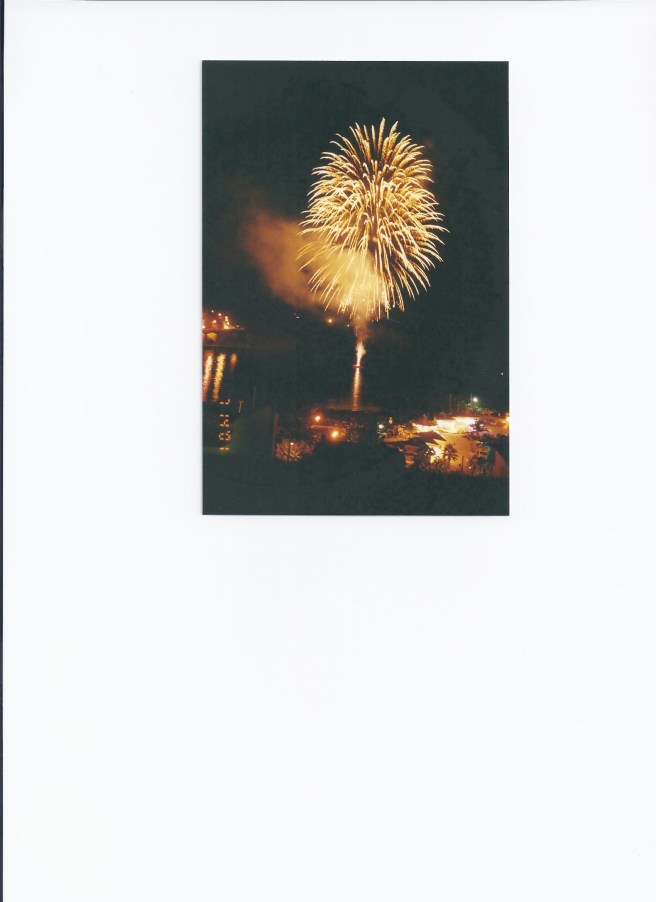
As the fireworks begin, we have a family tradition of eating chocolate bread pudding and having a cup of coffee. I don’t remember how this got started, but our daughter insists that, as a family tradition, it is now de rigueur.
The national holiday is, of course, Bastille Day, or 14 juillet. On this day there is always a parade through town with the laying of flower wreaths on all of the war memorials in the village.

There’s the revolutionary war memorial on the main square, the DeGaulle memorial on the way out of town towards the Col de Banyuls, and the Maillol war memorial behind the mairie, where speeches are made. This is also where other war memorial ceremonies take place, such as the June holiday that commemorates DeGaulle’s call to arms from London during WWII and the November 11 holiday, Armistice Day, when more speeches are made and the national anthem is sung. Fireworks are scheduled either July 14 or the night before and the quality varies depending upon that year’s budget. We have seen some tremendously wonderful displays some years and pitiful ones on other years.
In addition to the French national independence day, there are also ceremonies at the war memorial in nearby Port Vendres on AMERICAN Independence Day, as the memorial there is also in honor of those Frenchmen who fought for our independence in 1776! Since Port Vendres is twinned with Yorktown, VA, we have attended several ceremonies and walked in parades in Port Vendres on the 4th of July, including the festivities for the visit of the USS Avenger.

The Fete de Banyuls is a village celebration with local produce and crafts markets during the day. A parade with floats (very homemade) that carry some of the children (we cheered one year for our daughter’s Centre Aere friends on a float) is also part of the day’s festivities.
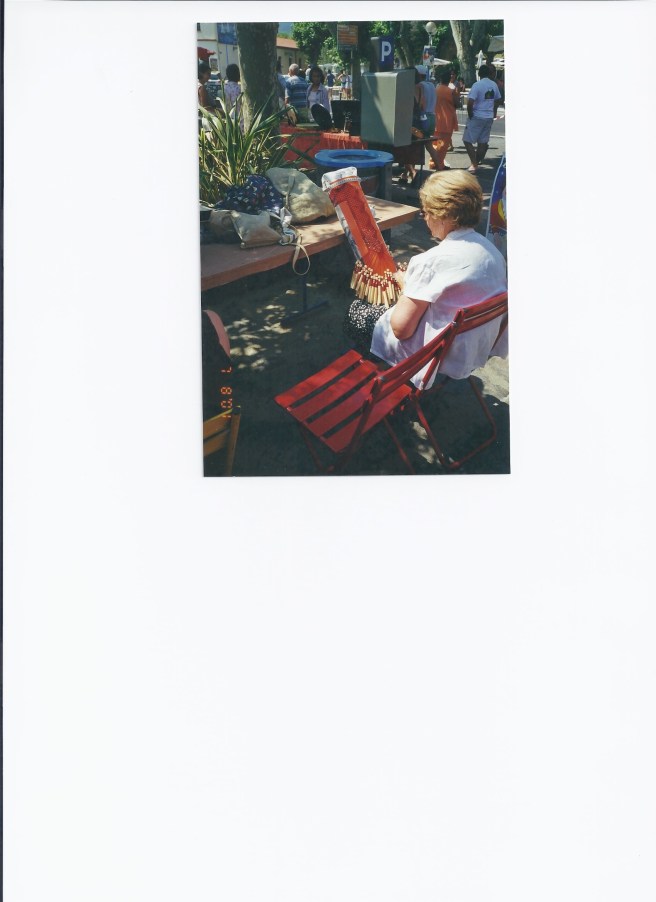
Two other major festivals occur during the year. One is the Fete Catalane, when sardana dancing groups come to Banyuls from both French Catalan and Spanish Catalan villages and dance on the square to the very unusual Cobla, a group of musicians playing Catalan instruments.
Several locals dress in Catalan costumes, there is a parade, with Castellars, and Geants, and lots of rifles being fired in the air. The Castellars are a troupe of tumblers that builds a tower by standing on each others’ shoulders, with a small child on top. They do this in the street—no mats or safety ropes. The Geants are huge giant papier- mache people, a king and a queen, etc. that are “danced” down the street, probably by someone inside on stilts. They cause a lot of excitement with the children.
The other really major festival in our village is the Fete de Vendange, which is the wine festival for our local wine and occurs the second week-end in October. October is a wonderful month to visit any wine district, as the air is full of the musk of the grapes that arrive throughout the day at the wineries in town.

We have about twelve wineries in Banyuls, so making wine is an important industry of our village. Banyuls wine is aged in large barrels painted red on the ends and set out in the sun. It is drunk as an aperatif or as a degustif. White Banyuls goes well with fruit desserts and custards. Red Banyuls wine marries perfectly with chocolate and cigars!

During the Fete de Vendanges, about 10,000 visitors descend upon our tiny village, all on that Sunday to taste the many Banyuls wines available through the morning and afternoon. A barrel of wine is blessed by the bishop after Sunday mass, and then the fun begins.
Small musical combos play at various locations throughout the town as the visitors purchase a glass and then walk up and down the street near the church, pushing through the crowds, and tasting all the different wines there are to sample. My favorite musical group is called “Les Enjoliveurs”—the hubcaps!
The rest of the summer is filled with Kermesses, which are fun fairs for children to support the Red Cross, traveling circuses and Guignol (Punch and Judy) shows. At the kermesses, children play games like fishing for plastic ducks or fish, walking on stilts around a little course, etc. They win tickets, which are then exchanged for prizes. The prizes are, I believe, donations from people and are sometimes chipped or broken, but we have quite a few of these dog figurines, glass fish ornaments, and other such knickknacks that were highly prized by our little girl.

Grillades, which usually include fried sardines or mussels and sausage cooked on large grills on the beach and pan o tomate with anchovies are also scheduled throughout the summer.

Often they make giant paellas, made in huge paella pans on open fires on the beach. Some people take large plastic containers with them to have them filled with paella, then take their dinner home to eat.

The “discos” at night often keep us awake with their loud rock music, but after a week or so, we barely hear the noise and it always ends by 2 a.m. when the bars close. Then every Thursday evening there is a Sardana, when the village people and visitors dance the sardana, the traditional Catalan circle dance to the music of a cobla.

Weather also plays an important part of village life. The main concern throughout the year is always the tramontane, a strong wind that whips across the Pyrenees mountains and hits the coast with gale-force winds. There is a Catalan saying that tells how long a tramontane will last—1, 3, or 7 days and another that says if the tramontane arrives at night, then rain will follow. During the summer, the wind is a wonderful friend, keeping our un-air conditioned apartment nice and cool. Whether it’s playing with the blowing curtains,

or just standing on the balcony, the tramontane during the summer is a welcome ally. But we learned to never go to the beautiful sand beach in Canet on a day when the tramontane is blowing as you will end up with sand-blasted legs! And full skirts are not a very good choice of clothing to wear when that lovely wind is blowing.
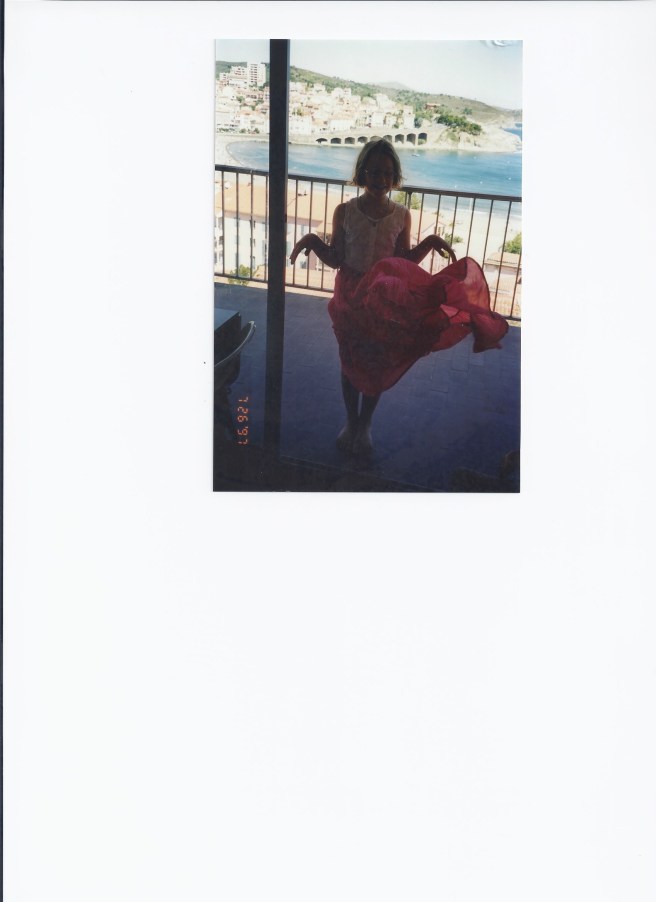
But in the winter it can be treacherous, bringing snow and ice down from the mountains, all of which paralyze our little tropical paradise.
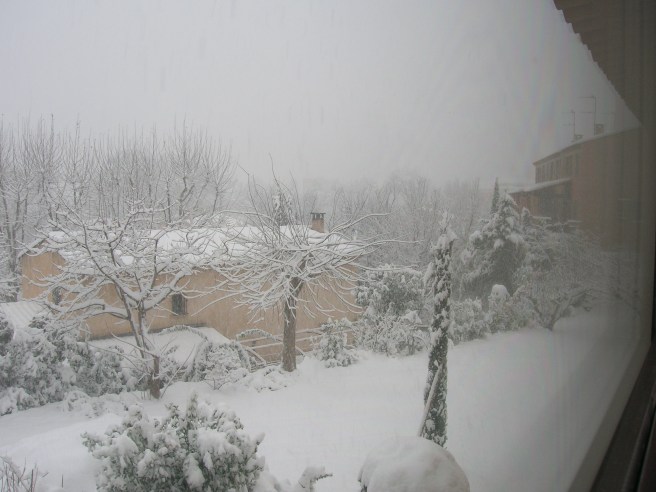
One night, when our daughter was about 10 years old, she came into our bedroom at 3:45 a.m., frightened from a nightmare. I talked with her a few minutes to calm her down and then suddenly I noticed that the wind was blowing all sorts of leaves and debris into our bedroom. We quickly closed the window and went out to the living room to see what was happening. Rain was blowing around so hard that we had white-out conditions! The storm was fierce and we soon discovered that a mini-tornado had descended upon the village. We sat on the sofa bed with our daughter, sipping tea, watching the storm develop and the sea turn quite ugly. Then CRASH! The lightening hit something big very near to us and we lost our electricity! An hour later we heard the chain saws busy at work. Apparently, a huge tree had been struck in the street below us, uprooting it and landing on the electric lines. We saw the results the next day. We also saw that a catamaran had sunk in the bay; it was recovered, but the mast was bent. Then we found that a downspout had been blown down off our building and the new balustrade along the fourth floor of our building had been blown in! The streets and walks were littered with branches, leaves and flowers, so the clean-up process went on all day long. Villagers still talk about that “mini-tornado” of ’97.

Winter storms along the coast are pretty frequent. The tramontane blows so fiercely that it is often difficult to stand or walk. The sea swells up and enters the village streets, looking at first like huge soap suds, until all is flooded up to four feet or more.

Boats from the harbor sometimes end up either on top of each other or floating up and down the village streets. Our friends’ hotel in Cerbere has been flooded more times than we can count, necessitating a lot of mud shoveling and washing up. Hopefully the new breakwater they built in Cerbere a few years ago is protecting the village now.
Almost every year, there is a fire in the vineyards up and down our coast. Sometimes it stays north of us, sometimes it devastates the vineyards just over the border in Spain, and sometimes it rages through the local vineyards, blackening the hills around the village. One summer many years ago, I rented our apartment to a professor and his family for five weeks. It was a summer of such a fire, so I got a phone call at my office one morning, asking me what they should save from the apartment if the fire came down into the village! Having had no news of France, I had had no idea that there was any danger to our village. The campgrounds on the edge of the village were burning and Canadairs (fire-fighting planes) were dipping into the bay then swooping up just above our balcony as they hurriedly dumped their load of seawater onto the fires in the hills behind our building.
Several years ago there was a huge fire on the Spanish border. When we arrived that year, the hills were all black. It was a stunning picture.

But actually I need to tell you about the “fruit sellers” first. In our many trips over the border to shop in Spain, we often noticed around the La Jonquera area, that there were often young ladies standing along the side of the road, sometimes with a small table. I always assumed they were manning small fruit stands, until one day my best friend was bemoaning increase of the prostitute rings in Spain. “What prostitutes?” I asked. “Didn’t you ever see the young girls standing on the side of the road down around La Junquera?” she asked me. “Oh!” The penny dropped! She had quite a laugh at me when I exclaimed, “But I thought they were fruit sellers!” Apparently young girls come from Eastern Europe and then work several years in order to get their legal papers and a passport for Spain. Their work entails standing in skimpy clothing along the side of the roads frequented by truckers, then going off into the fields for a “quick transaction.” So the day we arrived after the devastating fire that year, the hills were absolutely black, but standing on the road in the foreground, against the absolute black hills, was a prostitute with long black hair and a bright red outfit. It was, indeed, a very striking picture!
During the summer there are always lots of activities going on in the village and we try to make sure we have a monthly schedule on hand for our guests when they arrive. Friday mornings are flea markets/antique markets next to the harbor, Thursday and Sunday mornings are market days at Place de marche. Evenings are often what we call “night market” when there are stands of Indian and African wares, jewelry, and, at one time, garnet jewelry from local artisans, paintings, and other artisanal crafts. There are concerts scheduled throughout the summer by visiting artists or local musical groups. Some are better than others.
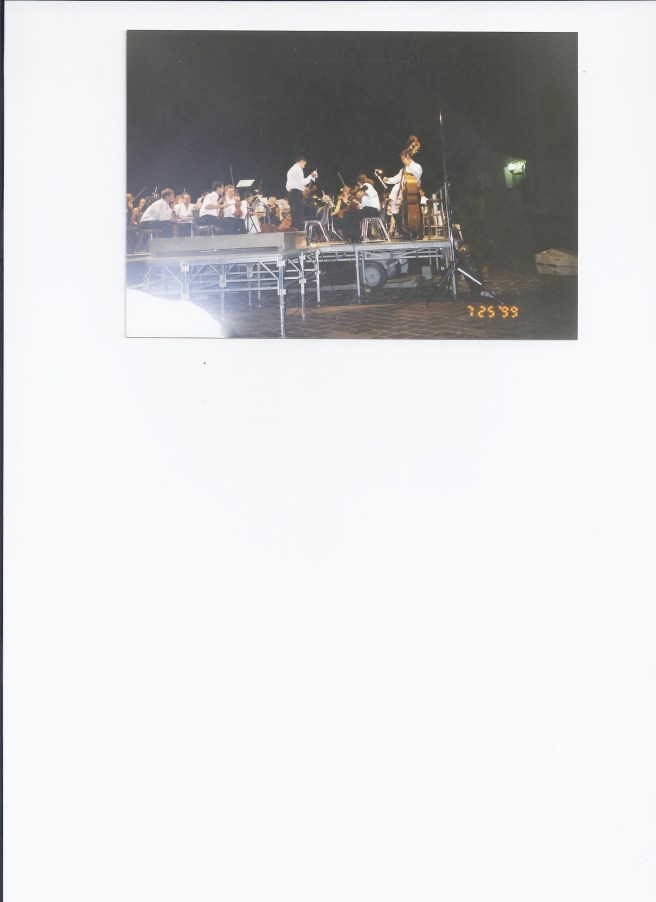
One summer quite a few years ago, we attended a concert given in our village by the summer festival orchestra of North Carolina School of the Arts. It was made up of students from music schools and conservatories all over the US and we were pleased to find a few familiar faces from our daughter’s music institute. So when they turned up a year or so later for a concert in Collioure, we decided to go see them again. This was, of course, a different group of students, but we still found a cellist who studied with a professor we knew quite well. I proceeded to tell him about my father’s gold frog bow, which I had sold to the professor and suggested that the student ask to see it when he got home. He brought out his hand from behind his back, and there was my father’s bow! He’d bought it from his professor and was using it for the concert that night. I was so stunned that I could hardly speak the rest of the evening. I still get chills down my back remembering that sensation, knowing that the cello bow had made it to the Roussillon even though my father did not live long enough to come visit himself.
And so the summers are filled with swimming in the sea, riding on the merry-go-round, visiting the various markets and fairs, watching the men (and women, now!) play petanque every evening, going for long walks up the hill and through all the narrow, twisting streets of our village, and spending long evenings of reading through our private, and by now, very extensive library. Not having a TV in France for the first 15 years, was a wonderful thing! But now we say our new TV is a great excuse for learning more French. And the cooking shows are quite fantastic, too!
Our daughter kept busy during those summers of her youth, reading or practicing her music lessons, going to the beach for churros

or huge croque-monsieurs

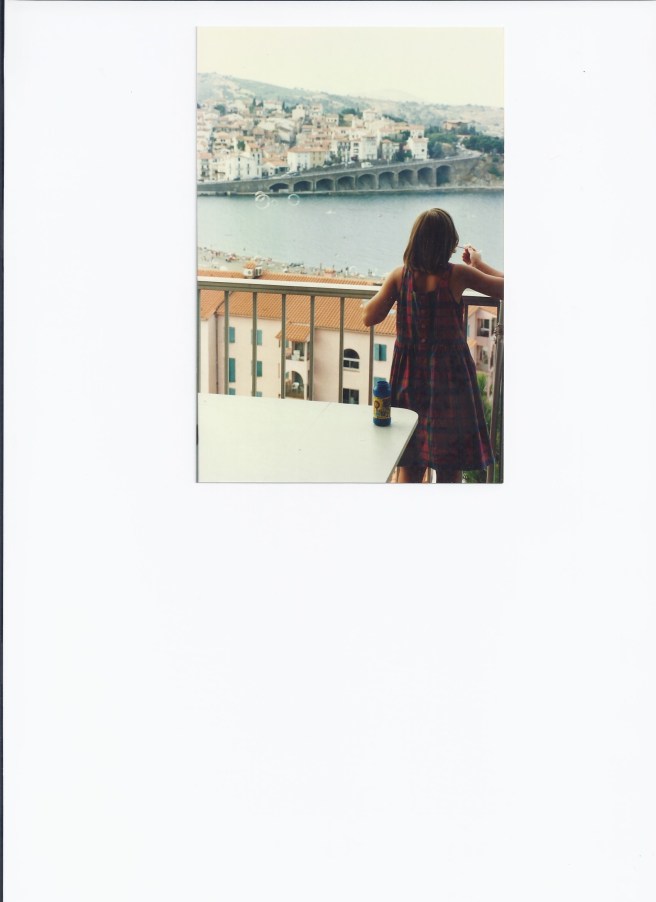
or just blowing bubbles on the balcony.
We played Checkers and Uno and Chess and invented new recipes. Every day was a new adventure.
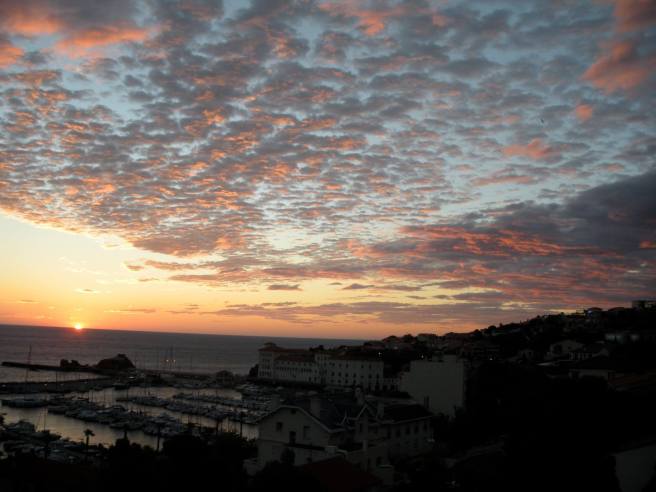
As the summer winds down and the tourists go home, the village settles down to its winter pace, knowing that the stores will close for two weeks at Tous-Saints (All Saints’ Day), then gear up for the Christmas season. Shops will be filled with santons and lots of chocolates. We will load up on fresh foie gras and nuts and pears and Roquefort cheese, as the Fall and winter season arrives. People will begin to bundle up against the tramontane and the plane trees will be trimmed of their branches (this always reminds me of how we “murder” crepe myrtle trees in the South). Most hotels close on October 1 and the owners will plan their winter vacations in warmer climes. But on Christmas Eve, the children of the village will don their Catalan dress and dance during midnight mass and Catalan music will continue to sound through the winter season, waiting for spring flowers to arrive and the busy tourist season to once again bring in the much needed annual revenue.
 2 Country Kitchen