11. Adventures & Misadventures In Spain

The Roussillon, (Catalan region, where we live,)is very closely related to the Catalunya region of Spain. Historically, the Roussillon has sometimes belonged to Spain and sometimes to France. They share a common language, Catalan, spoken mostly by the older people in our village.   Road signs announcing the beginning and the ending of villages are written in both Catalan and French in the Roussillon. The oral tradition of Catalan lives on in the older generation of both the Roussillon and Catalunya, but is gradually dying away, so the schools in Catalunya decided how to make it a written language, and the French schools in the Roussillon are now teaching this written form of Catalan to the children. I hear that French children in our area then come home and try to speak this new Catalan with their grandparents, who haven’t any idea what they are saying. In Barcelona, you will find that the directions on train ticket machines are all in Catalan, not Spanish. And there are always Catalan dishes listed on the menus on both sides of the border. In Catalunya, they have their own Catalan police force and are pushing to separate from Spain. I finally bought myself a large Catalan-French dictionary, as well as a pocket one to carry in my purse.   If you see a funny word with an “X” in it, it’s probably Catalan.

Because our village is so close to Spain—only 20 minutes through the Col de Banyuls—we often travel to Spain for our shopping needs and to explore wineries and restaurants, although since Spain joined the Common Market, prices have drifted upwards; we don’t find as many bargains as we used to find. Still, Spain grocery stores often carry many American and British products, which we do not find in France. For many years, we had to go to Spain to buy Philadelphia Cream Cheese and Listerine Mouth Wash; now both of these items are available in the stores in Banyuls. We still have to go to Spain for cheddar cheese, but it’s not worth the trip as it is very mild. There are many Brits between the French border and Barcelona, and this is why we find so many British goods. There’s always corned beef on the shelves, and Jacob’s biscuits, cans of baked beans, and different teas. I shop mainly for the Spanish anchovy-stuffed olives and sugar-free chocolate, Jello, cottage cheese, and paella pans, while my husband searches for wonderful albarino and tempranillo wines from the area.

Traveling through the Col has also given us the opportunity to encounter the local wildlife, mostly boars and goats and cows.

Sangliers through the Col de Banyuls.jpg

One day we arrived at a restaurant up in the mountains on the Spanish side and found our car surrounded by wild boar! They were headed toward the kitchen door of the restaurant to raid the dog food!

It always gives a giggle when we cross into Spain and see the signs: “Caca privado,” which is Catalan for “No hunting,” but our minds turn elsewhere.

The eight-hour drive down from Paris became tedious after a few years, so we often fly from the US directly into Barcelona. This gives us a fairly easy two and half hour drive up through Spain to Banyuls, while battling our jet lag.

Over the years, we have had many adventures in Spain, some are lovely and some are exciting. But the one that we will always remember with anger and chagrin, is the time we were robbed. I still have nightmares about it. I couldn’t bear to write about it in my diary for three days after it happened, and then it was only a few sentences about how we dealt with the aftermath.

We arrived in Barcelona in late June after a very trying trip up to JFK from the Philadelphia area. We’d decided to take a van up to JFK to ensure that our nine pieces of luggage would actually arrive with us in Barcelona. Unfortunately, the van got a flat tire along the Jersey turnpike. We waited for over 30 minutes for another van to come along and collect all of us and our luggage to get us to JFK in time for our flights. When it arrived, it already had five people in it and was full of luggage! Somehow we all squeezed in and put the luggage in the aisles of the van and off we sped, rocking all over the road, then getting stuck in a traffic jam ten minutes from the airport. Even after all this, we were only 30 minutes late, but an hour-long line at check-in was waiting for us. When we did get all checked in, and all of the luggage was out of our hands, we found we did not have seats together. (Sometimes you just have to accept these foul-ups.) Then the inevitable wait on the JFK tarmac started; two and half hours later we finally took off for Barcelona.   We were unaware that the plane came down in Lisbon the next morning, but it was a short stop, as we had arrived into Lisbon two hours late. We stayed on the plane while the cleaning crew came through, and security came onboard to make sure all the luggage in the cabin was really ours, not left by departing passengers. Less than an hour later, we were once again on our way to Barcelona.   We arrived when they said we would, and all of the luggage arrived—a miracle in itself! Outside of the immigration/customs area, a man was waiting for us, holding a sign with our name on it. This was the agent with our lease car. We had begun leasing brand-new Peugeots for our long stays in France, as this was less expensive than rental cars. We still do this. As we exited the airport, we saw our new car being unloaded from the car carrier truck right in front of the airport. There seemed to be quite a few men standing around, looking with interest at it and at us.

We were delighted to get everything stowed into the car and were soon on our way north. Getting on the highway was very easy that year, but within five minutes, we were in a traffic jam. It was then I noticed that the car’s side mirrors were folded in, so we couldn’t see traffic on the sides of the car. Several minutes later, we had a flat tire! My husband pulled over to the side of the road and stopped to check the tire. It was most peculiar to have a flat tire, as this was a new car. Very quickly, a man stopped his car in front of ours and offered to help us. He said we should follow him off the highway, where it would be easier to change the tire and that he would help us. Ah! –the Good Samaritan! So we followed him, and he led us to a residential street just off the next exit.

We parallel parked in front of a large apartment building. First he started taking luggage out of the back of the car to get at the spare tire, until we showed him that the spare was actually on a rack under the back of the car. I had our daughter stand next to the one large piece of luggage that was left outside the car, instinctively not trusting the neighborhood. Before lifting the car on the jack, he seemed to want to make very sure that the brake was on in the car. I had already done that, but he insisted on getting into the driver’s seat and making sure. I figured it was a male thing, not trusting what I’d said. We then watched as he helped my husband get the old tire off and start to put the new one on. As the nuts began to be put back on the wheel, our Good Samaritan insisted that our daughter and I also help to put them on, so he soon had us all huddled around the tire. At about this time, his cell phone rang, but he didn’t answer it. I looked at him, as if to say, aren’t you going to answer that? I looked back at me, and I will never forget the fear in his eyes. Within just a few minutes, he excused himself, saying he had to make a phone call, and he walked down the street, away from us. I helped my husband with the last of the nuts, getting the wheel solidly tightened on the car, and asked him if he thought we ought to give our Good Samaritan a little money when he returned for helping us. Then I opened the car door to get my folder of Spanish money. My briefcase, full of papers and medications, and a little good jewelry, my Canon SLR camera, and my coin purse were GONE.

By the time we got home to Banyuls, two and a half hours later, and called the credit card company, someone had already charged several thousands of dollars on the card. Even as I spoke with the agent in the Fraud Department, someone was trying to charge something else.

I still get angry when I think about how some gangs of thieves prey upon the gullible and the trusting and the kindly American. Thank goodness I always carry my passport on me, as I am sure that would have been their prime target!

We reported the theft to the police in Banyuls, who said we would have to go to the police in Spain. So the following week we went to Figueres, looking for the police station. We were eventually told to go to Mossos d’Esquadra, the Catalan police. There we found a female officer who spoke English because her mother had been British. We told her what had happened and she said, “Yes, these are gangs who work together. They slit the tire of your car during a traffic jam. Then the Good Samaritan gets you all down on the ground around the tire, so that you cannot see his colleague enter the car from the other side and grab your valuables. When he reset your brake, he probably did not fully close the door on that side of the car.” Then she asked us for a description of the man. “What color of skin did he have? Was it dark or light like ours?” I was befuddled for a moment, because the Spanish mostly have olive-toned skin and so, to me, it is all dark, compared to my Swedish/English very pale skin. What she was asking was if his skin was dark like a Mexican, because, apparently, they were being plagued by gangs coming over from Mexico and Central America. She wasn’t ready to believe that it was a Spaniard who had robbed us. He looked like a normal, clean-cut Spaniard to me! So we had to look through several books of mug shots, and what a hoot that was! Every criminal made a weird face for the camera!

We never found anyone who looked like our Good Samaritan in the mug books, but I can still see him in my mind, and I will never forget the frightened look in his eyes, as his phone rang to signal him that the deed was done.

We were told by someone, I forget who, that in Spain, if the thief does not use a weapon and is caught, he gets off lightly. But if there’s a weapon involved, then he’s thrown in jail. They, therefore, prefer to con you out of your belongings, or snatch and grab, as happens often in the airports.

We spent the next week on the phone with various banks and agencies in the US. We needed a replacement for my international license, so had to call AAA back home. Then we needed to replace our travelers’ checks and had to go to Perpignan to do that. I had to order more medications from the drug store back home and arrange for someone to pick them up and send them to me. My state driver’s license had to be replaced once I got back home. We lost French francs, Swiss francs, dollars, travelers checks, our check books, Spanish pesetas, medicines, all our papers for the sale of the old apartment, which we was to happen that summer, some jewelry, an old coin purse, and my camera. I carried that police report around with me for years, every time I went back to France, just in case I actually saw some of my jewelry or the camera in a flea market in Spain. Wishful thinking!

One of our daughter’s friends back home had started a neighborhood newspaper during the summer, so our daughter wrote an article about our robbery and sent it to her for her newspaper.

Two weeks later, a friend and her 13-year old daughter flew over to visit us for a week. They were flying into Barcelona, and I was really nervous about going back to the airport with our car. But we made our preparations: I bought a disposable camera and gave it to our daughter to take photos of any cars near us during a traffic jam.  I took only a fanny pack with enough pesetas for tolls, and put my passport back in its neck pouch. Then I found a baseball bat in a souvenir shop (why the French would sell a baseball bat in a souvenir shop is beyond me—do they even know how to play baseball?!).   With bat in hand, I entered the Barcelona Airport and quickly rushed our friends out and into our car.   I did get some strange looks, but no one was going to mess with my friends! Our daughter stared out of the windows with the camera until we were well on our way back up to France. And then we relaxed.

I still feel traumatized about this event that happened 17 years ago; it has taken me two weeks just to write these few paragraphs. There is the anger from being robbed, and there is the even greater anger from being conned.

We ventured back into Spain with our friend and her daughter that year. As usual, we took our guests to Figueres to visit the fabulous Dali Museum, and then stopped at Hotel Duran for lunch. We had discovered this hotel when our daughter was a baby; we were searching for a restaurant that had a high chair (not very many restaurants had them!). The Hotel Duran had a high chair, and we had a lovely meal there. Every since then, we have taken our guests to this hotel restaurant when we take them to the Dali Museum. We had a lovely meal that day and our daughters quickly named their waiter “Romeo,” and made sure they’d taken a photo of him—they were very young teen-agers, after all! My friend ordered her first course of Spanish ham and sausage; what arrived at the table was a great surprise to all. It was a lovely selection of Spanish ham and different sausages, hanging from a rack. The waiter showed my friend how to slice what she wanted from the different sausages. Her daughter quickly dubbed this course: “Sausage on a Coat Rack.” I stuck with the aubergine terrine (eggplant terrine) and monkfish.

Last year I was once again at Hotel Duran for lunch, this time with my daughter and her college friend who came for a week’s visit. The girls had greatly enjoyed the Dali Museum and had dutifully examined all the Dali artwork and memorabilia displayed in the hotel lobby before lunch. We had an older waiter that day, and he was very attentive to us three ladies. We got to talking with him and discovered that he had been at the hotel for 30 years, so he was there the very first time we discovered Hotel Duran when our daughter was a baby. He was thrilled to know that he had been part of that discovery, and at the end of the meal, he brought over a porron of wine and showed the girls how to drink from it. This is a traditional custom in the Catalan.  A porron is a glass carafe with a spout through which you drink by holding the carafe in the air and allowing the wine to land in your mouth (without touching the spout!). It can be a bit tricky!
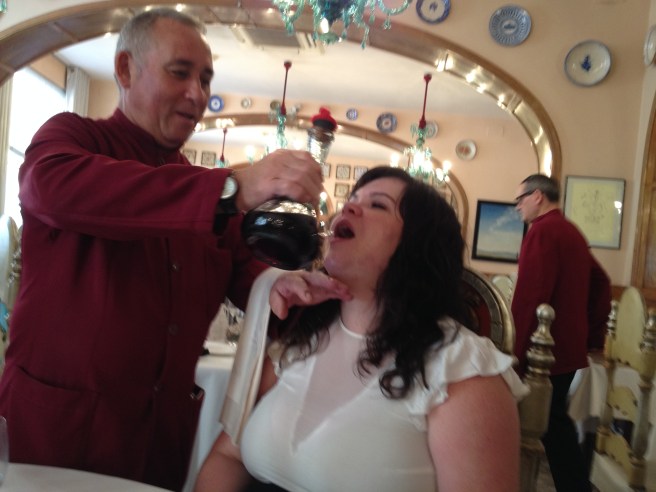
Drea and porron.JPG

Our Catalan friend demonstrated his technique for us at a restaurant in Espolla.

Abdon with Poirou.JPG

We then had to take our friend and her daughter back down to Barcelona Airport to fly home, and once again we went prepared with baseball bat and camera! When we returned, early in the morning, we approached the border, and noticed signs posted announcing the closure of the border to trucks between 11 and 11:15 a.m. because of the solar eclipse. All trucks in France were required to stop during the eclipse! I can only surmise that this is a safety measure, as so many people would be trying to see the eclipse. We watched the beginning of the event from our balcony, using the pinhole method, then had our lunch. By then we noticed lots of people on the beach, but no one was swimming. I could see the reflection of their mirrored eclipse glasses as they gazed upward, so we rushed back to the balcony and viewed more of the event using our mirrored glasses, the pinhole method and binocular reflection. We had about 80% eclipse in Banyuls, so it was just a small crescent at its peak. It took about two and a half hours to go through the whole process. It did get darker, but the sun still shone through.

We have taken many short trips down to Barcelona for a bit of shopping at the large department store, El Corte Ingles, and have enjoyed having tapas in the early evening. We learned early on that Spaniards do not eat the evening meal until after 10 p.m., when the sun goes down and the air is cooler   Before our daughter was born, this was fine with us, and we enjoyed many lovely evening meals at Renos, a wonderful restaurant where I remember eating stuffed quail for the first time.   Our first visit to Renos was very memorable. My first meal at Renos was fettucini with truffles, quail stuffed with foie gras and truffle sauce, champagne sorbet and coffee.   My husband had Catalan salad, duck in pear sauce, and fresh raspberries. Another time, we had goose liver pate, poached egg with truffles, fish and salmon in puff pastry, raspberry sorbet with eau de vie, beef sirloin with rice, ending with cream and fruit in a cookie basket with a lattice of drizzled sugar on top. What a meal! But in recent years, we enjoy tapas near the Placa Catalunya around 6 p.m. and skip a late dinner.

During one visit to Barcelona, my husband decided he wanted to visit a few art galleries. We had found two and were looking for the third on his list, but had trouble finding one of the streets.  We were standing on a street corner, looking a map. This is something you always want to avoid doing—read the map and memorize it before leaving your hotel! A middle-aged couple stopped and asked us if we needed help. The man could speak a little English, and when we said we were looking for this particular art gallery, he said we should follow him. So off we trusting Americans went, following these strangers several blocks until we came to a store. It was a leather goods store, and the man and his wife were the owners! We ended up drinking glasses of sherry while my husband tried on leather jackets that made me laugh, as he is the last person you would expect to look like a motorcyclist! It took some doing to get out of there without buying anything! We never did find the other art gallery.

Of course most visitors to Barcelona want to see the Gaudi works.  Every few years we have tried to visit the cathedral that Gaudi started so many years ago, to discover the progress that has been accomplished. The first time I saw it was in 1972 on my first trip to Europe. Since then they have added towers and elevators up the towers.

Sagada Familia-towers.jpg

So that there are now twelve towers (one for each disciple), covered with pieces of tile.

sagrada familia-close towers

They have installed an altar and finished more doors.

sagrada familia.jpg

There is always something new to discover.

To visit Parque Guell, in Gaudi’s planned residential district, we always take a taxi as it’s a long way out of the city. Our daughter enjoyed many hours playing on the tire swings,
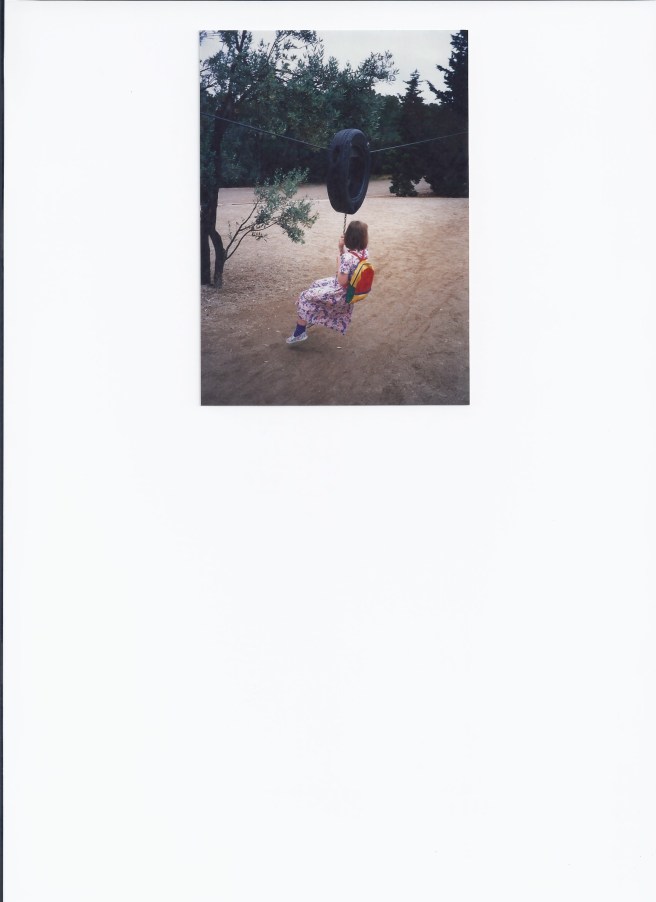
Parque Guell-tire swing.jpg

being lifted into the alcoves in the pocket wall,

Parque Guell.jpg

visiting the serpentine-shaped tile bench up above

Parque Guell-bench.jpg

and always greeting the dragon at the entry.
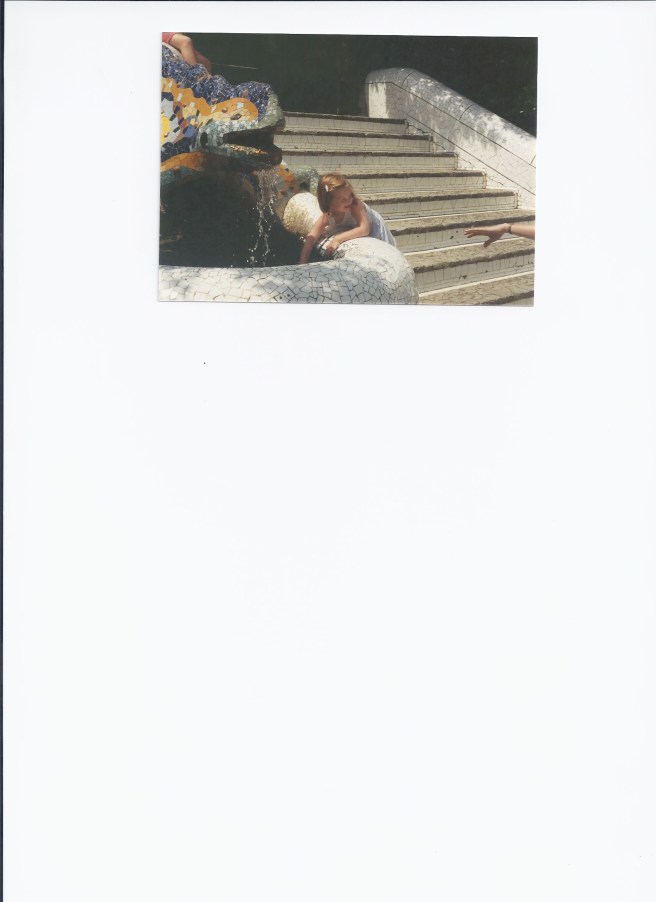
Parque Guell-dragon.jpg

And, of course, we could not miss the opportunity to head down to Valencia several times to see the Lladro factory. The first time we went was by train and that took seven hours. We took a taxi to our hotel and found that the rates were double those quoted in our Michelin guide. Then we tried to get to the factory. The hotel told us to take bus 6 or 16, then we were told to take bus 10. Finally we walked to another hotel where we told it would cost less than 1000 pesetas to take a taxi, so that’s what we did. However the taxi took us to a seconds store where we were told we could not tour the factory. So we shopped and chose lots of figurines for our collection, then had to go to a bank to exchange money.   The first one would not take a French check and exchanging the travelers checks would take all day. The next one had about 20 people waiting in line. The third one could change a French check and could change the French travelers checks, but the US travelers checks! By the time we got enough cash together, paid for the figurines and were ready to return to the hotel, we had two large boxes, two medium sized boxes and two small boxes. The clerk called us a taxi and off we went! In the midst of all this, our daughter’s stroller broke, so we ended up at yet another El Cortes Ingles department store, buying a wrench and nuts and bolts to repair the stroller. Then the seven hour train trip back up to France and then a long, difficult walk down from Banyuls train station, across town, and up our very steep hill to the apartment—with six boxes, a suitcase and a toddler in the stroller.

Two years later, we returned to Valencia, this time by car.   We found it was 546 km from Banyuls. This time we stayed at the Expo Hotel where our room was air conditioned, had a telephone, TV , mini-bar, and lovely bath. And, best of all, there was a rooftop pool, which was great after the long, hot drive. The city was building a new metro system that year, so driving around the city was a bit tricky. It took us quite some time to get to a Lladro shop, where we found prices about half the US prices. After shopping there, the clerk sent us off to the factory, where we had scheduled a tour, but the factory was not where she said it was, so we wasted an hour wandering around lost. When we finally found the factory, we were 15 minutes late for our tour. However, we were given a personal tour, which was great for keeping our young daughter’s attention. We saw several new pieces in production and enjoyed watching how everything is put together with liquid porcelain. Then we made another stop at the seconds shop, before returning to the hotel with another five Lladros for the collection. So our second visit to Valencia was a bit more successful.

We always gave our daughter her choice of where to eat or what to do on her name day. Name days in France are determined by the saint with whom you share a name, and you celebrate that day. Everyone says “Bonne Anniversaire,” as if it’s your birthday. This was confusing to her the first time it happened at Centre Aere.   In the Catholic calendar, every day in the year is dedicated to a saint, so when we are in France, we celebrate her name day, since it is during the summer when we are often there. Of course she often wanted to eat her dinner at Clos de Paulilles, but she would request a day at Canet Plage, the big sand beach north of us,

Canet Plage.jpg

or a day at Aqualand, the water park.
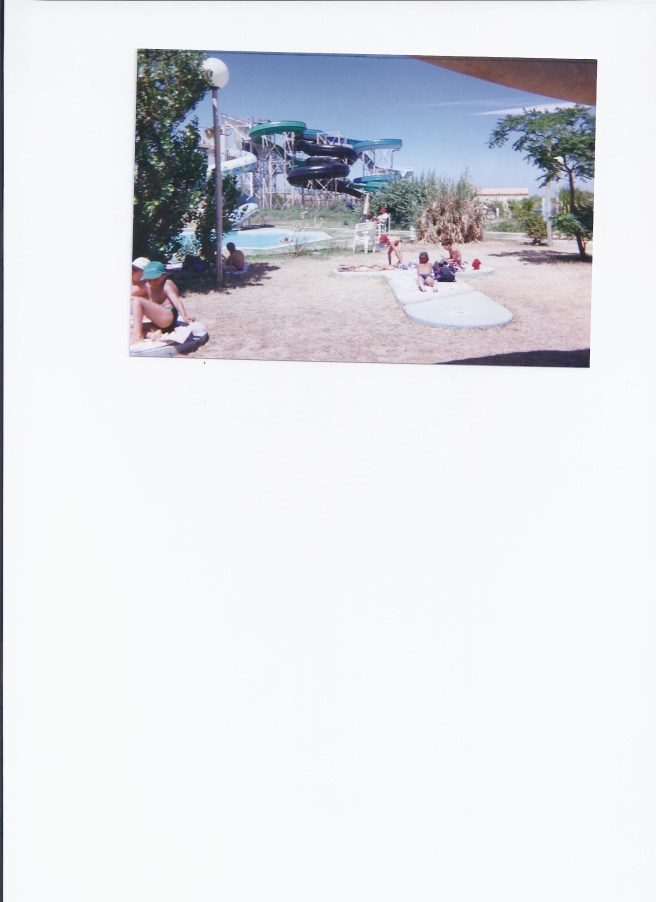
Aqualand.jpg

One year she decided she wanted to visit Dali’s home, two hours south of us along the Spanish coast, at Cadaques. So we called for ticket reservations and headed south.

We parked at a tiny church in Port Lligat and walked down to the Dali House. The house was wonderful! It was full of tiny rooms; we were allowed to stay in each area of rooms for 5-10 minutes, so the tour, done in English, was over in about 40 minutes. Metal bars kept us away from the original furniture. Dali’s wife, Gala, had a fondness for yellow dried flowers and put them everywhere. They’re called “Everlasting.” Their pool was also fabulous—long and narrow with fountains. Afterwards, we walked back to the car and had some cold water before heading back to Cadaques, where we had lunch at Es Truell, which was very good. We had mussels then zarzuela then dessert. Zarzuela is a sort of Catalan bouillabaisse, or fish stew. I have made is several times in the US, when I can find monkfish!
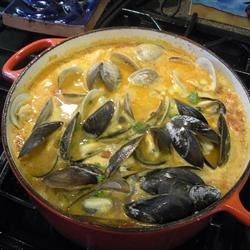
zarzuela

Several times we have traveled south to La Bisbal d’Amporda, a small town near Girona , well-known for its many tile and pottery stores. Our first visit to this area was prompted by a desire to tile the sunroom in our house in the US. We wanted to see what Spanish tiles were like. We went to a factory near Bisbal, which had been suggested by one of the pottery merchants. They only did wall tiles and sent us to Fabrico Blancos, which we found after stopping several times for more directions. They only sold through their stores and sent us to one of these on the outskirts of Bisbal,, which we found only after stopping at another huge pottery warehouse. There, the girl spoke only in Spanish, so we had quite a time communicating. She seemed quite taken aback at the idea of sending tiles to the US. So we just looked and measured and loved everything we saw. Finally we left, realizing it would take about 20 boxes of tile to floor the sunroom, which would be a lot to carry home!

After walking up and down the main street of Bisbal for several hours, we enjoy going to the tiny fortified medieval village of Peratallada, about 22 km east of Girona.   The 1991 film, “Robin Hood: Prince of Thieves” was partly filmed here. There we wander through the tiny streets,
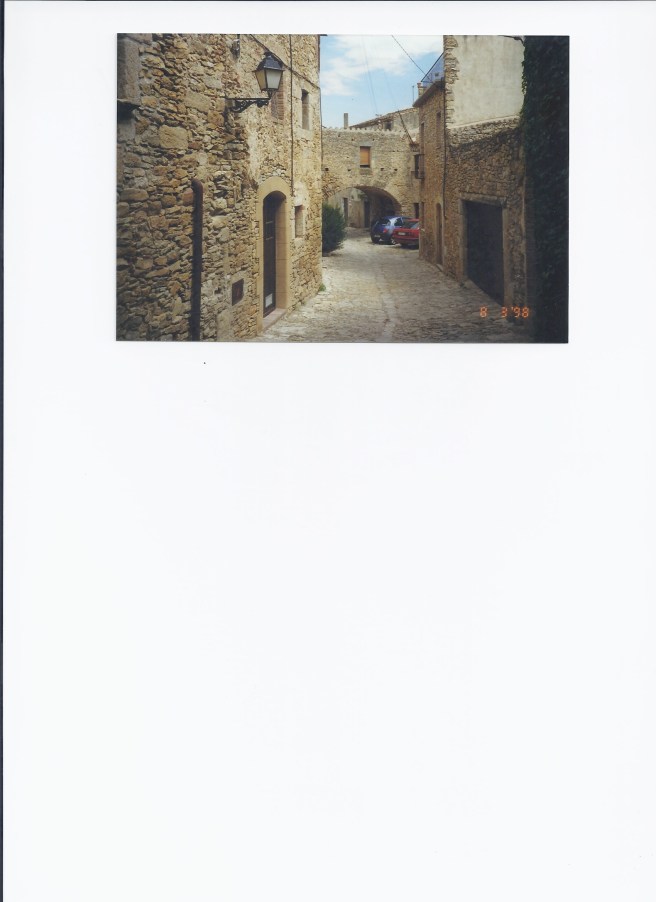
Peratallada.jpg

peer into shops and then eat a late lunch at a lovely Catalan restaurant, Can Nau.

Can Nau.jpg

We always look forward to a relaxing luncheon, which usually includes rabbit encrusted with almonds. The Catalan title of the dish translates as “the indentation in the grass where a rabbit has had his afternoon siesta.” What a lovely description!

Our most memorable meal in Spain was in Roses in 1998. We had heard about a restaurant called “Die Insel,” owned by a German-Spanish couple.   Our daughter ordered the wienerschnitzel from the children’s menu, and my husband and I ordered the tapas menu. What followed was an unending list of small courses, including my favorite: sea urchin soup. We had two sorts of ham, foie gras, dilled smoked salmon, escargots, raw oysters, quail eggs fried on foie gras, shrimp in garlic, gambas, something that looked like dragon fingers and smelled of iodine, gambas, clams, sea urchin soup, and scallops in a cream sauce. Then dessert was crepes Suzettes for me, whisky coffee for my husband, and flambéed raspberries for our daughter. Everything was delicious!

One year we traveled by train to Italy to visit Venice, Pisa, Florence and Milan.   For our return to Banyuls, we boarded the train in Milan to travel back to Perpignan, France, and were happy that we’d reserved a room in a sleeping car on a Spanish hotel train. The train came into the station early, before it was even posted on the board, so we boarded it and settled in quickly. By 10 p.m. we were beginning to go to sleep, when the conductor knocked on the door and told us we could not have a compartment for four people when we were only three people, and he insisted we pay another 9000 pesetas. When we argued with him, he said he would take away our rail pass. Then he saw that this was the last trip on the pass, so he said he would keep our passports and have us arrested in Barcelona! When we said we were not going to Spain, he said he’d have us arrested in Perpignan. My husband said, “FINE!” and slammed the door. But I was worried, so I paid the man $50 and he still wanted more, so I had to give him 8000 lire, too! I told him I was robbed in Barcelona the year before and I considered this a robbery as well. I also insisted on having back our passports immediately. He returned them to me, but we did not sleep much of the rest of the night.

The following morning we were up at 5 a.m., but the train was late. By 6 a.m. we still did not have our tickets or receipts returned to us. One of the conductors finally came with our railpasses and a receipt for 9100 pesetas. I insisted that I have the reservation ticket, too, which showed that I had already paid for the room, and she finally was able to get that to me. We were one and a half hours late arriving in Perpignan, and we were told that we could get reimboursed because the train was over an hour late. But, of course, that turned out wrong as it was late due to the fires near Marseilles, which was considered an act of God, not the fault of the French rail system, the Spanish rail system or the train.

I rewatch the “Alias” series and think, “Oh, if only I were young and bad-ass like Sydney Bristow!”

Zarzuela

Zarzuela

  • Prep 45 min.

  • Cook 45 min.

“Catalan fish stew”

Ingredients

  • 1-1/2# monkfish
  • 12 raw shrimp, peeled
  • 12 mussels, steamed
  • 12 clams, steamed
  • 1/2# sea scallops, halved
  • 4 calamar tubes, cut into rings
  • 1/4 c. olive oil
  • 1 c. finely chopped onion
  • 1 T. finely chopped garlic
  • 2 red bell peppers, chopped
  • 2 T. ham, cubed
  • 6 tomatoes, peeled, seeded and chopped
  • 1/2 c. blanched almonds, pulverized (almond meal)
  • 1 bay leaf
  • 1/8 t. saffron, crushed
  • 1 t. sea salt
  • coarse ground black pepper
  • 3 c. water
  • 1/2 c. white wine
  • 1 T. lemon juice
  • fresh parsley, chopped

Directions

  1. Heat oil in large soup pot.
  2. Add onions, garlic, and peppers; cook 5 min.
  3. Add ham and cook 2 min.
  4. Add tomatoes, almonds, bay leaf, saffron, salt and pepper; boil then cook 5 min.
  5. Add water, wine and lemon juice; boil.
  6. Add monkfish and cook 15 min.
  7. Add scallops, calamar and shrimp and cook 5 min.
  8. Add clams and mussels and cook 5 min.
  9. Sprinkle with parsley.

Wiener Schnitzel

Wiener Schnitzel

  • Prep 1 h

  • Cook 6-8 min.

“Viennese breaded veal cutlets”

Ingredients

  • 1 c. flour
  • salt and white pepper
  • 2 large eggs, lightly beaten
  • 2 T. milk
  • 1 c. cracker meal or fine bread crumbs
  • 4 veal cutlets, pounded thin and CHILLED
  • vegetable oil
  • lemon
  • Kosher dill pickles

Directions

  1. Whisk milk and eggs together.
  2. Place 3 dishes in line for coating: flour, egg mix, crackers
  3. Coat veal in flour, egg, crackers.
  4. Place in one layer on baking sheet and refrigerate 30 min. or more.
  5. Pour oil in skillet to 1/4″ deep; heat over medium-high.
  6. Add cutlets one at a time.
  7. Cook until golden, 2-3 min. per side.
  8. Transfer to paper towel lined sheet and keep warm.
  9. Serve with lemon wedge (for juice) and pickle.

Coquilles St. Jacques

Coquilles St. Jacques

  • Prep 45 min.

  • Cook 10 min.

Ingredients

  • 1# mushrooms, sliced
  • juice of lemon
  • 5 T. butter
  • 1#fresh or frozen sea scallops, thawed
  • 1 c. dry white wine
  • 1/4 t. ground thyme
  • 1 bay leaf
  • 1/2 t. salt
  • 1/8 t. pepper
  • 3 T. flour
  • 1 c. light cream
  • 3/4 c. buttered soft bread crumbs

Directions

  1. Soak scallops in brine: 1 qt. cold water, 1/4 c. lemon juice and 2 T. table salt for 30 min. (if in the US)
  2. Place scallops on rimmed baking sheet lined with clean kitchen towel; place second clean towel on top and press gently to blot liquid; let sit 10 min.
  3. Sprinkle mushrooms with lemon juice.
  4. Cook mushrooms in 2 T. butter until golden brown.
  5. Cut scallops into quarters (or use bay scallops).
  6. Place scallops, wine and seasonings in saucepan.
  7. Simmer, covered for 5 min.
  8. Drain, reserving 1 cup broth.
  9. Make a white sauce with remaining 3 T. butter, flour, broth and cream.
  10. Add scallops and mushrooms.
  11. Spoon into 6 buttered scallop shells.
  12. Top with buttered crumbs.
  13. Bake at 400 F. for 10 min. or until browned.

Garlic Shrimp

Garlic Shrimp

  • Prep 10 min.

  • Cook 5 min.

An original recipe

Ingredients

  • shrimp, peeled
  • garlic salt
  • olive oil

Directions

  1. Heat olive oil in skillet.
  2. Add raw shrimp.
  3. Sprinkle with garlic salt.
  4. Turn shrimp over when pink.
  5. Add more garlic salt.

10. Out and About

Out and About

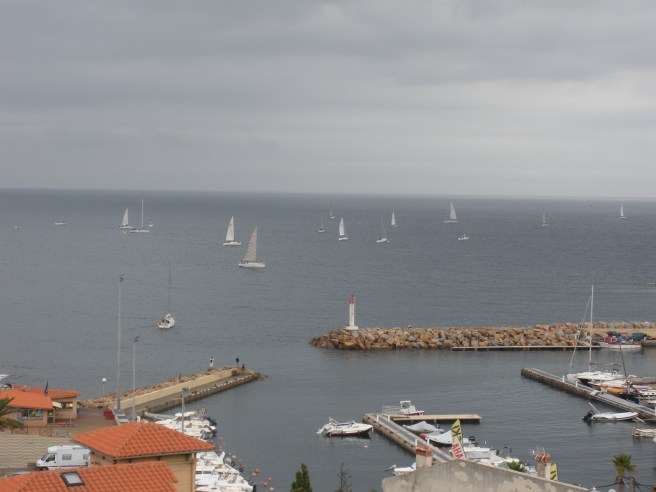
We are often asked, “What do you do when you’re in France?” Frankly, we live! We eat and read and rest and visit with good friends. I spend a lot of time in the kitchen, creating, and my husband watches the boats going in and out of the harbor and the sailboat races on Sundays.

sailboat races

But occasionally, we also do some shopping and wine tasting and even some sight-seeing.

One of our favorite shopping stories is about the purchase of our wedding rings. We were in France for the week of Easter and, during that time, decided to look at wedding rings to see if we could find something beyond the usual band of gold. We had a lovely day in Perpignan, looking through the stores and eventually came upon the street filled with jewelers. Perpignan garnets are highly prized in the area and are now difficult to find as the synthetics flood the market. However, there is a guild of jewelers who are licensed to deal in garnets, and that day we found ourselves in one of those shops. While we were not looking at garnets, we did figure that this jeweler was very reputable, since he was a member of this prestigious guild. What we did find were gold rings that were round on the inside and square on the outside—very unusual, indeed! Getting a ring to fit my finger was no problem at all, but then the jeweler measured my husband’s finger and his eyes grew big. “Oh, la la!” he said. “I’m not sure I have enough gold to make a ring for monsieur!” We explained that we only a few days left of vacation and would need the rings before we left for the US. So the jeweler said to give him a day or so and he would call his colleagues to see if he could gather enough gold to make the ring. We were excited, but a little apprehensive. Would we get the ring in time?

The next day, the jeweler called to say he had the gold and could make the ring by Saturday. We were leaving by train to Paris on Saturday evening. “Well,” he said.   “The train stops in Perpignan for 20 minutes before going on to Paris, so I will have my associate meet you on the platform. Look for her when the train pulls into the station.”   So, with fingers crossed, we boarded the train in Banyuls and headed for Perpignan. When the train came into the station, I explained to the conductor that we were just getting off the train for a few minutes to meet someone and would return immediately. He watched us carefully as we left the train; I’m sure he thought it was a strange proceeding! Luckily, my husband is tall and very distinguished-looking, so the woman from the jewelry store saw us immediately and handed us the ring in a little box. I said: “Try it on and make sure it fits!” My husband chuckled as he put the ring on and said, “What am I going to do if it doesn’t fit?” What, indeed! But it did fit, and that is how we ended up with French wedding rings.   When our daughter was 12 years old, we took her to the same jeweler and bought her a garnet cross to wear for her confirmation at church.   I still look in the windows and salivate over their lovely garnet jewelry!

The other memorable shopping experience happened at Christmas when we were in Banyuls for the millennium. We had been looking for a small artificial Christmas tree all week, something not too big and not too small. Every store seemed to have sizes we did not want. Finally, on Christmas Eve, we stopped in a supermarket in Mas Guerido, on the outskirts of Perpignan. There they had a tree that was just the right size, but it was their display tree—no more boxed trees available. “But you can purchase the display tree, madame!” said a clerk when he saw my look of dismay. So with much excitement, I began to undecorate the tree, as it was covered with ornaments provided by different food companies. “Oh, no, Madame! You take the ornaments, too! No need to take them off the tree.” My goodness, I thought. This is wonderful! Then I asked the price and he said 25 francs—the equivalent of about $5. Good heavens! Then the clerk picked up the tree and carried to our car for us! Unheard of!   That tree still sits in our garage, covered with a tree bag, and the additional ornaments we made for it are carefully stored, ready for the next time we decide to spend Christmas in Banyuls.  We will never forget our $5 tree!

Every year I plan at least one shopping trip with my best friend, who now lives in Perpignan. Sometimes I drive up and sometimes I take the train, but always we meet for coffee and pastry at L’Espi, a delightful patisserie and restaurant.

L'Espi

We always spend a good 30 or 40 minutes of conversation over coffee and pastry before feeling well enough fortified to face a morning of shopping. Then we head for the shop where I purchase my annual santon. Santons are figurines of various sizes—the best are made by Claude Carbonel in Marseille. Each figure is a typical person from a French village and is dressed with provencal cloth.. Santons are placed around the crèche at Christmas time as if all have come to worship the Christ Child. It makes a nice display, and I enjoy choosing a new santon every year, a man one year and a woman, the next.

Santons

Then we head for Sephora, where I find products not found in the American Sephora stores. A stop in the tea shop to look at the unusual tea pots and a stop in the embroidery shop for supplies are usually on the list, as well as the required stop in the little Arab store on the edge of the Arab section of Perpignan. There I buy my pate de coing, which comes in a block. This is pate de fruit, which is the consistency of gum-drops. Coing is quince in English. A familiar Spanish dish is slices of manchego cheese topped with slices of pate de coing and drizzled with honey. This is served as either an appetizer or as a cheese course or dessert. At Christmas we purchase large boxes of pate de fruits, which are like rectangular gum-drops in all different flavors and are really delicious!

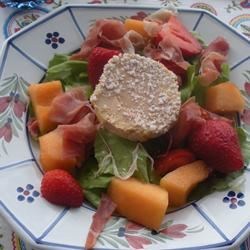
And then my friend and I head to a restaurant for lunch. We have tried many different ones over the years, but we still have our favorites. At Café de St. Jean, we sit in the open air under the ramparts of the cathedral. One of my favorite dishes served there over the years was a foie gras salad with strawberries, which I am always pleased to make at home.

Salde de Foie Gras

Always there is a new restaurant to try, once a quiche café, once a seafood restaurant. Then there was Le Devil, the tapas restaurant we visited for a book-launch one night! Perpignan is full of restaurants to explore. I also squeeze in a quick look through the fabulous Catalan store, Maison de Quinta and a shopping spree at the department store, Nouvelle Gallerie. We wander through the little streets, visit an antique store where we sometimes find antique Quimper dishes, and, of course, peer into the windows of our jewelers’ shop—he who made our wedding rings. The last stop is always the Belgian chocolate shop for an assortment of candies to take home to my family.

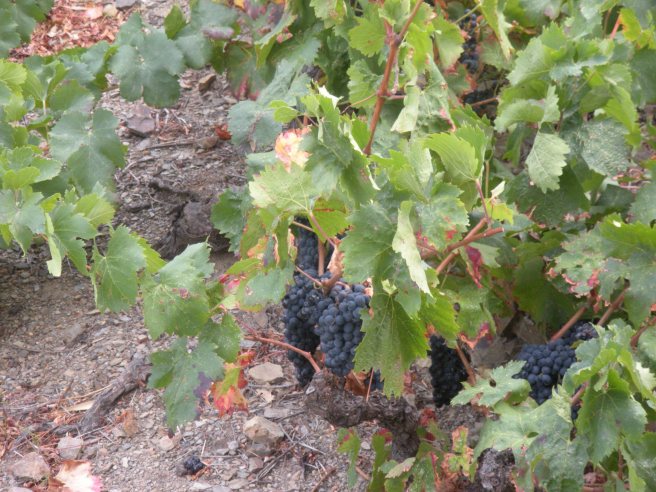
Having a husband who likes to pour over the annual Guide Hachette des Vins means that we frequently have a list of local wineries to visit and prized wines to try. They might be wineries in Banyuls or they might be further afield north to Maury or Cases de Pene or Tautavel or even on to Tavel.

vineyard grapes.JPG

We have had several wonderful wine-tasting experiences. Of course the usual one is at Chateau de Jau, where we have the dejeuner degustation, which is a luncheon with about nine wines to taste throughout the courses, served under a very large, old tree on an open-air patio. When it’s cold or rainy, blankets are passed around! The menu stays basically the same: fougasse with olives or bacon, pain au tomate and Serrano ham, lamb chops,


lamb chops at Jau.jpg

Catalan sausage, Roquefort cheese,

Roquefort at Jau.jpg

ice cream and cake (except one year when they experimented with orange rice pudding) and then coffee. We have been eating this meal there for about 25 years. The meats are grilled on an open fire of sarments (grape vines), and we eat beside a pool full of carp, which have grown to mammoth sizes over the years (due to diners feeding them their bread, and sometimes the sausage, by mistake!).

feeding carp.JPG

We have enjoyed tasting many of their wines over the years, but particularly the new vintages from their vineyards in Chile. When our daughter was small, she would enjoy wandering around the pond while we lingered over the wine and her father enjoyed all the Roquefort cheese for himself. When our daughter was about 14, the one of the owners told us very seriously that our daughter should be tasting the wines so she would learn what a to taste in a wine and would learn to respect wine as a pairing with food, not as just another alcoholic beverage.   So whenever we were in France, we let her taste the wines, and she learned very quickly. We realized very quickly that she was a “nose,” someone who can smell all the different nuances in a wine (much like a perfume “nose” is used in the perfume industry).   This made her tasting experiences so much more meaningful.

For a few years, Chateau de Jau also hosted an evening concert and dinner during the Tour de France Music Festival. We enjoyed hearing some wonderful British singers, as well as pianist, Clive Lythgoe, who used to be on the faculty of our daughter’s institute in the States. The concerts began about 8:30 p.m., then there was a break for dinner at 10 p.m., then the other half of the concert, which ended about 1:15 a.m., so we would get home about 2:30 a.m.   It is over an hour drive for us to get up to Cases de Pene.

Beside the restaurant (Le Grill) is a large building which has become an art gallery for annual summer shows of very esoteric and eclectic art. One of my favorite works of art was a completely flattened Citroen car, hung vertically on the end wall. The title was “Citroen Presse,” which is a play on words or a double entendre, as a citron presse is lemon squash, or what we Americans call lemonade! Another wonderful piece was a piano set up to play wine glasses of water, like a glass harmonica, instead of strings.

Their sister winery, Clos de Paulilles, which is situated just outside Banyuls, , offered evening wine-tasting meals, which we also enjoyed. Their menu included foie gras, Catalan chicken, manchego cheese, and a chocolate dessert. It was one of daughter’s favorite restaurants and where she often chose to eat for her name-day celebration. When she was very small, she collected pine needles from the tile floor and had a great time pretending that these needles were a family, while my husband and I enjoyed tasting all the wines. Those pine needles came home with us, carefully wrapped in a yellow paper napkin, “because they were a family and had to stay together.” Several years ago, during a cleaning spree, I found them, and I hadn’t the heart to throw them away! Clos de Paulilles is now owned by Domaine de Caze, so the meals are not the same, but it is still lovely to sit on the patio and enjoy the views of the sea.

While our daughter was involved in her summer camp, my husband and I often took the opportunity to explore other wineries. One of my favorite adventures was visiting the tiny village of Calce. My husband had been researching local wines and found that the whites from Calce that year were very good. So he directed me through many small roads and lanes and fields, and I thought we’d never find this place!   But finally we came upon the village we sought. We passed the winery just as we entered the village, but it looked closed, so we drove through the village and saw only two people—they were sitting on chairs outside their house, watching us go by. It was siesta time, so of course everything was closed. We returned to the winery and, by waiting a bit, were able to call someone and arrange a tasting.   They were delighted to sell their wine to Americans!

Another time we’d had our usual lovely meal in Montner at L’Auberge du Cellier and had enjoyed a local wine. Pierre-Louis sent us home by way of the village the wine came from, so we could buy some. There we found some workers along one of the village streets and by mentioning the name of the wine, we were able to find the right vintner. He took us into his garage, and there we tasted the wine again and bought a few bottles. It’s always an adventure, as some wines are made in very small establishments, like personal garages, and others come from cooperatives or from very large wineries. However, there is never a tasting fee, as you find in Napa Valley!

Last year we headed to a new winery, La Toupie, near Perpignan. I dutifully turned on the GPS in our lease car, and we soon found ourselves lost in a maze of streets within a new housing development. We call our GPS lady “Mabl” (Most Annoying British Lady), and she really does annoy us when she gets us lost, often when we’re up in the mountains where she thinks there are not any roads! But this time, we finally did find a sign for the winery and proceeded down a narrow driveway to a large gate. I timidly opened the gate and entered the back garden of a very nice house! But nothing ventured, nothing gained, so I continued past the swimming pool and up to the open back doors of the house, calling out as I went. Two teen-aged girls and their mother arrived and explained to me that the winery was actually in another town. She gave me their card and took my phone number. That evening, her husband called and we arranged a tasting at his winery the next day. He met us in the center of that village and we followed him up the hill to his new building. He’d only been in business a few years but already had won acclimations for several of his wines. And he’d worked in Napa Valley for a while, so could speak to us in English. But the best part was that he had plates of fresh bread and cheeses ready for our wine-tasting at a tiny café table with chairs. It was so elegant and private and the wine really was very good. What an enjoyable experience! We saved a bottle for New Year’s Eve, and when I sent a photo of my husband with this wine to my friend in Banyuls, she responded with a photo of her husband with the same wine, which they also had for New Year’s Eve!

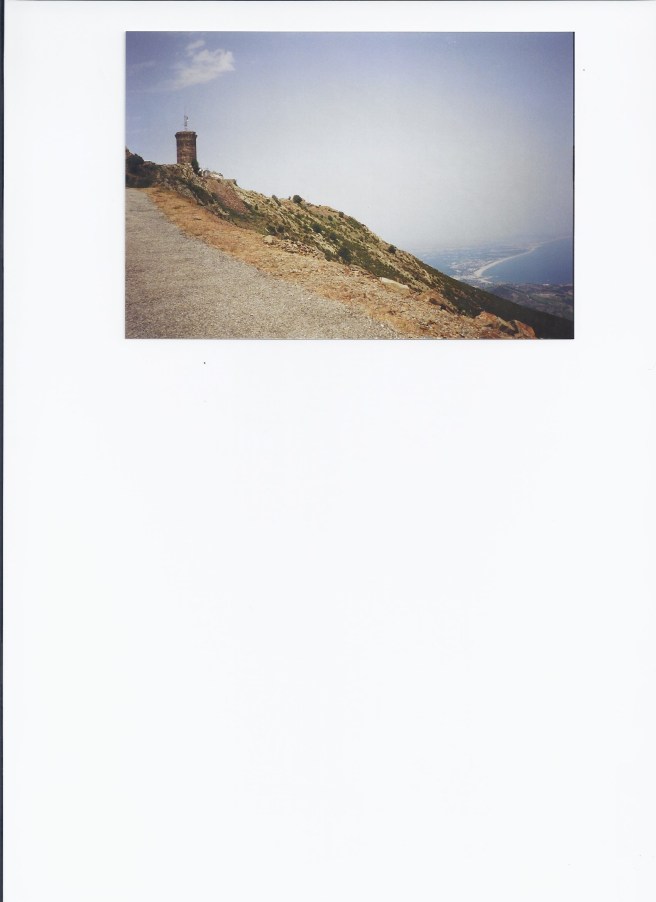
As our daughter grew, I decided that we needed to explore something different every year. It became a groaning joke of what would mother drag us to this year! Sometimes it was simply a drive up to the top of the mountain behind Banyuls to visit the Tour de Madeloc, the watchtower overlooking our part of the coast.

tour de madeloc.jpg

This is a one-lane winding road that is best driven after a wine tasting at the large Templiers winery on the way up! Meeting a car coming down when you are going up, with a stony hill on one side of the car and the steep cliff down on the other side (remember we’re talking ONE-lane here), takes a lot of Dutch courage!

road up to madeloc.jpg

But the views from on top are fantastic and well worth the nail-biting drive up the mountain.

We got to the butterfly exhibit in Elne when it first opened (before they realized that dogs should really NOT be permitted inside the butterfly house!), we visited the ramparts and caves of Villefranche de Conflent, where my daughter and I sang in one of the circular rooms of the towers to test the wonderful acoustics! We took a trip on Le Petit Train Jaune, a tourist train up to the edge of Andorra, and we went to Carcassone several times to visit the walled city, which can be seen from the autoroute as you travel north.

carcassone from autoroute.jpg

Carcassone is a rebuilt ancient city (rebuilt in the 19th century), which is often described by the French as very Disneyesque. It is full of boutiques and knight-themed exhibits. In the summer, it is quite a lively place, particular for children. One time we went to a restaurant for lunch and had a lovely luncheon on an open patio, where chickens wandered around our feet!

carcassone gate.jpg

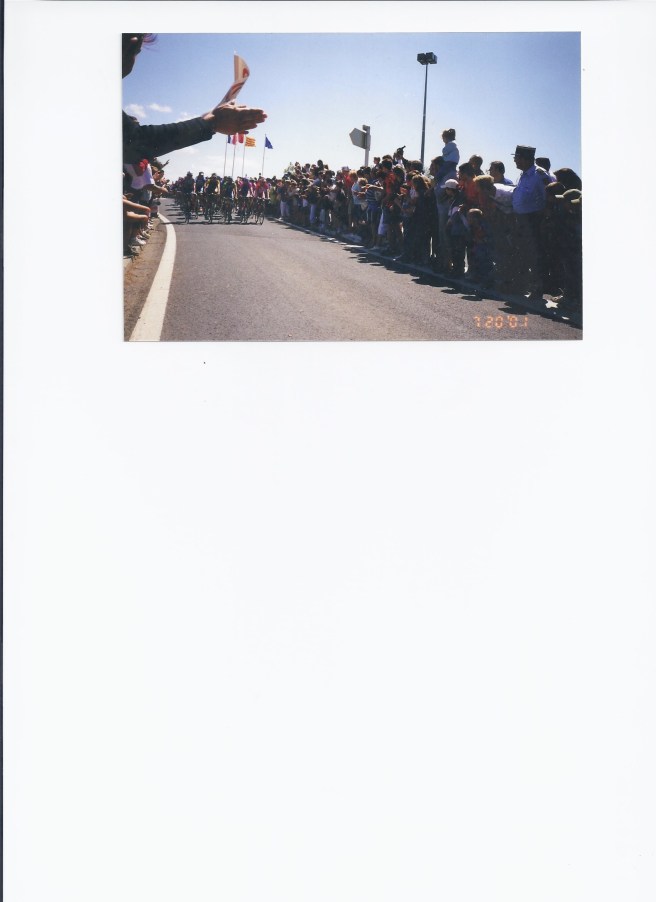
In 2001 a leg of the Tour de France cycling race left Perpignan, headed to Ax les Termes, up in the mountains. We decided this was an opportunity not to be missed, even though the tramontane had been blowing all day, so we drove up toward Marquixanes, near Eus, which was along the route. But we got no further than Thuir, because the road was closed for the race. We finally found a place to park in Thuir, with difficulty, as hundreds of people were there to line the route. Then we stood for two hours in the wind, waiting and waiting, while the parade of sponsor cars came by, throwing gifts to the spectators: flags, coffee, candies, toys. At long last we saw the cyclists, all in a group, then “whoosh!” In 10 seconds they were past us and on their way. I’m not sure my family ever forgave me for having them stand in the tramontane wind for two hours, for ten seconds of “whoosh!,” but it’s an experience they have never forgotten!

tour de france.jpg

This was the year I also dragged them to Peyrepetouse, a Cahors castle in the Aude. It had been a trip recommended by a friend, and since we’d not visited any of the many Cahors castles in the area, we decided this was a chance to see one. First we had a lovely lunch at Auberge du Vieux Moulin, where we ate under a huge weeping willow tree, then a visit to the source d’amoureux (a water spring with magical powers for lovers).

Moulin restaurant-Pyerepetouse.jpg

We then drove up toward the castle as far as we were permitted, paid an entrance fee, and then had a 20 minute climb of very hard walking over slippery rocks up to the fortification. Once we got there, it was all climbing up and down and, did I mention that it was an extremely hot day? We never did get to see the newer part of the castle as we were too hot and tired by then. Our plan for continuing on to Queribus, another Cathar castle, was quickly scrapped, and we returned home to a long rest.

Peyrepetouse.jpg

And then there were the trips up to Les Angles in the mountains. Les Angles, a twin village of Banyuls, is a small ski resort town of about 50 habitants. There is an ice skating rink there. and this was important at one stage of our daughter’s life, as she was taking skating lessons during junior and senior high school. We had tried a skating rink in Bompas, near Perpignan, but this had been a bit of a disaster. I should have realized something was odd when there was a fan going as we walked in. No need for our sweatshirts, as the “ice” was wax! “How do you skate on this stuff?” I asked the attendant.   “It will warm up after you skate on it for a while,” he answered. “Just tell her to keep skating around the rink!” Hah! No chance of practicing fancy footwork, then! So we took her up to Les Angles several years, spending the week-end to allow her a few days of skating on real ice. The first time we visited, I dragged the family to the nearby animal park. We trekked along the 3.5 km footpath to see the animals amongst the trees. It took two hours to complete the circuit. Unfortunately, it was very foggy that morning and we saw mostly only shadows through the trees!

Our other ritual trip was up to Andorra, the tiny country nestled in the Pyrenees between France and Spain. That is a four-hour trip up mountain roads, through very twisty roads, which we named the “small intestine” and the “big intestine,” because that is what they looked like on the map, then over the border at Pas de la Casa (a shopping mecca), and through the narrow valley of Andorra to the capital, Andorra la Vella. By 1999, they had built a long tunnel through the mountains in order to eliminate the “large intestine.” We were very happy this was done, but one year when we went through this tunnel, we arrived at the other end in a thick cloud where we could not see the road at all! It’s really scary when you can’t see the edge of the road as it winds it’s way up and down the mountains! They are not big on edge-of-road barriers! The cloud lasted all the way through Pas de la Casa, where we couldn’t see the town at all.

Because Andorra la Vella is squeezed between the mountains, we would drive in on one street, park the car in a garage, then take an elevator down several floors and exit on the adjacent street. We had fun shopping, mostly at a jewelers’ , which added Lladro figurines to our expanding collection. At the end of the week-end, we would return to Banyuls with our daughter smushed into a tiny corner of the back seat of the car, practically buried in Lladro boxes—one year she had, literally, 4 inches of space. That is what she remembers most about Andorra!

About ten years ago, our friends in Banyuls asked us what route we usually took to get to Spain. We had two alternate routes: one inland and across the frontier on the autoroute and the other one down the coast on the winding road along the cliffs above the sea. They asked, “Why not go through the Col de Banyuls?” I asked about the kind of road this was and where it went. “Oh, it’s very easy! In 20 minutes you are in Spain! Just follow on out this road and keep going. You’ll have one section of the road that is kind of rough, and then there are some sharp turns, but always you climb up to the top, which is the border between France and Spain. We do it all the time!”

It was through the Col de Banyuls that many refugees escaped France during World War II, some hiding in the bottom of carts full of manure that were being wheeled up the mountain for the vineyards. The Resistance was very active in Banyuls and many of the older generation still have stories to tell. The Col was also the sight of numerous battles between the French and Spanish over the centuries, and a very large painting of one such battle hangs in the town hall.

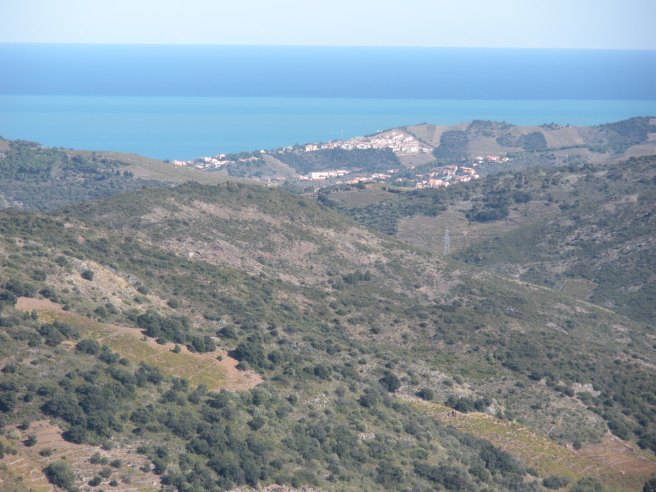
So one day we decided to give the Col de Banyuls a try. When we got to the “kind of rough” spot, we found that it was like a dry river bed covered with boulders of rock! I don’t know how the car survived going over that patch, but then we had the hairpin turns to look forward to! There are five hairpin turns on the French side, always climbing and often only one-lane until you arrive at the top, where many tourists stop for photos of the views (and often the customs officers are there to inspect the trunk of your car!).

View from Col de Banyuls.JPG

Then one last hair-pin turn and down you go on the Spanish side, over five cattle grates until you arrive, going through a very narrow “luge-run,” into the village of Espolla. Whew! By the time we arrived back in Banyuls the following year, the road on the Spanish side had been resurfaced and the “rough patch” on the French side had been filled in. Since then, we have used this route into Spain whenever we go down for a bit of shopping or sight-seeing in Figueres, and even to head back to Barcelona, as we can pick up the autopista in Figueres.

Last year when we arrived in Barcelona, we picked up our lease car and headed north, as usual. When we got to the top of the Col and headed down into France and around the five hairpin turns, we suddenly realized that we’d forgotten that there had been torrential rains and floods the previous Fall. The road was almost completely washed out! It took a long time to drive over the rough surfaces at very slow speeds before we got into town. So we’ll forgo our shortcut to Spain until the road is all repaired again.

Because Spain is close to our village, we are often traveling over the border for shopping or for eating at favorite restaurants. The opening of the borders between countries in Europe, and the institution of the euro as a common currency, has made it easy to go back and forth, much as we do between States in the US. Although, I must note, that custom police still patrol NEAR the borders. Once, when returning from Andorra, we were stopped by customs just a few kilometers into France. I kept asking the officer if he wanted to see our passports, but no, he just wanted to see what was in our trunk. When he started fussing about the bottles of alcohol we were bringing into France, stating that only so many liters was allowed to be imported into the country, I asked him, yet again, if he didn’t want to see our passports. “No, madame, it’s not necessary, but you cannot bring all of this into France.” At this point, my husband jumped out of the car and explained in halting French that we were Americans and that it was all going to the US. “Oh, then, monsieur, no problem!” Apparently, (according to my husband) my French was too good—the officer didn’t realize we were Americans!

Our adventures in Spain have many and varied, and did not always turn out so delightfully, and for that reason they deserve a chapter all their own.

Salade de Foie Gras

Salade de Foie Gras

  • Prep 15 min.

“Source: Cafe St. Jean, Perpignan”

Ingredients

  • lettuce
  • melon or cantaloupe, cut in chunks
  • strawberries, halved
  • tomatoes, cut in chunks
  • foie gras, sliced
  • serrano ham, sliced
  • gros sel/kosher salt (or sea salt)
  • vinaigrette

Directions

  1. Tear lettuce into pieces and add vinaigrette.
  2. Place lettuce on each individual plate.
  3. Top with fruit and tomatoes.
  4. Add slices of ham.
  5. Top with a slice of foie gras encrusted in gros sel (Kosher salt).