13. Memorable Moments

We have had many memorable moments in Banyuls over the years, making new friends, sharing good wine, celebrating American and French holidays together.
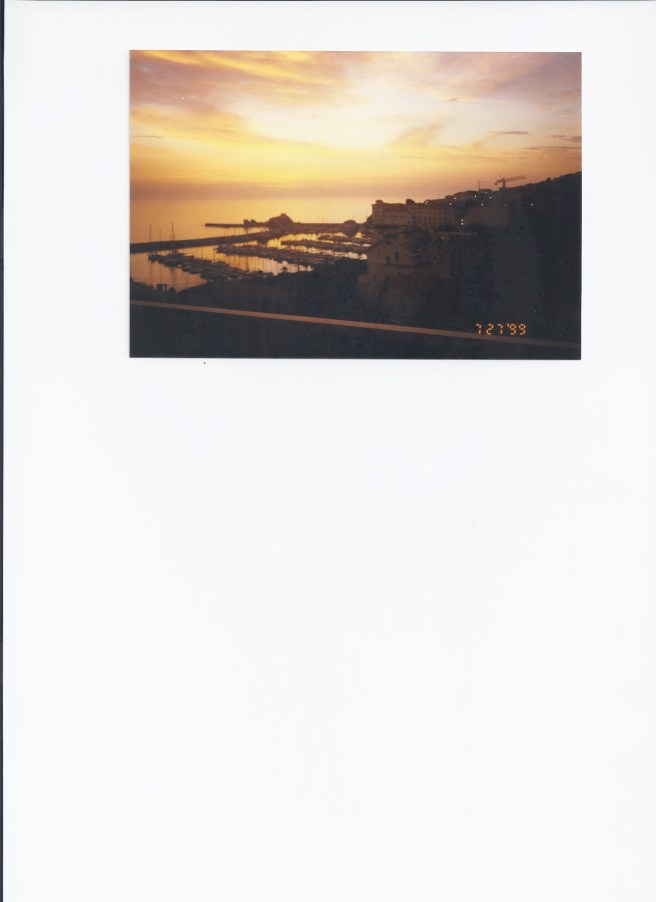
sunrise copy

But one of the first village favorite moments was our first Catalan fest in 1986. Every summer the Catalan villages from both sides of the border get together for a day of celebration of all things Catalan, mostly food, music, dancing the sardana and crafts. That July day, we headed downtown about 10:30 a.m. to hear the speeches made by our mayor and the visiting majors from neighboring Catalan villages, both in France and in Spain. This was followed by the castellars, who are acrobats that form human towers right on the street. They climb upon each others’ shoulders, making a tower, with a young child climbing up to the top! This was very new to us, and I kept thinking about all the safety nets and harnesses they would have been required to have in the US.

By 1:30 p.m. two HUGE paella pans were cooking paella on the plaza behind city hall, just outside the post office. Tables were set all up and down the street that runs beside city hall, effectively closing off traffic for the afternoon. For 25 francs each (about $2.50 back then), we had a lovely meal of bread, wine, seafood paella and dessert. It was our first feeling of inclusion by the villagers, who welcomed us as one of their own.
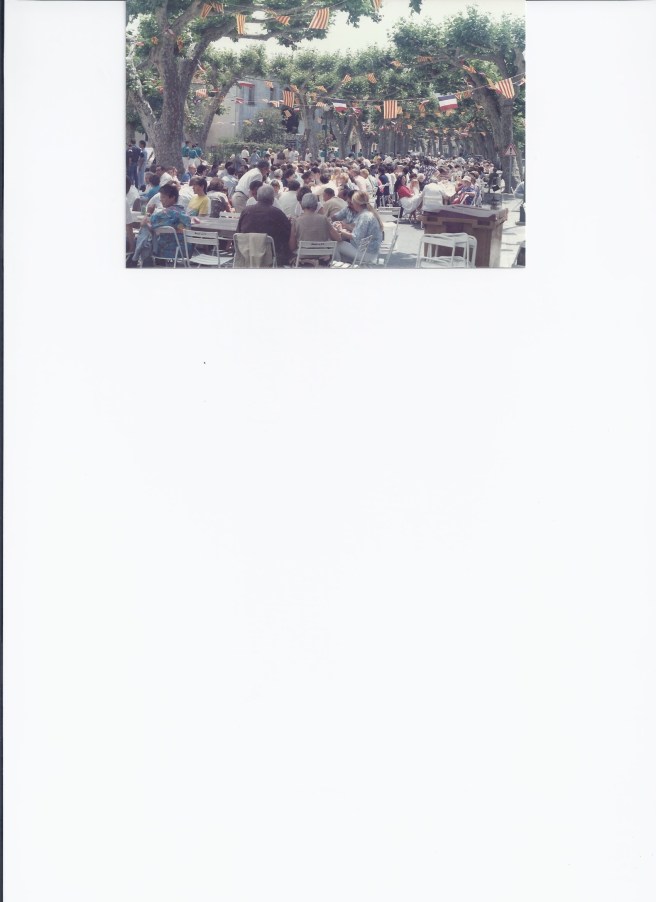
first Catalan fest

Later we danced on our balcony to the music that floated up to us from the square. Amidst all the repairs and renovations we were doing at this time in our lives, our first Catalan fest was a spot of conviviality and feeling of warmth from the village, which we relished.
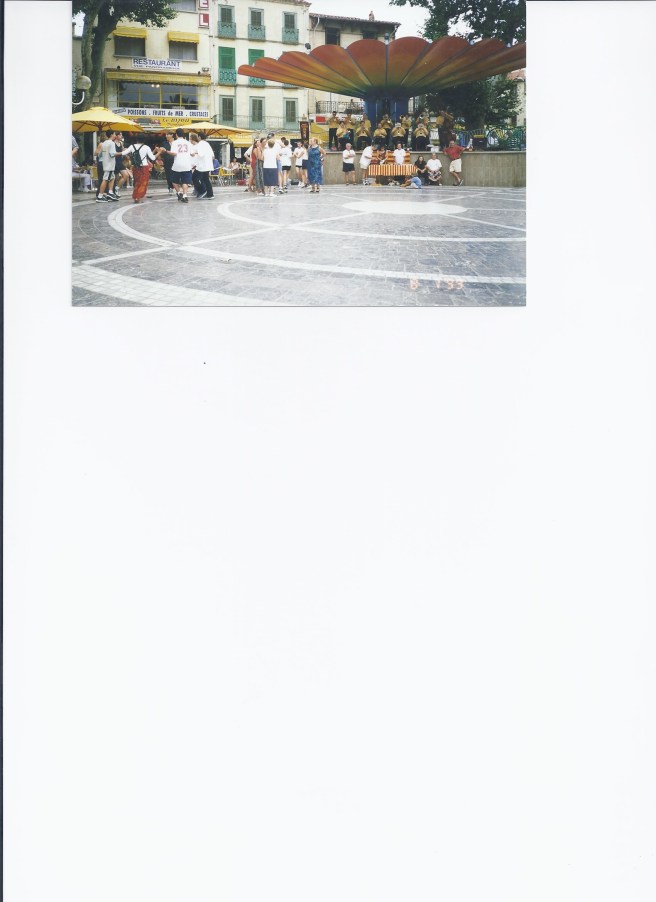
Catalan fest-place.jpg

Racing for a Win

One of my personal favorite moments was watching our young daughter beat the French boys in a swimming race! After she turned 12, she was encouraged to try a sailing class, as she was really too old to continue at Centre Aere, the village’s summer camp. Before the children were allowed to go out in the sailboats, they had to pass a swimming test by swimming a distance along the shoreline, while wearing lifejackets.   The boys in the class were all quite shocked that our daughter, whom they assumed was deaf or dumb because she didn’t speak French to them, beat them soundly in this race. I had to take a photo of the finish as she never would have believed it—and still doesn’t!  After that, she was treated like a princess by the boys!

Anne wins the race.jpg

Concerts

We have attended many wonderful concerts, some of which have been mentioned in previous stories. Two of our favorites were part of the annual Casals Music Festival and took place in the tiny hill village of Eus, west of Perpignan. In 1999, when our friend and her teen-aged daughter visited us, we attended the performance of two American musicians, Paul Bliss and Marian Fried. As it turned out, they used to live in our hometown in Ohio and knew lots of our musician friends. In fact, they had been hired at our university by our friend’s father, who, at that time, was head of the music department! What a small world!

Fried and Bliss.jpg

The following year, we were back in Eus for a concert by a group of eight bassists, called “The Geatles.” We arrived early so that we ended up with front row seats. They were the best bassists I had heard in a long time and were very entertaining. They were absolutely superb as they switched easily from Bach to Elgar to the Beatles to Haydn to wild, crazy stuff. They really showed the full versatility of their instruments. I remember that concert with a smile, because of all the fun they had playing together and entertaining us. Luckily we bought their CD, which they all signed, and can relive those memories whenever we please.

The Geatles.jpg

That year, we also attended a cello concert at St. Michel de Cuxa, another of the Casals Festival venues. Cellist Frans Helmerson ended the concert by playing Casals’ “Song of the Birds” accompanied by 29 cellists. At the demand of the audience, they repeated their performance. Fabulous and spine-chilling!

50th Anniversary Party in Cerbere

In July 1999, we were invited to the 50th anniversary party of our friends’ hotel in Cerbere. So at 9:45 p.m. we drove the winding road down to Cerbere to help celebrate this milestone. The chef had prepared a six-layer tower cake topped by Roman candles!

Dorade anniversary cake.jpg

Our friends had to open the awning roof before lighting the candles!
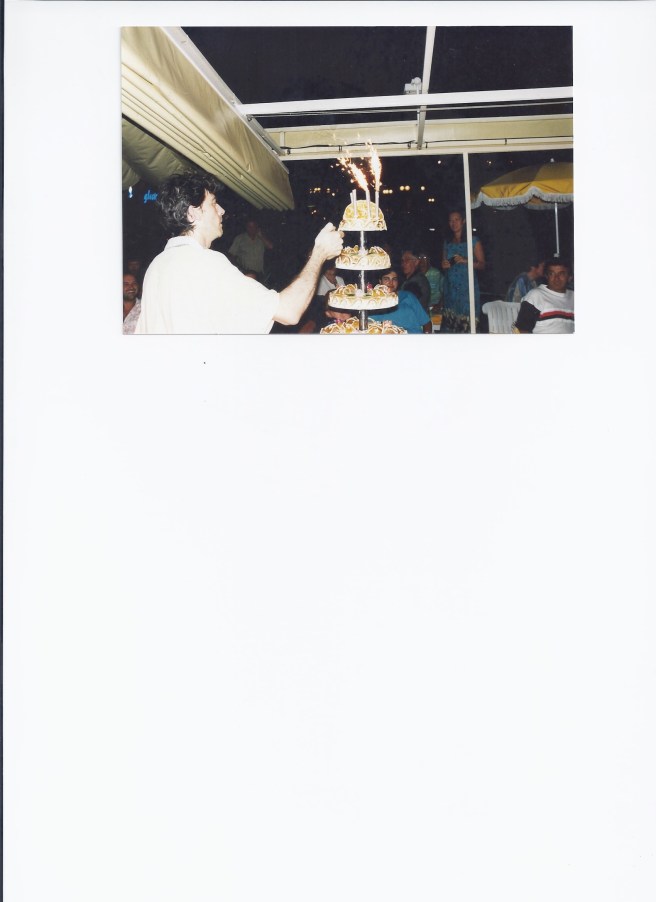
lighting the Dorade cake

We enjoyed a few hours visiting with the patron and his family and met a Swedish couple who had been coming to Cerbere for over ten years. When we left, the patron’s son, who now runs the hotel, gave us a fancy bottle of Banyuls wine and set of glasses. We were so pleased to be able to share this celebration with such good friends.

Coince!

Our apartment building has two elevators, one in either corner of the building. They are single-minded elevators, which means that they do not take multiple orders for stopping at the different levels. If you want to go to level 2 and your friend wants to go to level 0, the elevator will go to whichever floor’s button is pushed first, as it only takes one command at a time. We squeeze ourselves and groceries into these tiny elevators several times a week, and when we arrive with lots of luggage, the luggage and one person goes up the elevator while the other climbs the stairs.   There’s just not enough room in these tiny metal boxes for very much stuff.

On Memorial Day a couple years ago, at the end of the day, I took the trash and recycle stuff down the elevator to the basement of the building. After putting the trash in the trash bin and the recycle in the yellow recycle bin, I got back into the elevator to come up to our apartment. The doors closed, but the elevator did not move! I was coince (trapped)! After banging on the doors and pushing them apart, then back together, the elevator came up part way. After more banging and pushing on the doors, it finally came up to the second floor, but then the doors would not open for a while. I was getting really panicky by then, locked in that tiny box! Finally they opened and I got out! I had pushed the alarm button several times, but our neighbor, who is our resident “go-to” guy, was out of town, as were our other neighbors, and by the time my husband heard the siren, and had started down the stairs to find me, I was out of the elevator! It probably was only a few minutes that I was locked in that tiny metal box, but to me it seemed like hours! So we flipped the switch in the elevator to stop it, and I put “out of service” signs on all the elevator doors (all six floors!), then wrote emails to several neighbors to let them know of my experience.   Then I had a stiff drink! When our neighbor returned, he had a repairman check the elevator. He said that he always carries his cell phone with him when he uses the elevator, so he can call if he gets stuck. I told him I didn’t think I needed a phone to take the garbage down! He then reminded me that next year we were to have new elevators installed; these would have a phone in them “as well as a large mirror, so women could fix their make-up.”   Well….they do now have a large mirror, but no phone, and they now announce everything they are doing: “On descende” “On monte” “deuxieme etage,” in an annoying voice.

So this was a terrifying experience, not so much a favorite moment, but it happened on Memorial Day, so I guess it was memorable.

Fish Encounters

One year, when our daughter was ten, we went up to Canet Plage one morning to enjoy the lovely, and very long, white sand beach. This beach is more like we encounter in the US along the Atlantic coast, both in New Jersey and in Florida. While the beach in Banyuls is gravel, the beach at Canet is lovely white sand. Our daughter has enjoyed being buried up to her chin in the sand, until the sand fleas begin to bite, that is.

This particular day, the wind was down, so Canet seemed a good choice (when it’s windy, your legs get sand-blasted). By 9:30 a.m. the parking places were almost all filled, but we found one spot. The sand was lovely and warm, but not burning hot. I went into the water with our daughter. Within ten seconds, I had stepped on something that stung! I quickly backed out of the water and sat on the beach, wondering what I had stepped on! As I sat on the sand, the pain got worse. By then my husband and daughter were in the water together and far from our mats and towels, completely oblivious to my pain. So I tried to go for help, hobbling and limping through the deep sand up the beach to the children’s play area. The man in charge there directed me to a pharmacy up on the street level. It was too far and painful for me to walk all the way back to the mats to tell my family where I was going, so I had to stand there and wait for them to get out of the water and notice I was no longer there. By walking partway back and yelling and waving my arms, I finally attracted the attention of my daughter, who ran over to me and helped me to limp up to the pharmacy, which was quite a distance! There, a nice girl sat me on a chair and held a huge wad of cotton fluff soaked in ammonia on my foot for five minutes. Then she applied a white cream and said it should be better in an hour. She said I had stepped on a “vive,” a flat fish that buries itself in the sand and stings its predators, like me, apparently. After that experience, I wear water shoes on ALL the beaches!

Last year, my daughter and a college friend decided to visit Banyuls for a week, after traveling around Italy for a week of vacation, so I decided to plan a day at the local spa as a nice surprise for them.

One day, my husband and I went to the spa to check it out. Besides massages and relaxing classes, a sauna, restaurant, and a pool, the spa offers fish massages! I had never seen this before, but decided this was just the right kind of exotic experience the girls would need.   You stick your feet into a tank of water and tiny fish nibble away all the dead skin on your feet and legs! I first took my step-daughter for a fish massage to try it out before booking the spa day for my daughter and her friend. We had a lot of fun, sitting on the bench with our feet in the tub of water, watching the fish eat away at our feet and ankles. It tickles for the first five minutes, but then you get used to it, and after 20 or 30 minutes, you have nice smooth feet! The tank is right out in the lobby of the spa, so other people were stopping constantly, watching in fascination and asking us questions. We all enjoyed that new experience!
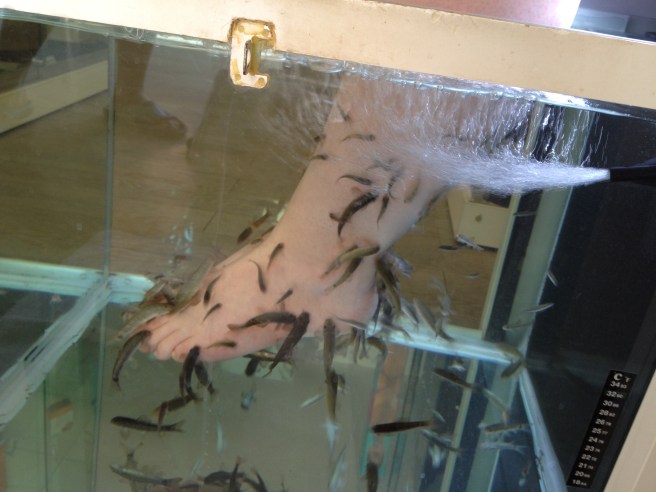
fish pedicure.JPG

Boy Scouts’ 100th

In 2007, the Boy Scouts celebrated their 100th birthday. As a former scout, my husband wanted to be part of this celebration. We had read about the celebration planned by local scouts, so early one morning we drove up to Perpignan for an 8 a.m. service at the Monastere de Ste. Claire.  The church was filled with scouts and their families and friends. It was a very moving service and included the reciting of the Boy Scout pledge and other traditional customs, all in French, of course. Afterwards we went to the garden for petit dejeuner (breakfast) of juice, wine, breads and cookies. We met lots of people who all seemed pleased to have us there, particularly when they heard that my husband had attended the Boy Scout Jamboreee in Paris in 1947. One of the guests at the celebration had also been at this jamboree!

USS Avenger Visit

But the most significant event of our 30 years in Banyuls was the arrival in July 1991 of the USS Avenger.   This minesweeper had been in the Middle East during the Gulf War, and was on its way home after a year of deployment. So for the 4th of July, the Avenger came into the port of Port Vendres, our neighboring village, for several days to celebrate the American holiday. My best friend was enlisted to organize a picnic for the officers of the ship and to do all the translations for the ceremonies in Port Vendres and in Banyuls. So we few Americans in town were also enlisted to help with the picnic. I made a large bowl of cole slaw and baked a pot beans all night long, then opened six cans of Green Giant corn to heat up. (Fresh corn is only recently being seen in the markets of France and it is always, always seen with wrinkled kernels. The best option is to purchase canned corn!) Our friends bought pre-formed hamburger patties (rather unusual in France back in 1991) to cook on the grill. Then we helped decorate the campground pavilion in Banyuls with yellow ribbons on all the posts and trees and put American flags on the tables.
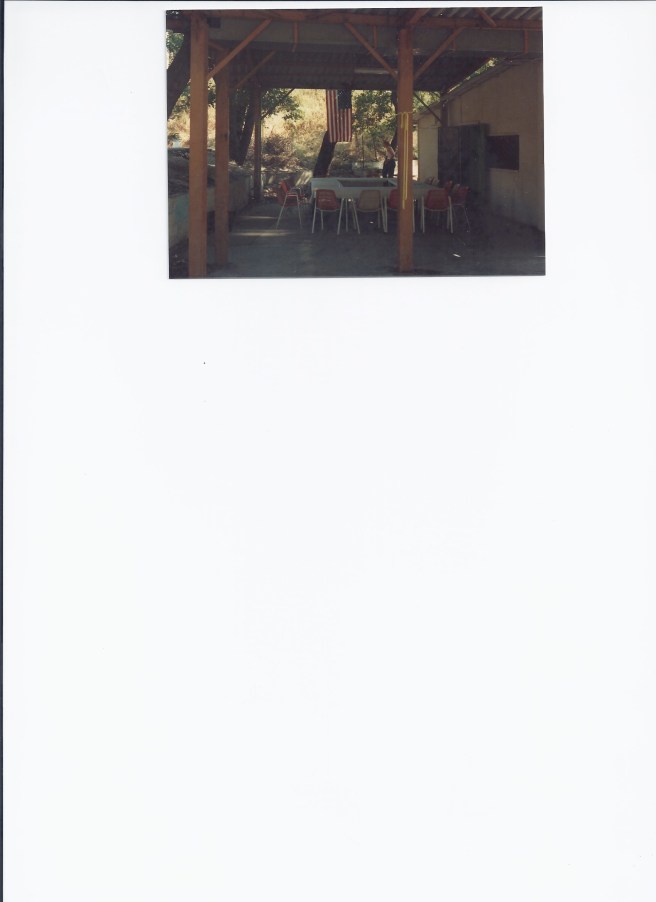
campground picnic.jpg

About ten officers arrived around 11 a.m. and we served them hamburgers, baked beans, cole slaw, lentil salad, potato salad, corn, lettuce, tomatoes, onions, chips, munchies, watermelon and peanut butter cookies—a little taste of home. After our picnic, we took them to the large winery in Banyuls for a tour, and then we all went to Port Vendres for a look at the ship and a ceremony at the American Revolutionary War monument.

4 July in PV

This was followed by a cocktail party at Club Nautique in Port Vendres, where the captain was shown how to drink from a porron (see “Adventures and Misadventures in Spain”).   Our three-year old daughter sat on a bar stool, singing “Itsy Bitsy Spider” and “Mary Had a Little Lamb” with the sailors, who all fell in love with her.
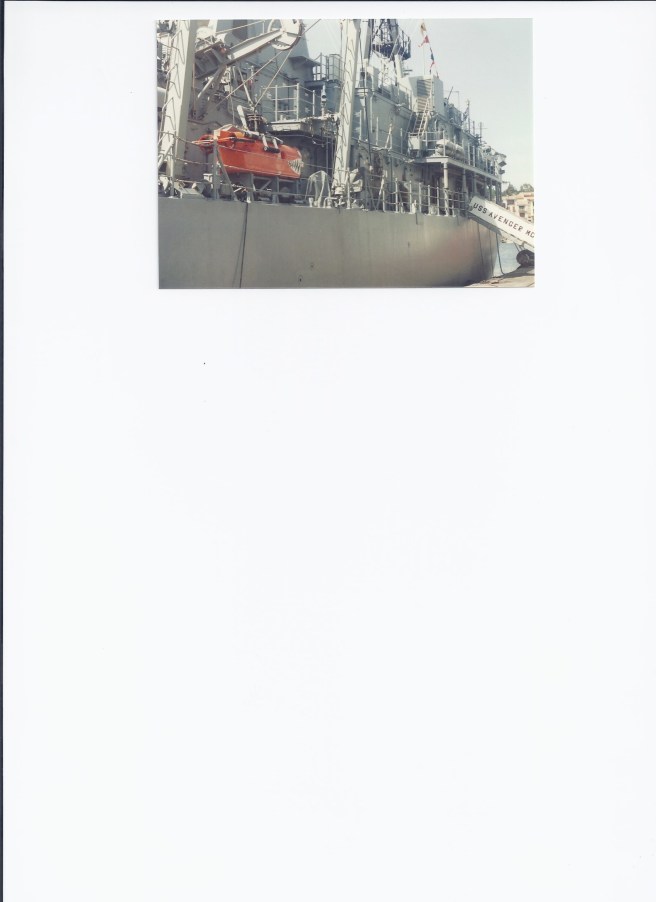
USS Avenger.jpg

After this, we returned to the ship for a thorough tour of this minesweeper (we were given USS Avenger caps, which I still wear proudly on the 4th of July), after which we took the captain and five other officers up to Argeles for tapas and authentic gypsy flamenco in one of the cafes.   We got home at 2 a.m.! Our daughter became very attached to one of the officers

Anne and Bill.jpg

and enjoyed being carried through town by the captain.
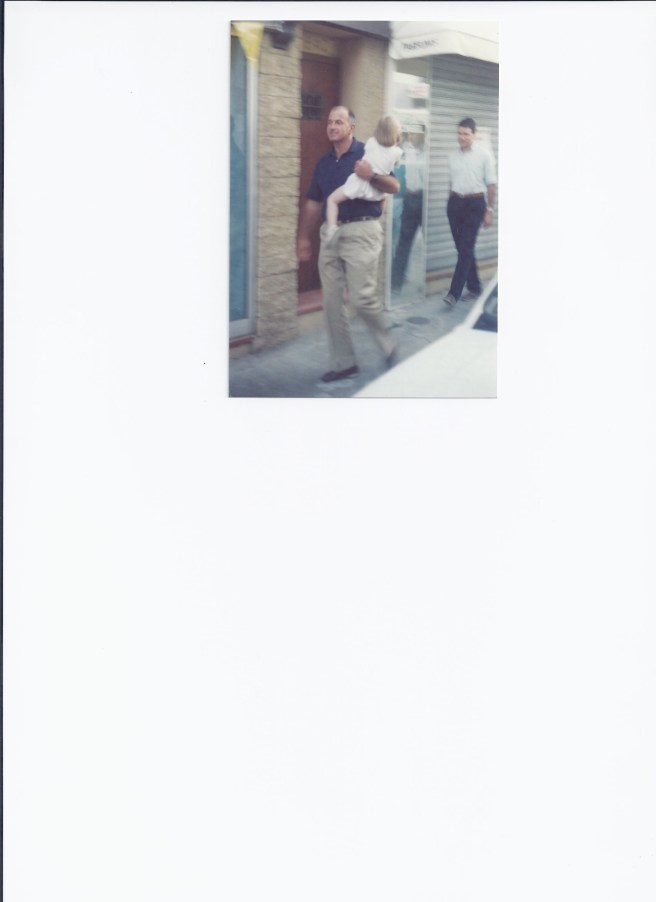
Capt. Cope and Anne.jpg

These fellows were really missing their families and anxious to get home to them. We were glad to be able to give them a little reminder of home as they headed back across the ocean.

Christmas for the Millennium

For the millennium, we decided to spend Christmas and New Year’s in Banyuls. This was an experience not to be missed. In addition to our favorite shopping trip for a tree (“Out and About”), we had wonderful meals with friends, sharing our Swedish Christmas with French friends and their Icelandic relative, and sharing an English Christmas dinner with the family from Cerbere.

We flew into Paris and took the train down to Banyuls. By now our daughter was 12 years old, so was no longer permitted to share a wagon lit bedroom with us. So, in order to stay together, we had to book a couchette, which is then shared with strangers—not the ideal.

When we arrived in Banyuls, we walked down through the quiet village and up our hill on the other side. It was fun to see the lights decorating the trees and the new stage with multi-colored shell overhead on the square. There was even a Christmas tree on the square, but only lights on it from half way up to the top! Typical for that time of year, the tramontane wind was very strong and cold.

After picking up a rental car in Perpignan the following day, we went to Auchan, one of the large grocery stores in Perpignan, and bought what we would need for our Christmas celebration, plus our daughter’s surprise present: our first TV. It was then we discovered that there is an annual tax to pay if you own a TV! Every year we receive a form from the government asking us if we still have a TV, so that they can add the TV tax to one of our annual tax bills.

We found our wonderful $5 tree on the 21st of December, and our daughter then spent about three hours making tree ornaments to add to those that had come with the tree.

tree and bookcase.jpg

The following day, we drove up to Toulouse, a 2-hour drive, to shop at Ikea for items for our Swedish Christmas. I was able to buy a Julbock (Christmas straw goat), some tomtes, herring, and lingonberry jam. The next two days were spent in the kitchen making syllta, Swedish meatballs, red cabbage, ham, cookies, cake for a Buche de Noel, salmon, and all the rest of our traditional foods for our Swedish smorgasbord. One of the bars downtown was owned by a Swedish family that year, and also was decorated with lots of tomtes.   We enjoyed a nice hot glass of glogg with the owners one cold evening. I think they were pleased to find someone who appreciated the Swedish Christmas customs.

On Christmas Eve, our French friends arrived for Swedish Christmas with their Icelandic “granddaughter,” just as Pere Noel arrived on the beach below us by Catalan barque, all lit up with lights and torches. He landed under the arcade and created a lot of excitement for the village children.

For our Swedish Christmas we all started with glogg and hors d’oeuvres of salmon mousse, anchovy paste, and boursin with hardbread and toasts. Then we went to the table for the first few courses of shrimp, herring, anchovies and sardines, salmon, and syltta.
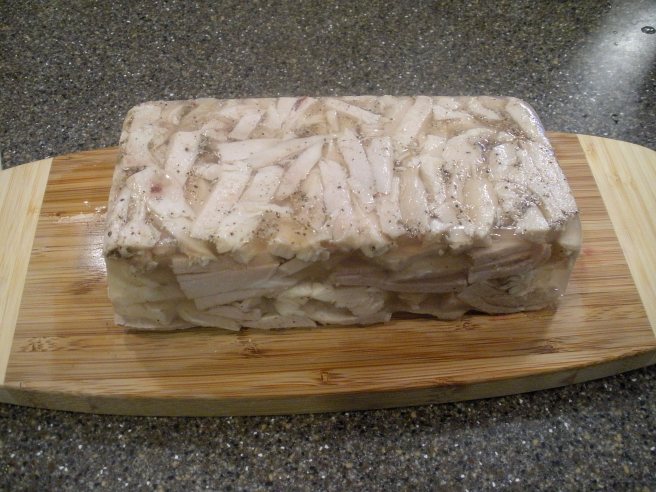
syltta unmolded.JPG

Then we had the buffet of ham, Janssons Frestelse, beans, red cabbage and apples, meatballs, and cheese. We ended with the traditional French dessert of Buche de Noel. The tomte had come and left little packages for everyone, after which I played the Swedish Hymn, and then it was officially Christmas.

About 10:30 p.m. we all drove down to the village church for Christmas mass.  The priest headed the procession, carrying the baby Jesus into the church and placing him in the crèche. He was followed by about 20 children dressed as angels and in Catalan costumes; they stood or sat around the crèche. We sang several familiar carols in French and in the middle of mass, the children danced a Catalan dance and everyone clapped along. It was an unusual church service, but full of joy, and it lasted exactly one hour.

Christmas morning was special because all the presents were small—they’d had to fit into our suitcases!—except for the bookcase my husband had made for me and the really big box that had been intriguing our daughter for several days.

TV.jpg

She was so surprised in opening it to find a TV! She spent most of the day exploring the different French shows that were available, learning quickly that French TV shows never start on time!

Two days later, our Cerbere friends and their two small children arrived for our Christmas dinner. We had brought a frozen turkey with us from the US. It was only 12# because that is all that would fit into the suitcase, but to them, it was humongous! For this dinner, we did our usual roast turkey with oyster stuffing and chestnut stuffing, mashed potatoes, sweet potatoes, brussels sprouts, carrots, then pumpkin pie and Christmas pudding with custard. It was an unusual dinner for them, and I remember that the children did not eat too much, but enjoyed the dessert!

On New Year’s Eve, the entire village was invited to gather on the beach in early afternoon for a millennium photo. All the children sat on the sand and the older people sat on chairs. It took about an hour to get everyone ready, so it was a lot of standing around just waiting. But we’re very glad to have a copy to hang on our wall to remind us that we belong to this small village on the French coast of the Mediterranean.

beach millennium photo.jpg

Later we dressed up in our party clothes and attended an aperatif for a free glass of Banyuls wine served to everyone by the municipal police.

By early afternoon we began to watch the millennium on TV as it traveled around the world. This was broadcast on a Spanish station. It was really wonderful to see how each country celebrated. We had Pitt Island at 1 p.m., New Zealand at 2 p.m., Japan, China, Indonesia, India, South Africa, Russia, Egypt, Greece, Sweden, Finland, Norway, Germany, etc. At 11:30 p.m. we switched to a French station and began the Paris countdown—the most fabulous display of all. It involved three ferris wheels of acrobats and pictures, and then the Eiffel Tower exploded stage by stage—wonderful!

At midnight our daughter hit her “crystal” ball with a hammer to open the surprises inside and we shared a bottle of Moet-Perrier 1990 champange. Thus the new year and the new millennium arrived for us in Banyuls. We had celebrated the dawn of the new millennium in our little bit of paradise.

sunset-last.jpg

Seafood Paella

Seafood Paella

  • Prep 20 min.

  • Cook 35 min.

“Paella without the chicken or meat”

Ingredients

  • 2-1/4 c. seafood broth
  • large pinch of saffron threads, slightly ground in mortar
  • 1 T. Pastis
  • 3 T. olive oil (2+1)
  • 12 raw, peeled and de-veined shrimp
  • 2 calamar tubes (encornets), sliced crosswise into rings
  • 2 T. chopped tentacles from the squid
  • 1/2 onion, minced
  • 4 mini red bell peppers, sliced crosswise in rings (or 1/2 large red bell pepper, diced)
  • 2 cloves garlic, minced
  • 2 fresh tomatoes, diced
  • 1/2 t. dried thyme
  • 1 T. fresh parsley, chopped
  • 1 T. fennel fronds, chopped
  • sea salt and fresh ground pepper to taste
  • 1 c. Arborio rice
  • 8 ou. fresh cod, cut in 1/2″ slices
  • 12 clams
  • 12 mussels
  • 1/2 c. frozen peas (optional)

Directions

  1. Preheat oven to 400 F.
  2. Heat broth in large saucepan. Add saffron and boil for 5 min. Add pastis. Set aside and keep warm.
  3. In paella pan, heat 2 T. oil. Add shrimp and calamar rings and saute until shrimp are golden. Remove from pan.
  4. Add onion to the paella pan and cook 3 min.
  5. Add 1 T. oil to the pan and saute bell peppers, 2 min.
  6. Add garlic and tomato and cook, 3 min.
  7. Add thyme, parsley and fennel, salt and pepper to taste and stir to blend.
  8. Stir in the rice and cook until juices are absorbed.
  9. Add broth and stir evenly. (Add peas, if using.) Boil 10 min. on the stove, until broth is half absorbed into the rice.
  10. Without stirring, tuck fish pieces, clams and mussels into the rice.
  11. On top, add tentacles, shrimp, and cod.
  12. Put into oven, uncovered, 25 min. until liquid is all absorbed.
  13. Rest, covered with a linen kitchen towel for 5 min. before serving.

Syllta

Syllta

  • Prep 30 min. and overnight

Recipe By:Swede
“Sliced cold dish for the Christmas buffet.”

Ingredients

  • 2 chicken breasts
  • 2# pork loin
  • 1 package unflavored gelatin
  • 1/4 c. cold water
  • 1 1/2 c. broth
  • salt and pepper

Directions

  1. Boil chicken and pork in salted water.
  2. Save the broth.
  3. Cool meat and broth.  This can be done overnight.  Then skim fat from the broth.
  4. Mix gelatin and water; add broth one T. at a time.
  5. Cut meat from bones and cut in 1″ strips.
  6. Put meat, salt and pepper in loaf pan, one layer at a time, repeating layers until full.
  7. Pour gelatin mixture over meat.
  8. Press with board weighted by bottle of water.
  9. Chill, pressed, overnight.
  10. Check gelatin to make sure it is molding.
  11. Unmold and slice with electric knife.
  12. Serve with vinegar and allspice or with cranberry relish.

Janssons Frestelse

Janssons Frestelse

  • Prep 30 min.

  • Cook 1 h

“Jannsons Temptation for the Christmas Eve luncheon buffet!”

Ingredients

  • 6 raw potatoes
  • 8-12 anchovies (Swedish whole anchovies in a jar)
  • 1 onion
  • pepper
  • 2 c. cream
  • butter and dry bread crumbs for the casserole

Directions

  1. Wash and pare potatoes.
  2. Cut into paper-thin slices or thin, narrow strips.
  3. Scrape bones and remove heads and tails from anchovies and cut into small pieces.
  4. Butter and crumb a baking dish.
  5. Place layer of potatoes, onions and pepper in dish, then anchovies.
  6. Alternate until used.
  7. Top layer should be potatoes.
  8. Pour cream over the top.
  9. Bake at 375 F. until top is delicately browned and potatoes are cooked.

Peanut Butter Cookies

Peanut Butter Cookies

Prep  15 min.
Cook  10 min.

Ingredients

  • 1 c. butter or shortening
  • 1 c. sugar
  • 1 c. brown sugar
  • 1 c. peanut butter
  • 2 eggs
  • 2 t. baking soda
  • 2 1/2 c. flour
  • 1/4 t. salt
  • 1/2 t. vanilla extract

Directions

  1. Cream butter and sugars.
  2. Add peanut butter and eggs.
  3. Mix dry ingredients and add to peanut butter mixture.
  4. Form into walnut-sized balls and press on cookie sheets with fork, making criss-cross patterns.
  5. Bake at 325 F. about 10 min. until done.

Cole Slaw

Cole Slaw

  • Prep 25 min.

Ingredients

  • 1 small head cabbage, grated
  • 2/3 c. mayonnaise
  • 2 T. tarragon vinegar
  • 2 T. sugar
  • 1 t. mustard
  • 1 t. celery seed
  • 1 medium carrot (grated)
  • 1 medium onion (grated)
  • milk or cream (if needed)

Directions

  1. Blend mayonnaise, vinegar, sugar, mustard and celery seed. Add to cabbage and carrots and onions.
  2. Add milk or cream, if needed.

12. Menus and Meals

The other day, I made poulet aux pruneaux (chicken with prunes), a Catalan recipe. I know it is Catalan because it includes ham! Travel anywhere just over the border in Spain, and you will smell the pig farms. Pork and ham are favorite meats of the Catalans, and so you will find chopped ham included in many of their recipes. After Christmas, I freeze pint-sized zip-loc bags of ham slices from the Christmas ham, so I always have some on hand to throw into the skillet, as needed. At stores in Spain, we see large hams (smoked and dried) hanging on strings, waiting for customers. They even sell canvas cases for them; they look like covers for tennis rackets!

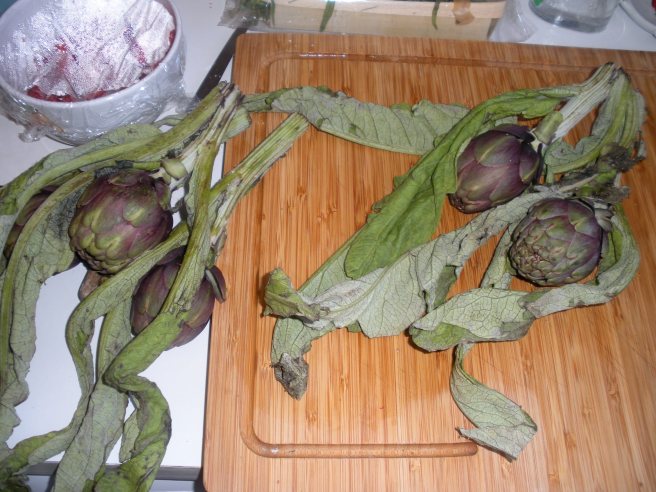
Several years ago, my best friend turned her creative talents from watercolors to writing and wrote a book about the artichoke, including recipes from grande toque chefs in the area. Villelongue de la Salanque is a village just north of Perpignan and is well-known for its artichokes, much as Castroville, California, is in the US. This is when I learned about violets, the young artichokes that are eaten whole.

violets


When an American friend visited us a few years ago, I showed her how to prepare these delicacies for artichoke risotto. The process is rather labor intensive, but I think they are well worth the effort.

artichoke risotto

They can also be prepared with other vegetables for Pierre-Louis Marin’s Legumes a la Grecque.

violets a la grecque

The main problem I face when returning to our small town in the US south, is finding really fresh fish. We have a fishmonger who is open only four days a week, but brings fish from the markets on the coast, so his fish are fresher than can be found in the grocery stores. One year I decided to make soupe de poissons (fish soup), so got my best friend’s recipe from her, and off I went to find fish heads. All the grocery stores had were filets. How do you know a fish is fresh if you cannot look it in the eye? I once asked the clerk at a fish counter how fresh the filets were that she was selling. She went to her card file and said “They came in on Thursday.” This was the following Tuesday! What happened to the expression: ”Guests, like fish, smell after 3 days”?

I had to ask the fishmonger to bring me some fish heads from the coast, as he only brought filets with him to sell. So he brought me two salmon heads and a few mullet heads. The salmon heads were too big to grind up in the food mill, but the resulting soup was delicious.

To understand the problem of getting fresh fish in our small US town, here is the experience I had a year ago. I had been on the look-out for mackerel to make some of my favorite Banyuls recipes here in the US. Our local fish monger had told me that the mackerel would be coming in around mid-March, but when I was there in March, he didn’t have any mackerel yet.

Meanwhile, I was in Krogers supermarket one morning and glanced at the fish counter—always full of nameless filets on display.  BUT that morning I saw–lo and behold!– three kinds of WHOLE fish!  That’s right—with heads and tails!  And one sort was mackerel.  I was so excited!  So I picked out just one, as they were really LONG and when I asked the young man if it was cleaned, he said, “Oh, I’m sure it is; they always come in cleaned.”  Then he kept feeling its belly and discovered that it was NOT cleaned, so of course I asked him to clean it (a mistake).  It took FOREVER for him to clean that one skinny fish!  He said at one point, “Wow, this is really hard!”  Finally I said “Oh, it’s okay; I’ll clean it out again when I get home.”  When he brought it to me on a styrofoam tray (with head and tail flopping over the ends), he said it was the first time he’d ever cleaned a fish.  “I used to go fishin’ with my dad, but he always cleaned the fish.”  I said I figured that was the case.  When he asked why, I said because it took so long!  Then he decided to transfer the fish to a humongous ziploc (2 gallon, at least) bag because that little styrofoam tray just wasn’t cutting it!  THEN he took $1 off the price because I’d had to wait so long for him to clean the fish.

I asked him what the other whole fish were—looked like a pageot, but pink with yellow stripes.  He didn’t know.  He asked a colleague who said he thought they were snapper, but he didn’t really know. The only other whole fish was a huge red snapper that was more a decoration than food. Is it any wonder that we head for the Poissonnerie for fresh fish as soon as we arrive in Banyuls?!

Papillotes de maquereau

After having mackerel steamed with vegetables in foil packets one day, we often have leftover fish, which I then prepare cold with curry served on a bed of sautéed leeks and zucchini the next day. This latter is a recipe I copied from the restaurant at Clos de Paullilles.

Mackeral in curry.JPG


Of course, in France I can get lovely fresh sardines every day, and enjoy trying different recipes with them. They are nothing like the canned sardines I grew up with in the US!

fish copy.JPG

I set myself two recipes to master this year. One was joues de porc a la sauce de Banyuls (pork cheeks in Banyuls sauce), such as I first had at La Pardalere. The second was foie de lotte (monkfish liver), such I first had a 7ieme Vague, in the suburbs of Perpignan. I will have to tackle the latter in France, as there is no way I will ever get a monkfish liver where I live in the US. We do find pork cheeks (jowls, they are called) here in the South, so this month I will do my first trial.
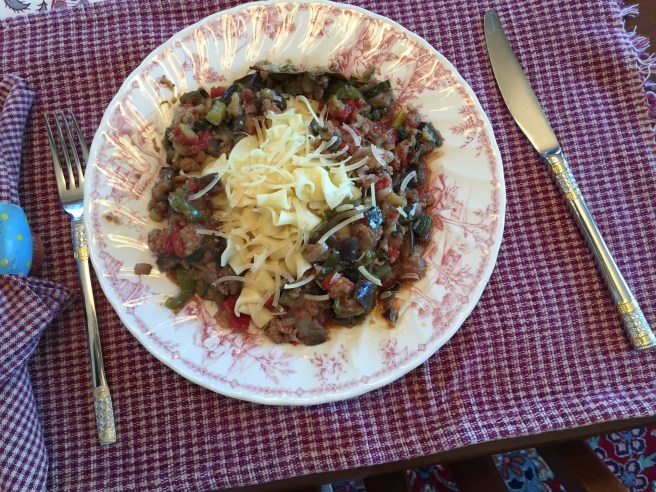
Last week I tried a new recipe from our local Roussillon newspaper, L’independent, which daily has a recipe for its readers to try. I often clip them and bring them back to the US to try, if they include ingredients that are readily available here. Today was Tagliatelle a la ratatouille. Luckily I still had some ground veal left from another dish I’d made recently.

tagliatelle a la ratatouille.JPG

Reading through the recipe reminded me that emince does not mean “to mince.” It means “to thinly slice.”   It’s one of those French words, which my colleague calls “false friends,” when teaching her French classes. They look like an English word, so we assume that is their meaning. My very young French teacher in high school told us a story about one of her faut pas when visiting France. She’d been out with a group of young French people and had enjoyed herself very much. She wanted to tell the guy she was with that she envied him, living in France. So she used the verb envier. When she said to him, “je vous envie,” she thought she was saying, “I envy you.” She didn’t realize she was actually saying, “I desire you.”   A false friend, indeed! As a teen, I often wondered how she got out of that situation.

We have had many fabulous and interesting meals over the years. I always get ideas from the restaurants, other chefs, and my friends. The three of us (my best friend, my French friend and I), with our husbands, often get together for meals, and, I must admit, often vie with each other for the most interesting dishes to present. I have served French friends elaborate salad bars, where they had quite a lot of difficulty piling various ingredients onto their plates, as one does in an American salad bar. The French like their salad foods separated. I have introduced them to barbequed ribs, cole slaw and fried green tomatoes with remoulade sauce.

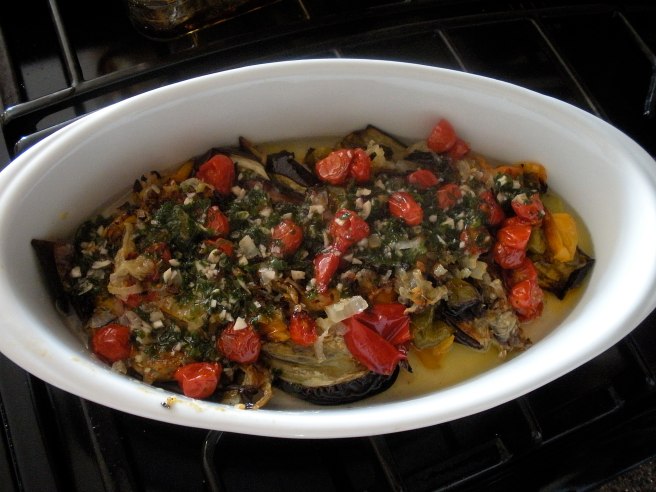
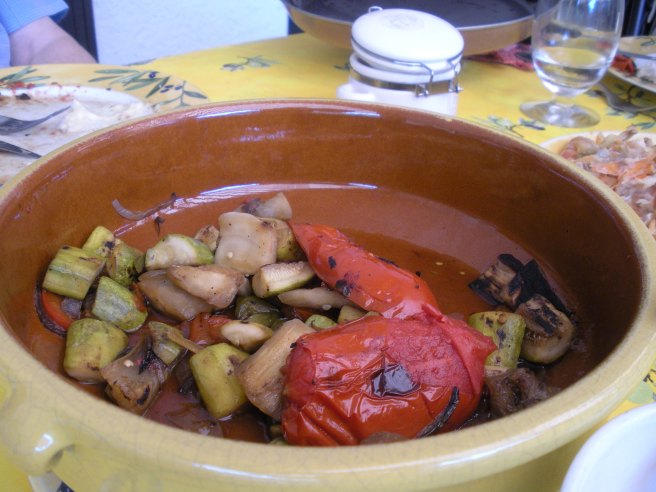
And I have reproduced our Swedish Christmas smorgasbord and English Christmas dinner, and 4th of July picnics. Then I return to the US and invite friends in for a Catalan dinner or Spanish tapas. Our daughter’s favorite, escalivada, is always on the menu. This is a combination of roasted vegetables, served cold with a vinaigrette—all ingredients are easy to find in the US.

Escalivada.JPG

The trick to making meals outside of the regional cuisine where I happen to be is to find the proper ingredients on either side of the pond!

Our friends in France have made frog legs for us, tuna-avocado salad on a Pringle chip, smoked trout on toasts,

 Smoked fish canapes

 salade aux geziers,

Salade aux gesiers

grilled bananas, boar stew, appetizer cake,

cake sale.JPG

and Tupperware tuna mold!

tuna mold.JPG

The tuna mold was quite a surprise for me when my French friend served it to us. I found it delicious and asked her what it was. “Oh!” she said. “It is a recipe from Tooperwar!” What? “You know. The plastique mold? Tooperwar.” Ohhhh….Tupperware! Yes, it’s in France, too! I was happy to add the Tupperware recipe, coming to me via France, to my repertoire.

My French friend said one day, “Come for luncheon this week. It’ll just be a simple meal, nothing fancy.”   After years of her wonderful meals, we have become skeptical when she says the meal will be “simple.” This was a meal for the six of us, so we knew it would be anything but simple!

We started with champagne and with this were Pringle chips topped with tuna and avocado salad. She had served us this appetizer several times before and have never seen this idea anywhere else. What an interesting way to use Pringles! Another easy appetizer she uses is pinwheels of puff pastry filled with tapenade.

Verrines have become very popular in France in recent years. They even sell the tiny glasses or dishes that are used for these mise en bouches in plastic! They are lovely little bites of fish and vegetables or anything that looks lovely layered, as you want to see the layers through the sides of the glass. They are also used as desserts with layers of fruit and custard and crumble. This particular day, my friend served us verrines of salmon mousse, pureed watercress and toasted squash seeds.

j's verrine.JPG

then shredded celery root and apple topped with smoked salmon,

J's fish course.JPG

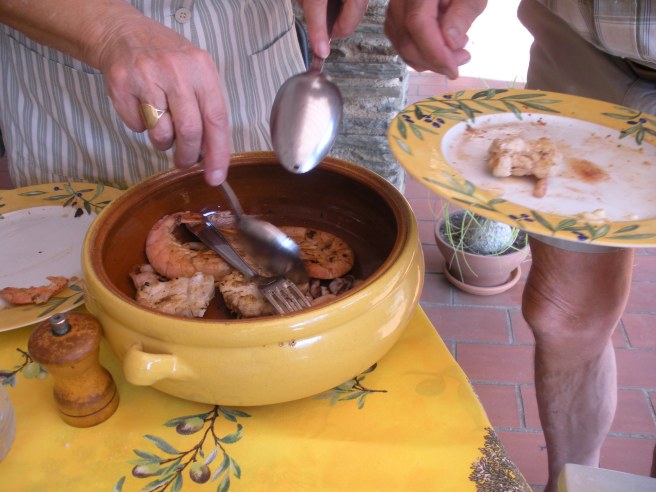
then grilled gambas, calamar and monkfish

J's grilled parillada.JPG

with grilled vegetables,

J'sgrilled veggies

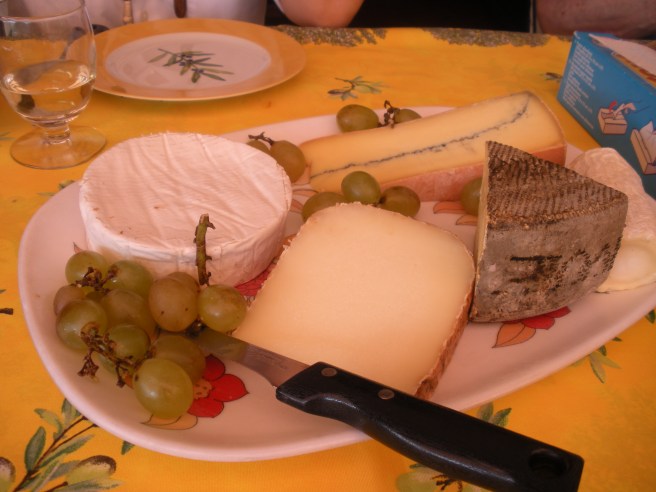
then cheeses,

J's cheese

then tarte aux pommes,

 J's apple tarte.JPG

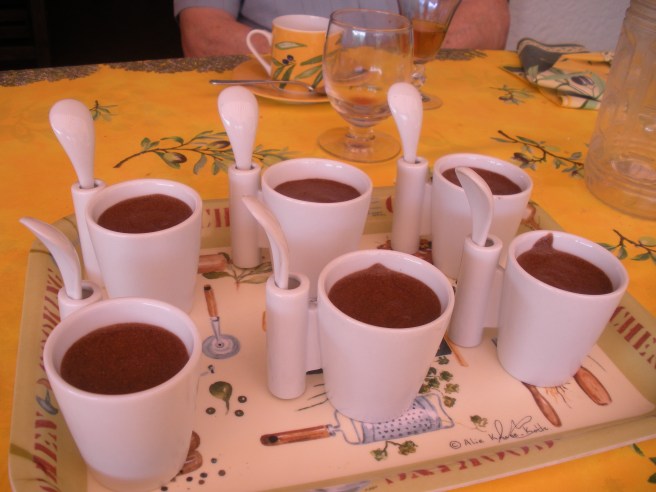
then coffee and pots de creme!

J's coffee.JPG

This is considered a simple luncheon! We also had a fabulous meal at her house one January, when she served us anchovies and butter on bread, foie gras and magret de canard (sliced duck breast) on a leaf of endive, pheasant in cream and cider sauce with fried apples and rice, then cheese, then cherry tart. Another day her meal for us included a salad with dried maigret de canard (duck breast), which she prepared herself. She buries the duck breast in coarse salt for 24 hours, then peppers it and puts it in the fridge for 20 days! These meals last about six hours from champagne to coffee. Nothing is really simple at a French home.

My best friend, who is native French, but grew up in the US, rivals these meals with those she creates for us, adding her own artistic touches. One we particularly remember started with rillettes on bread and lady bug creations made of tapenade and tomatoes! Then seafood salad stuffed into lemons with long spears of olives and grape tomatoes stuck into them. Then potatoes and frog legs, followed by fresh fruit and whipped cream. She is always introducing us to something new!

Another year she served us three different canapés, which included ham and cheese, heart-shaped bread topped with omelet and anchovy and bread topped with herring. Next course was tarte aux feves with salad. Then cold salmon stuffed with spinach and carrots, rocket and three sauces: béarnaise, tartar and aoli. Then blueberry crumble.

Feves are a lima bean-like vegetable that are quite delicious. However, you must plan well ahead of time when cooking them. First you take them out of their pods, like shelling peas. Then you parboil them to loosen their skins. Then you slip them out of their skins. You may start with two pounds of feves from the market but will end up with half of cup of beans! They are very labor-intensive to prepare. After having prepared them myself several times, I am always very appreciative of receiving them in a restaurant or at a friend’s home!

When the six of us got together at my best friend’s home in Pia several years ago, she served us a variety of appetizers: caperberries, garlic cloves, pain au tomates, bread sticks, and egg-salmon-caper canapés. Then we had vichyssoise, then grape-stuffed quail with vegetable omelet on lettuce. Then cheese, then grilled bananas and grilled pineapple with strawberries. This was another six-hour luncheon!

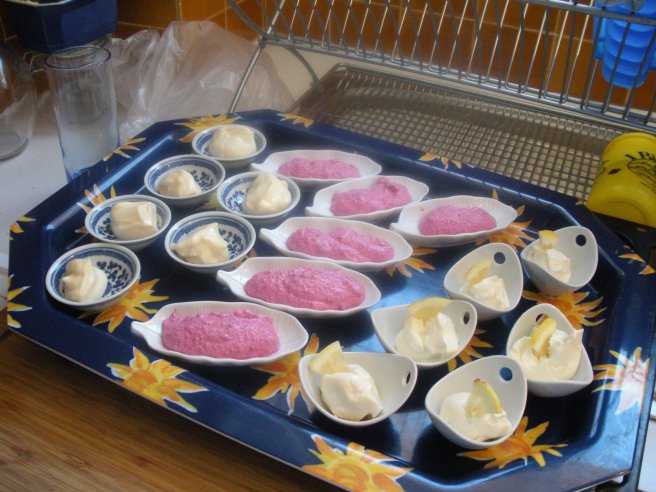
In return, I have served our friends many interesting meals. The menu for our British friends one year began with seven different appetizers with Perelada (a cava, bubbly Spanish wine) then Collette’s Cucumber Salad (from the Ratatouille cookbook for children), stuffed squid with carrots and potatoes, served with Albarino white wine, then melon au Banyuls and red currants served with white Banyuls wine. We always share our favorite recipes. Last year, I learned a lovely recipe of melon and cucumber salad from them.

When the six of us got together at our apartment one year, I served six different appetizers with Perelada in the living room. Then we sat at the table on the balcony and had our meal: spring roll, fried sardines and vegetable terrine with accompanying sauces,

Sauces.JPG

then veal chops and potatoes, then cheese, then panna cotta and kumquat cake with our coffee.

One other year I wove strips of cod and salmon together, then poached them, for our main course.

Salmon and Cod interlaced.jpg

Another time I fried squash blossoms to put on top of stuffed artichokes for our entrée. Last year I tried a new recipe, which was a seafood lasagna with safran sauce—both elegant and delicious!

lasagne saffronee

One year we took fresh corn, from our local farm in Ohio, in our suitcase. Twenty-four hours later I had it cooking for my best friend who was longing for real corn on the cob. Her Spanish husband would not eat it, but my friend really enjoyed every bite! Then we had veal in tarragon with potatoes and spinach soufflé, then palmiers and Junior Mints (also arriving in the suitcase) with coffee. Yet another day, I made her Manhattan Clam Chowder, chicken with chestnut stuffing, sauced turnips and carrots, then Tarte aux Pommes Alsacienne. I try to remember what foods she might be missing from her childhood in the States, and include them on my menus for her. She teases me because I keep a card file on what I serve to our friends, so that I do not repeat the menu for them. But this is also helpful when it comes to remembering that one friend likes only white wine, someone else likes only red wine, another likes whisky and orange juice, another doesn’t eat chocolate, one can’t eat lettuce or cabbage, and another is left-handed and likes her silverware at her place setting reversed.

It takes a long time to prepare these meals for each other, but we so very much enjoy that time in the kitchen, creating, thinking up new ways to present our chosen courses, that it is always a pleasure. Sometimes it takes me a up to a whole week to find the ingredients, then another day to start the preparation, and then all morning to do the cooking so that we are ready to enjoy our guests by the time they arrive at noon. Yes, it’s a lot of work, but I’m happiest in the kitchen, working with food and creating; I know that the meal will last four to six hours with lots of wonderful conversation and camaraderie, so that all that hard work is worth it!

Menu board.JPG

Restaurants also inspire me to try new recipes in my kitchen. When I eat a particular dish that I think I can duplicate, I can’t wait to get into my kitchen for a bit of creative fun! At Restaurant Le Vauban in Perpignan, I ate a salad with Serrano ham and manchego, which is very simple to make. In the US, I use prosciutto ham. It is, quite simply, greens, dressed with vinaigrette, then topped with sliced ham and thin-sliced manchego cheese. This is then put under the broiler (or in the microwave) for a few seconds to melt the cheese!

Manchego Salad

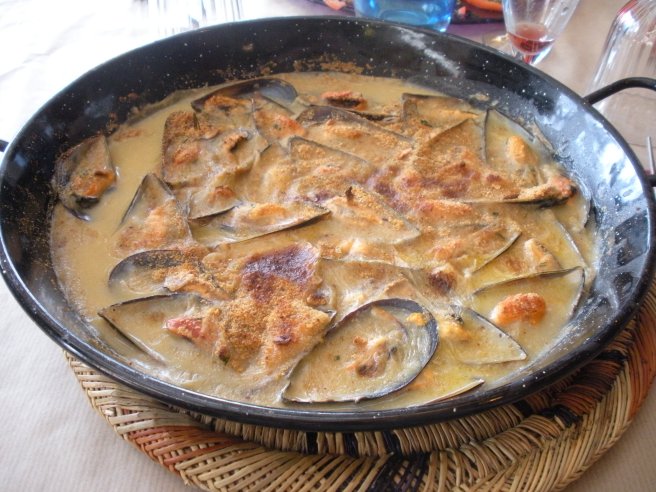
And, of course, our favorite meal we always look forward to is the luncheon we traditionally have at our friends’ hotel in Cerbere. Over the years, the mussel dishes have changed a bit, from the time of my chef friend’s Moules Sang et D’Or

moules sang et d'or.JPG

(mussels in a saffron sauce with red peppers) to his brother’s moules gratinee et citronee; both recipes are equally fabulous.

moule gratinees-Cerbere.JPG

I have spent many years trying to recreate these recipes, which have remained firmly locked in the kitchen of the hotel in Cerbere. Chefs do not readily share their recipes!

For several years, our daughter attended music festivals in France, including a piano camp located in Castelfranc, near Albi. One year, we took my best friend and her husband to attend the students’ final concert, staying in a B&B in Albi to extend our visit over the week-end. The day after her concert, we all went to luncheon at L’Esprit du Vin, a wonderful restaurant in Albi. There we began with kir and appetizers of fried favettes, fried olives with parmesan, and fried cod balls. Mise en bouche was melon soup with fried sage leaf and chevre and flowers. The next course was anchovy wrapped in the shredded-wheat-like dough seen in Greek pastries, after which we were served another mise-en-bouche of shrimp and cod and flowers. Then my husband and I had gambas and langoustine, while our daughter had fried foie gras on melon balls. Entremet was campari and lemonade granite. Then we had fried apricots on pain perdu. Then, of course, coffee and more tiny chocolate desserts—almonds, raisins, orange peel, hazelnut cakes.

For special occasions, we go to Pierre-Louis Marin’s restaurant in Montner, a small hill village west of Perpignan. Our first visit was with my best friend and her husband. We started that meal with a mise en bouche of beet gazpacho served in a leaning shot glass and salmon sushi. The entrée was two soft-boiled eggs with toast points topped with anchovies and red pepper strips. The main course was bourade de morue (cod) on scalloped potatoes and toasts. Then a dessert of touron ice cream and wet rousquilles (traditional Catalan anise-flavored “dry doughnuts”). We ended with coffee and tiny pots de creme with small glasses of Maury wine.

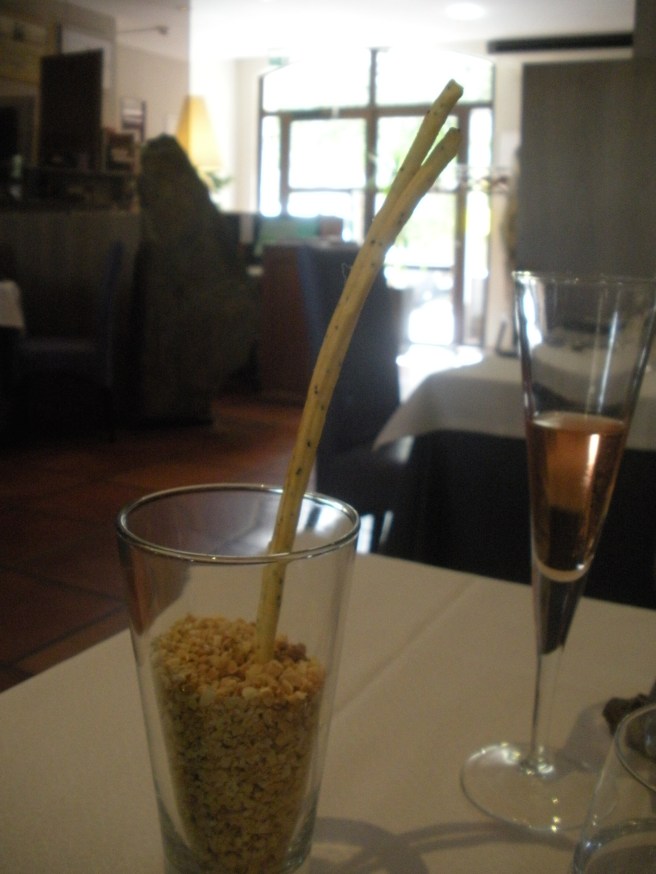
For our anniversary a few years ago, we ordered his Mena i Calla menu, with wine pairings. This is a menu completely at the discretion of the chef, so we did not know exactly what we were going to get for our meal, but we knew it would be absolutely fabulous. We were asked if we were allergic to anything or really could not eat any particular food, and then we were in for a treat! We began with Charpentier pink champagne with very thin bread sticks stuck into a glass of chopped nuts (or bread crumbs?).

PL's bread sticks.JPG

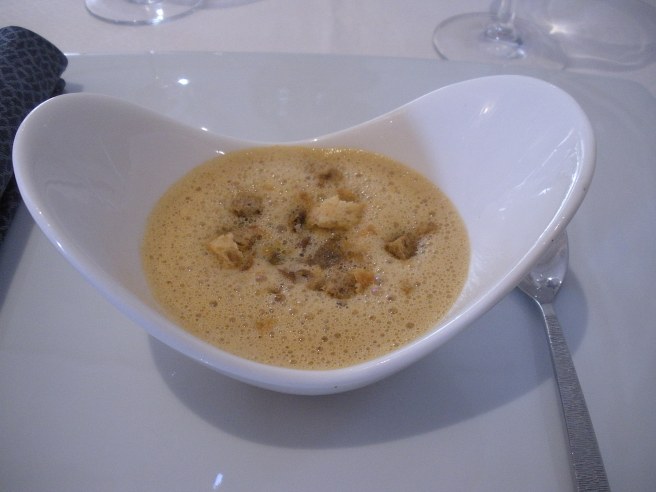
Pierre-Louis brought us the first course of soupe de poissons (fish soup), all frothy and with tiny croutons in it.

PL's mullet soup.JPG

The second course was foie gras with caramelized onion and delicious oblong purple radishes served with Domaine Comelade white from Espira de l’Agly.

PL's foie gras.JPG

The third course was a variety of vegetables, including tiny artichokes, carrot and beet shavings, white asparagus, dots of sauces, dill and mint, on a bed of crumble with feta brebis cheese (made locally), served with Mont Noir Rose, Cote de Roussillon.

DSCN2738.JPG

The fourth course was bonite (a fish) on a bed of Chinese pea pods, white asparagus and onion with a lovely coriander sauce, served with a Domaine Deveza white, Cotes Catalane.

DSCN2739.JPG

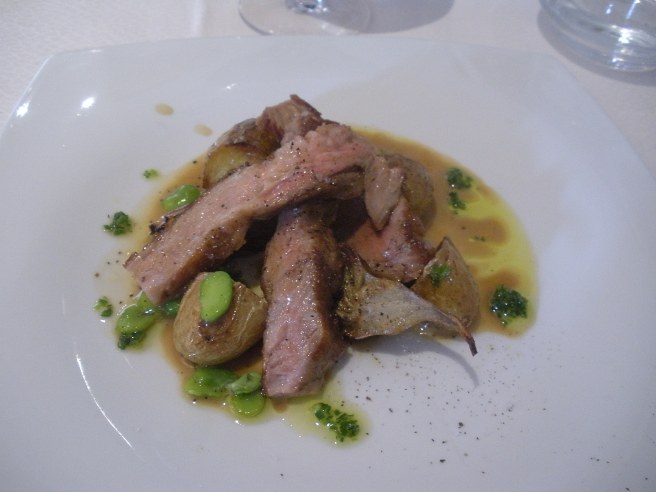
The fifth course was Catalan lamb with feves, artichokes, and new potatoes, served with Mont Noir 2009, Cotes Villages.

DSCN2740.JPG

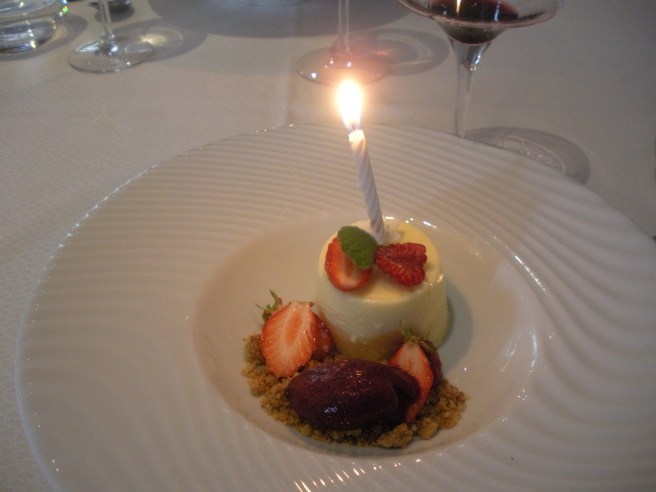
The sixth course was brebis flan, strawberries and sorbet cassis (black currant) on a crumble bed—with a candle lit for our anniversary!—served with Mas Amiel Blanc.

DSCN2741.JPG


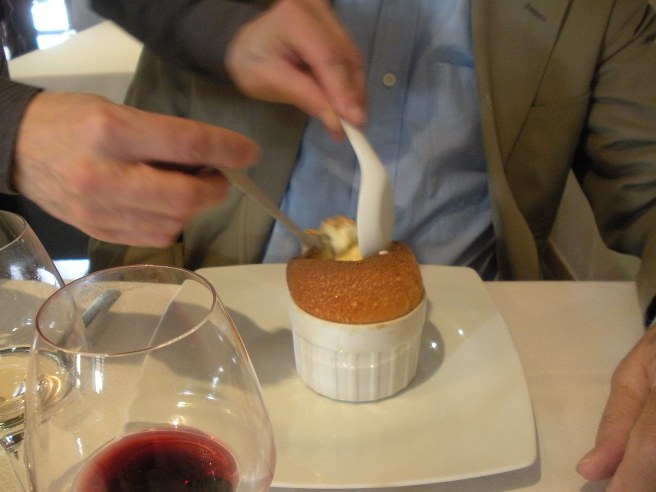
The final course was hot rhubarb souffle, into which our waiter put a small scoop of vanilla ice cream!

DSCN2744.JPG

This was followed by the inevitable coffee with orange-flavored chocolates. Yes, that’s a luncheon! Perhaps this explains why we have given up eating in the evenings!

Not all the restaurants we have visited in France are this fabulous, but who wants to talk about the ones that are not?


For our anniversary a few years ago, we ordered his Mena i Calla menu, with wine pairings. This is a menu completely at the discretion of the chef, so we did not know exactly what we were going to get for our meal, but we knew it would be absolutely fabulous. We were asked if we were allergic to anything or really could not eat any particular food, and then we were in for a treat! We began with Charpentier pink champagne with very thin bread sticks stuck into a glass of chopped nuts (or bread crumbs?).


Pierre-Louis brought us the first course of soupe de poissons (fish soup), all frothy and with tiny croutons in it.

The second course was foie gras with caramelized onion and delicious oblong purple radishes served with Domaine Comelade white from Espira de l’Agly.

The third course was a variety of vegetables, including tiny artichokes, carrot and beet shavings, white asparagus, dots of sauces, dill and mint, on a bed of crumble with feta brebis cheese (made locally), served with Mont Noir Rose, Cote de Roussillon.


The fourth course was bonite (a fish) on a bed of Chinese pea pods, white asparagus and onion with a lovely coriander sauce, served with a Domaine Deveza white, Cotes Catalane.


The fifth course was Catalan lamb with feves, artichokes, and new potatoes, served with Mont Noir 2009, Cotes Villages.


The sixth course was brebis flan, strawberries and sorbet cassis (black currant) on a crumble bed—with a candle lit for our anniversary!—served with Mas Amiel Blanc.

The final course was hot rhubarb souffle, into which our waiter put a small scoop of vanilla ice cream!


This was followed by the inevitable coffee with orange-flavored chocolates. Yes, that’s a luncheon! Perhaps this explains why we have given up eating in the evenings!

Not all the restaurants we have visited in France are this fabulous, but who wants to talk about the ones that are not?

Pots de Crème

Pots de Crème

  • Prep 10 min.

  • Cook 12 min.

  • Ready In 5 h

“Dark chocolate stiff mousse”

Ingredients

  • 10 ounces bittersweet chocolate (60%), chopped fine
  • 5 large egg yolks
  • 5 T. sugar
  • 1/4 t. salt
  • 1-1/2 c. heavy cream
  • 3/4 c. half-and-half
  • 1 T. vanilla extract
  • 1/2 t. instant espresso mixed with 1 T. water
  • Whipped Cream:
  • 1/2 c. cold heavy cream
  • 2 t. sugar
  • 1/2 t. vanilla extract

Directions

  1. Place chocolate in medium heatproof bowl; set fine-mesh strainer over bowl.
  2. Whisk yolk, sugar, and salt in another medium bowl until combined; whisk in heavy cream and half-and-half.
  3. Transfer mixture to saucepan and cook over medium-low, stirring constantly and scraping bottom of pot with wooden spoon, until thickened and silky, 180 degrees on instant-read thermometer, 12 min. Do not let custard overcook or simmer.
  4. Immediately pour custard through strainer over chocolate and let stand to melt, 5 min.
  5. Whisk gently until smooth, then add vanilla and espresso.
  6. Divide mixture among ramekins.
  7. Gently tap ramekins against counter to remove air bubbles.
  8. Cool to room temperature, then cover with plastic wrap and refrigerate at least 4 hours or up to 72 hours.
  9. Before serving, let pots de crème stand at room temperature 20-30 min.
  10. Dollop each with 2 T. whipped cream and garnish with cocoa or chocolate shavings, if using.

Tagliatelles a la Ratatouille

Tagliatelles a la Ratatouille

  • Prep 40 m

  • Cook 1 h

“ratatouille and noodles (Source: L’Independent)”

Ingredients

  • 300 g. tagliatelles (or egg noodles)
  • 300 g. (1/2#)ground veal (or pork)
  • 2 eggplants, peeled and chopped
  • 2 bell peppers, sliced
  • 2 zucchini, peeled and chopped
  • 1 onion, thinly sliced
  • 1 pound tomatoes, diced
  • salt
  • pepper
  • oil
  • thyme
  • bay leaf
  • 400 g. butter
  • grated parmesan cheese

Directions

  1. Put chopped eggplant and zucchini in a colander and add salt. Let sit from about 30 minutes to an hour.
  2. Heat a little oil in a deep skillet and add the onion to soften until golden. Add meat and cook, stirring, about 10 minutes, or until browned. Remove meat and onion from skillet and set aside.
  3. Add more oil to the skillet, then add zucchini, eggplant, peppers, tomatoes.
  4. Add thyme and bay leaf, salt and pepper and cover skillet. Cook 45 minutes, then add back in the meat and onion.
  5. Cook noddles in salted boiling water.
  6. Drain and add tablespoon of butter, placing noodles in the center of each plate. Arrange the ratatouille around the noodles and top with parmesan cheese.