16. Will We Ever Be Done?

Furniture replacements were next on our list of renovations. We’d used the sofa bed (canapé lit) for over 30 years. There was no support left in it—one sunk so far down and then had trouble getting up!
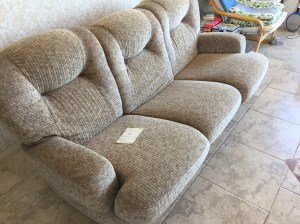
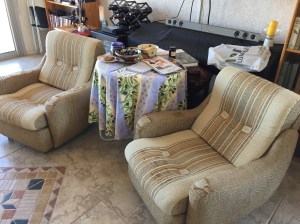
Then the two “comfy” chairs in the living room were leftovers from the previous apartment owner and the material was all worn away on the arms, plus they, too, sunk so far down that I felt I was practically sitting on the floor.
So one day we went up to our furniture store near Perpignan and we chose a canapé relax, which is a reclining sofa, and then looked at Murphy beds for our daughter’s room. While the bunk beds in that room were great when she was 12 and separated as twin beds when she was 20, she was now 30 and it was time for a larger bed, which would also have the advantage of folding up against the wall, opening up her room for other uses when she wasn’t there. We found what looked like a good option, and when our daughter arrived that July, I took her up to the store to get her approval. The surface I’d chosen was white as I thought this looked the brightest and would blend in with the wall covering, but she took one look at it and said “Honestly, Mom, all I see are fingerprints!” She was right! It was a smooth surface and any hand or finger marks showed immediately. So she chose a textured grey finish. I marked all our choices down in a brochure and got estimated prices from the clerk. Then we waited until the following year to order the sofa and bed. I had to order the bed before leaving the US as it was to take several weeks to arrive. Once I received the call from the store saying it had arrived, it was time to disassemble the twin beds. This turned out to be much more difficult than I’d anticipated.  Luckily the furniture store told me that they would take apart the twin beds and carry them to our garage for us—no charge.  Of course that meant that I needed to clean out the garage.   Our French friends offered to come and cart off the debris from the garage and take it to the dechetterie. One has to have a special permit card in order to take things to the decheterrie (dump), so our friend offered to do this for us. Off went the boat hooks and the anchor, paint pans and a lot of wood, mostly left by the previous owner of our apartment. It was a good clean-out.

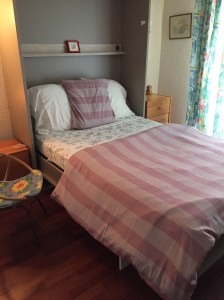
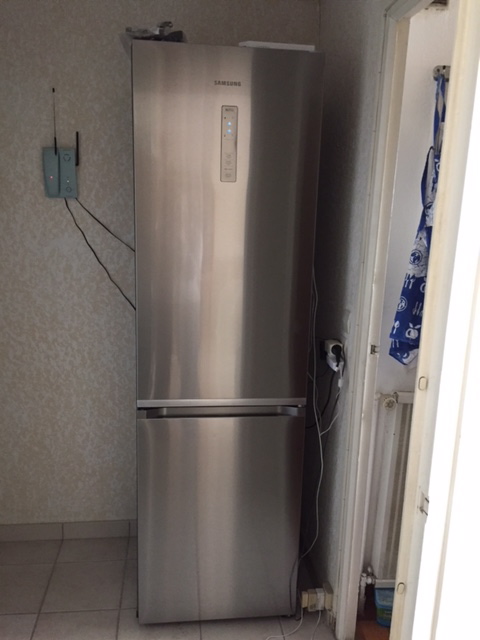
The furniture men arrived the following day and spent 4 hours installing the Murphy bed. When it was completed and I came into the room to see the finished project, I realized I had ordered the wrong finish! This was not the grey textured finish our daughter had chosen; it was a grey smooth finish and there were already finger prints showing on it! I was so upset! But we must look for the humor in life, so we now call it the “Big Fridge,” as that is what it looks like!

After they left, I discovered they’d broken through the living room wall when bolting the bed to the bedroom wall, so they had to repair that when they returned with the sofa two weeks later. It was a poor repair, but at least there was no longer a hole in the wall!

The men took away the old sofa bed and the two very old chairs straight to the dump. This is one procedure we have noticed about France which is different from the States. When you order something new, the workmen will take away the old directly to the dump for you, sometimes for a fee and sometimes for free. When we replaced a sofa in the States this past year, we had to make many phone calls to get a charity to come take away the old sofa for us and they were very particular that it was not stained or torn in any way. The trash pickup would, of course, have taken it, but then I would have had to drag it down to the curb and that was way beyond my abilities.

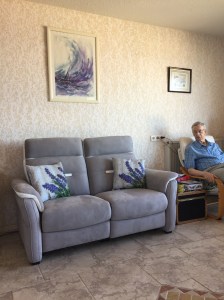
The new recliner sofa we bought in France is so solid that it’s almost like sitting on a hard bench. But it’s reclining and electric, so that’s very nice. It’s also much smaller as it’s only a two-seater, so there’s more room for a larger end table; I had fun rearranging the living room for the first time in about 20 years. And it’s grey and white—just like the “big fridge”! That night we had pina coladas to celebrate our new furniture. I promptly knocked my glass on the tile floor, smashing it to bits and christening the new sofa. It had been a long week.
My best friend came to visit overnight and helped me put together all the linens for the Murphy bed. We quickly discovered that I couldn’t put on the zippered mattress cover as the mattress was strapped to the frame. So that was a useless purchase. But the mattress padded cover, sheets, light blanket and comforter were soon in place. I commissioned my friend to paint a frieze on the long white panel—a beach scene with a young couple and two cats following them, then two children playing near the water’s edge. Perhaps someday this will be accomplished!
Next I drove up to our DIY store, Castorama, stopping first at the light store to purchase a new light for the WC.

I found a mirror for our daughter’s room and a few other items at Castorama, then exited to find that I had a flat tire! The tire was completely flat.

So I called Peugeot Assistance and they sent a road service person to me an hour later. (It was amazing how many people came out of Castorama and told me that my tire was flat while I was waiting for him!) He couldn’t find the leak, but changed it to the emergency tire (only good for 80 km), and followed me to the Peugeot dealership across the street, and kindly explained everything to the mechanics for me. They found the leak on the sidewall near a bent rim. No insurance coverage for that. And they didn’t have the high-end tire to replace it! In France, by law, tires have to match on each axle. So I went down the street to Feu Vert, a tire store, and asked them to help me. They didn’t have these high-end tires either, but could sell me two less expensive tires for only 200 euros. That took another hour. I got home six hours after leaving in the morning! And I had a spare tire to store in the garage. Nothing is easy.

The following month, the gas company store in Perpignan called to say they had our two radiators ready to install. These were a small heated towel rack for the kitchen, and a large radiator for the outside wall of the living room. We were excited about getting more of the old radiators replaced as the old ones were difficult, or not impossible, to regulate. The one in our daughter’s room did not work at all. While the radiators did not matter much when we were only visiting during summer months, now that we were retired and empty-nesters, we were in residence in the spring or Fall when temperatures dropped considerably and the tramontane blew fiercely. We needed the heat for our old bones!

It took three plumbers and six hours to remove the two old radiators from the kitchen and living room and install the new ones. Then they discovered that the new towel bar in the kitchen was leaking, so that had to be remedied. It was nice having my kitchen towels on a heated rack so they dry quickly, but I had to move my bread bag, in which I store our daily baguette, to the other end of the kitchen; the heat from the towel rack was drying out the bread!

Three weeks later, I discovered water on the living room floor; the new big radiator was also leaking, so I had to call the plumber to return and fix that! It seems he’d left his apprentices to do part of the job and it wasn’t done as well as he would have done it. In fact, all they needed to do was tighten a joint. A few days later he had to return to tighten something else to stop a new leak. Finally all was well, and we had a wall of heat to keep us warm. Did I say, nothing is easy?
By this time, we were into October, the time of our village’s wine festival. We’ve attended the festival, pushing through the throngs of people, all with their glasses stretched out toward the pourers of the various Banyuls vintages, longing for yet another taste of their nectar. But in recent years, negotiating the crowds are too difficult, so we settle for purchasing a box of glasses for ourselves and friends, and enjoying the view of the 10,000 visitors from far above the fray. On Halloween, our young friends from Cerbere came to us for luncheon. By then their hotel was closed for the season and they were feeling relaxed once again. They arrived with a huge bouquet of flowers standing in a plastic bag of water (!) and two volumes of Almanac des Gourmands from the early 19th century. I have so much enjoyed reading through these interesting books.

My menu that day had to be themed, of course, being Halloween, so we began with Perelada and Zombie Eyes (cherry tomatoes stuffed with crab and topped with a tiny circle of black olive).

Then Witches Cauldron (boulettes de poisson aux legumes),

Slasher’s Plate (veal in tarragon and skansk potatis),

then Monster Mash (Swedish apple pudding).

We had a wonderful visit with them and they then helped me figure out how to pay our real estate taxes online, which is so much easier than waiting for bills to come in the mail. We are trying to make life a little easier for our daughter when it’s her turn to pay all these bills!

On November 11, we were up early to watch part of the Armistice Day ceremonies in Paris on TV. Then I walked downtown to the ceremony behind city hall, where I met my French friend. We stood listening to all the speeches.
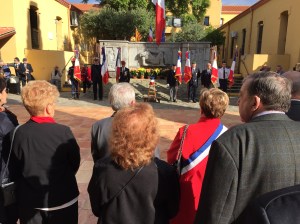
Suddenly one of the little school girls fainted. I watched as they attended to her and when my friend asked me what had happened, I turned to her and whispered “A little girl fainted and they carried her away.” She looked at me with a question in her eye, so I repeated myself slowly, “A little girl fainted and they carried her away.” It was only when she looked at me in amusement that I realized I’d spoken to her in English! We both burst out in laughter, which was so inappropriate for the solemn occasion, but really, it was too funny.  She told me I was getting just like our mutual friend who does so much translating back and forth between French and English (and also Spanish when her husband was alive), when we’re all together that she would get confused and translate to the wrong language for one of us!

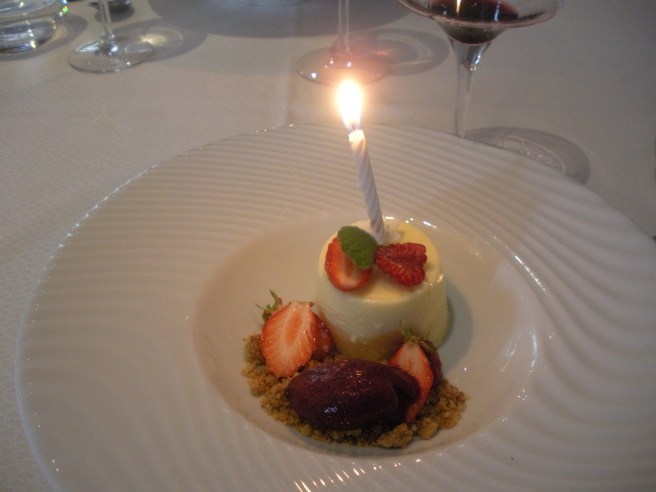
Our cruise home later that month was memorable; not only were we celebrating my husband’s birthday onboard, but we had my best friend with us, returning to the US to visit with her mother and to spend some time with us in our US home. We enjoyed several culinary classes together, as well as exploring a few Spanish ports. It was a memorable trip.

The following Spring, we returned to France once again onboard an Oceania ship. I once again enjoyed the cooking classes onboard, this time with a new friend from Washington DC, and had a lovely visit in Madeira to the embroidery workshop, quickly visiting my favorite Funchal shops to buy some birthday gifts.

We arrived at the port in Barcelona on time and quickly got a taxi to our usual car lease office in Mas Blau, near the airport. The drive up to France was tiring for me this year, but we arrived at the home of our French friends on the edge of our village in time for a light lunch of escalivada, brochettes and strawberries. My best friend called just as we finished eating, to make sure we had arrived. Since my husband was beginning to fall asleep, we quickly continued on to our little apartment on the other side of the village. I got him into the apartment and he immediately fell asleep on the bed. Meanwhile, I turned on the utilities, got the car into the garage, and took some of the luggage up to the apartment. Everything went well until I plugged in the refrigerator. Then all the electricity went out!

Our upstairs neighbor, a single gentleman of advancing years, who has always been so kind to us, was home when I knocked on his door for assistance. He checked our controlleur, which turns on and off our electricity to the apartment. Nothing happened. From his apartment we tried to call EDF, the electric company, but the system is all computerized and they would only speak to the account holder from the account holder’s phone. But since our electricity was off, we also had no phone service as the phone batteries were all run down, not having been connected for 9 months!

So then I called our wonderful electrician, who is always very difficult to book. (We’d been waiting two years for him to install the new light in the WC.) He did answer the phone, but said he was too busy to come by and investigate our electricity problem. So I called our French friend with whom we’d just had lunch, and she called our plumber (remember him?). He said he would come by to see if he could help us. By this time, I was in tears.   But then the door bell rang and it was the electrician! He’d felt guilty, I suppose, about not coming to help us. He got right onto the problem and found the cable connections had come loose, so he just tightened them and all was well. He helped me get the chaudiere started and the stovetop. While all this was happening, the plumber rang the doorbell, ready to help and I had to apologize to him saying that the electrician had arrived after all! He was not pleased! He’d interrupted his day to come to my aid and now I didn’t need him after all. My husband slept through all of this! So that was our first day back in our little home in paradise,.

Our first renovation project this year was the installation of new radiators in the two bedrooms. These were the last two radiators to be installed. I have gotten into the habit of requesting estimates from the various companies and workmen before leaving each year for the work we think we’ll want done the following year. This gives me an idea of how much money I will need to bring from the US and gives me the opportunity to place an order with down payment before leaving the States. As some items we’ve ordered, such as the Murphy bed, and the garage door, take up to two months to arrive, and we only stay in France for three months at a time, this extra lead time becomes very important.

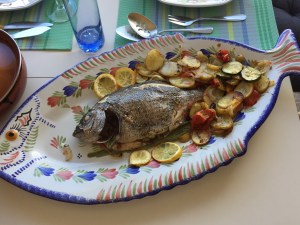
While we waited to hear from our gas company about the new radiators, I enjoyed visiting all the shops downtown, particularly the poissonerie and buying lots of fresh fish. I discovered a new fish, which I’d never seen before. It is called a sar and is like a fat dorade, which is bream, in English.

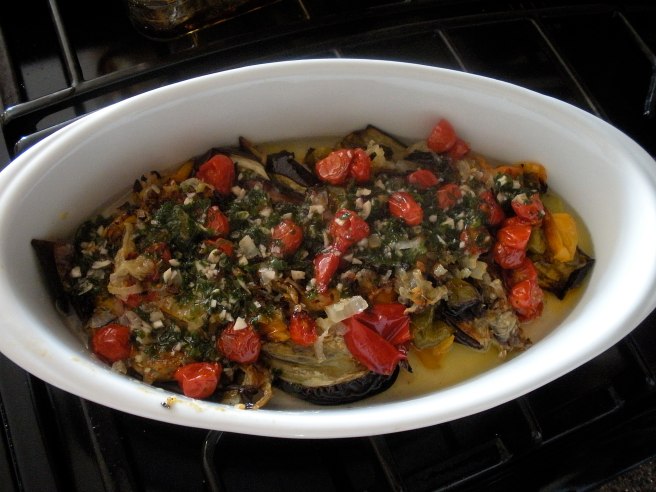
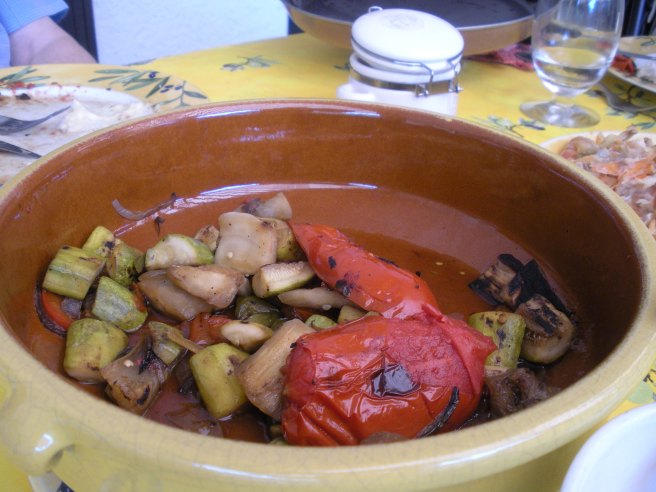
Following instructions from my best friend, I laid it on a bed of vegetables, covered it with slices of lemon, and baked it in the oven.
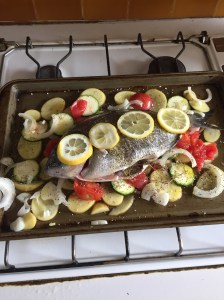
It made a lovely meal and successful new experience for us.
The day arrived for new bedroom radiators to be installed. I was up at 7:30 a.m. getting ready for the workmen, who were to arrive about 8:30 a.m. It was pouring rain outside, so I put out hangers to hang wet jackets and then big white bath towels on the wooden floors for their wet tool boxes. Our gas company plumber, with his apprentice, arrived about 9 a.m. It took them five hours to install the bedroom radiators. They did our daughter’s room first, then ours.

We sat in the living room, bored after I did three hours of ironing! But finally all was done, with guarantees that there would be no leaks this year. I laid a piece of paper towel under each radiator anyway, just so I could easily check for water leaks. I gave the plumber our check and then his apprentice handed me back one of my white towels, all grimy with black gunk!! Even bleaching it didn’t get the grease out. I guess I have more rags now. But it is so nice to have heat in the bedrooms.
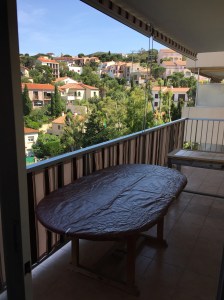
The big project for this year, though, was the installation of awnings on the balcony. Over the years, we have considered several options for keeping the sun off the balcony when it’s not wanted, and for protecting us from the wind. Some residents have their balconies enclosed in glass. Others have awnings that crank out at an angle. We chose the third option, that of awnings that come straight down. Because our balcony is double in length, it needed two awnings, which actually makes it so much more flexible. I insisted that we have them electrified with remote controls, so we could move them up or down from the living room or even without getting out of bed in the morning. So before leaving the States, I had mailed our signed devis and check to the window company in our village. Because of the weather and the tramontane blowing its usual spring wind, this installation was delayed two months. But finally, the men were ready to come and install our awnings, as well as matching material on the outside of the railing, which provides a bit of privacy. Madame, in their office, said I’d been a bonne sport for waiting so patiently. They had predicted that it would be a half-day job, but they were working from 8 a.m. 4 p.m.

The end product was fabulous. This team of workers has been so very good through the years, even with cleaning up afterwards.   We immediately requested a devis for the following year to have the bedroom windows replaced as they leak cold air in the winter and, if we ever manage to have air conditioning installed, they will need to also keep out the hot air of summer.
 

The following day, I went downtown to our plumber’s appliance store to look through a brochure of cooktops. It was time to do one last, although unplanned, renovation project. My old cooktop was really struggling after 40 years. Only 3 of the 4 burners worked and they had only 2 settings: medium high and high. We’d looked at various configurations over the years, always dreaming of kitchen renovations, which keep slipping down to the bottom of the list. But now we just wanted something that would actually work and would make my kitchen adventures more congenial. I found a lovely 4-burner cooktop that had automatic lighting (as I have in the States); no more lighting it with a friction device each time I turned on the burner! So I ordered it and then awaited its arrival.

This was the year of celebrating 75 years since D-Day. On the morning of the 6th of June, we watched the 75th Anniversary D-Day ceremonies on TV all morning; they were very impressive. We invited our French friends and my best friend for afternoon coffee. It was a day of remembering the war and its devastating losses, and a day for our French friend to remember the joy and wonder she felt as a little girl when the Americans arrived to liberate her small village in the north. She remembers well the day the tanks arrived with soldiers. At first she thought maybe these were more Germans, but when the soldiers began to throw them rolls of Life Saver candy and packets of instant coffee, she knew the Americans had come to save them! Her mother invited some of the soldiers to their home for coffee, and she still has a photo that was taken on the occasion. The French will always be thankful to the American soldiers because they had suffered for so many years of occupation by Germany and deceit by the French Vichy government.   My husband told of his youth outside London, dodging bombs on the way home from school, of the war-time rationing that continued well into the 1950s, and of watching the gliders start out across the channel on the night of June 5. It was a day of remembrance and chills still travel up and down my spine when I think of listening to them speak of their youth in the time of war.

We had glasses of Banyuls wine, tarte aux fraise, decorated with French, American and British flags, coffee and chouquettes.
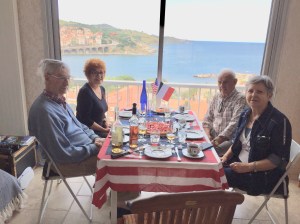
That night we watched the 75th Anniversary D-Day ceremonies on TV, which were very impressive.

It took another week for my cooktop to be installed. The plumbers had come to look at the lines under the old cooktop and discovered that these were all copper; the new law in France requires that the gas lines be made of flexible plastic. So measurements had to be made and an estimate prepared for me. On their day of arrival, they appeared at 2 p.m. and were done by 4 p.m. They’d had to cut the opening in the countertop a bit, so there was sawdust everywhere! Unfortunately, I’d emptied the top shelf in the cabinet, but not the second shelf. It took me another two hours to clean all the dishes on the front of that shelf, which had gotten covered with the sawdust. But I had a nice new cooktop for my kitchen and I was ecstatic!
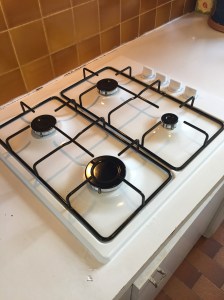
Four burners that worked! Automatic lighting of the burners! And they even managed to straighten the tilt of the old countertop a bit, so that saucepans no long slid off the burners!

So what’s left to do? Well, there are the bedroom windows and shutters to be replaced, and I have a feeling that the washer is on its last legs. I have never been able to figure out how to replace the narrow sliding door between the living room and balcony and its shutter needs to be replaced. Then we’d hoped to have air conditioning installed in the two bedrooms before our plumber retires later this year.

But the world pandemic has intervened, and we are confined in our home in the States for the duration. So I dream of being in our little French village, enjoying lots of fresh fish, tree-ripe fruit and vegetables, letting the tramontane blow all away all the cobwebs from my mind as I create new dishes in my little kitchen, and hopefully walking down our hill frequently to enjoy a cup of cappuccino (really, café viennoise) at the PMU Cafe with my friends.
15. Renovations – Part 2

More Renovations

The following year, was our year to experience a lovely spring in Banyuls. Returning to town by passing through the Col de Banyuls, was like driving through a garden of wild flowers. Each twisting turn opened up spreading vistas of color all along the mountainous road that took us from Spain to France.

This was also the year we were to celebrate our 30th wedding anniversary. We decided to celebrate this anniversary with our close friends, the two couples with whom we traditionally spend a lot of time when we’re in France. And, of course, we chose Pierre-Louis’ restaurant in Montner as the venue! This was going to be an expensive meal, so we decided to cut our vacation expenses by choosing a cheaper cruise line for our crossing into Barcelona. We had used this cruise company once before and were not pleased with the cuisine or service, though it was only half full.   But we thought maybe we would try it again. Terrible mistake! It was worse than ever, plus the ship was completely filled!   So we will return to our favorite Oceania ships for all our crossings in the future.

Our most important renovation would be a new garage door. The old, original, garage door was made of solid wood and moved horizontally along a track in the cement floor of the garage. It needed constant attention to clean out the track, then to keep it greased, which was something we were not able to provide on a regular basis, since we are in residence only three months a year. As we became older and older, that door became heavier and heavier. We had noticed some of our neighbors had replaced their old doors with lovely metal automatic doors. After getting a recommendation from one neighbor, we were able to receive an estimate before leaving town the year before. It would be expensive, but we had several months in which to save up. We ordered the new automatic garage door before leaving the States, using our estimate (devis) from last year, as it was to take 2 months for the door to arrive. By the time we arrived in Banyuls, our check had also arrived at the garage door company, but they would not cash it until the door arrived at their workshop (very proper). So now we just had to await arrival of the door.

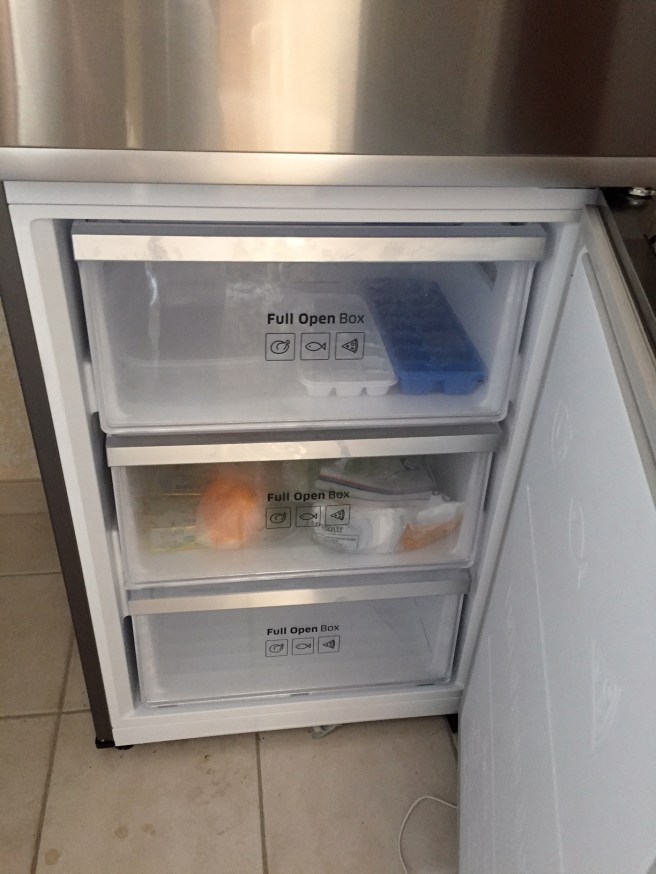
One of our first agenda items after settling into our apartment once again, was to go to our plumber’s appliance store and order the new fridge, which we’d found at an appliance store last year. Our old refrigerator, which was by then about twenty years old, had a peculiar habit of freezing up the back wall so that any food up against the back wall would also freeze! This was really annoying when I put fresh produce, like lettuce, into the fridge. In recent years I would place a rolled up towel at the back of each shelf to keep food off the back wall. So the year before, we had gone to a large appliance store in Perpignan to look at refrigerators and to figure out what kind of appliance we would need to be frost free and not freeze on the inside of refrigerated compartment. We chose a tall Samsung with freezer drawers on the bottom. Fridges in France nowadays are either under–the-counter (table-top), or they are very tall to maximize the space available. If you are about 5’8” tall, your head would come to the phone on the wall in this photo; then imagine reaching up to the top of the fridge! To access the top shelf of this new fridge, our much shorter daughter will have to stand on a step-stool! And, yes, it is situated in the corridor, as the kitchen is much too small for such an appliance.

new fridge

One week later, the new fridge arrived and the plumber’s assistants took our old one to the dechetterie (the dump). Unfortunately, they didn’t know how to change to doors to put them on the left hinge, instead of the right hinge.

new freezer

Since my kitchen is through the open door to the right of the fridge, I would need to be able to open the door to the left in order to get things out of the shelves and drawers while working in the kitchen.   The plumber promised to return the next day, but, apparently, went off to the mountains for three days, instead! A week later, one of his assistants arrived to change the door, but found it was too complicated for him, so we waited another couple of hours for the plumber to arrive with yet another helper to reverse the doors. Two hours later, all was complete and I can now open the doors from the kitchen. One must be patient with plumbers in France—and treat them like royalty.

We had asked for a new estimate for a new kitchen window from the window company in our village. The original window opened with a hinge at the bottom. This meant that whenever I wanted to clean the outside of the window, I had to climb up on the sink and lean over the open window as far as I could, in order to clean the outside glass. When one’s age nears the 70-year mark, one is reluctant to climb up on ANYthing, let alone a kitchen sink! So we had planned for several years to replace this window with one that opened in two directions, like ones we had seen in Germany. The new window would be hinged at the bottom as well as the left side, so that it would open towards me OR open like a book. Superb! We’d also requested a roll-up screen for this window (screens are mostly unheard of in France, although they became popular a few years ago when the mosquitoes were particular bad). But the new estimate showed that the screen had doubled in price since our original estimate, so we scratched that from the order. The new window would arrive in three or four weeks.

While we waited for the new automatic garage door and the new kitchen window to arrive and be installed, we began planning for our 30th anniversary celebration. We had made the restaurant reservation before leaving the States, but had to change it when we arrived, as my best friend’s husband had lost his battle with lung cancer while we were on the ship en route to Barcelona. We arrived just a day after his funeral, so were devastated to have missed the opportunity to say goodbye and to support his wife through this trauma in her life. He will be sorely missed from our outings together. A former matador and former stone mason, our Spanish friend always added a spark to our gatherings. Speaking only Spanish, but understanding a little French, he would wait patiently for his wife to translate our friends’ French for him into Spanish or our English into Spanish. My best friend was by this time tri-lingual and was kept very busy whenever we were all together. We had many funny moments when she would turn to her husband and translate the French conversation into English for him before realizing she was speaking in English instead of Spanish! He would nod his head thoughtfully, smiling secretly, while the rest of us burst into laughter.

So we were only five for our grand luncheon in Montner; I had produced a little commemorative program, celebrating our anniversary, as well as milestone birthdays for we three ladies, and a memorial to our missing friend.

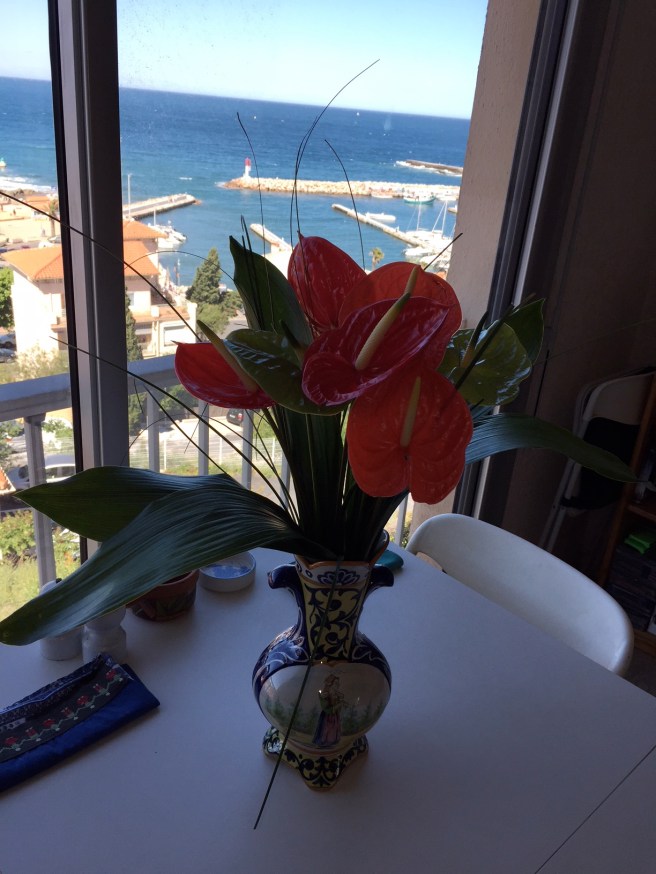
I had ordered a Poirot silver swan cane for my husband’s gift, and had our daughter mail it to me from the States, as it was just too long to fit into any of our suitcases. Because my husband was not physically able to do any shopping in the stores, he decided that I should go to our favorite jewelry store in Perpignan (the store of the wedding rings; see: 10-“Out and About”) and purchase a Catalan garnet ring for my anniversary present! The Catalan garnets are a must for any shopping list; unfortunately, the garnets originally found in the Catalan are now only found in pieces of antique jewelry. Today’s garnets come form elsewhere in the world, but are cut and set in the Catalan style. A strictly controlled guild guarantees the Catalan garnet industry in the area. So my best friend and I met one day in Perpignan, had our usual coffee and pastries at L’Espi, the pastry café, and headed over to Gil et Jean Jewelers. We had so much fun looking at different rings and were delighted with our final choice. Luckily my husband agreed with our choice! So now we were ready for our celebration. The day before, our friends sent us a lovely bouquet of flowers.

anniversary flowers

The weather was beautiful on that day in May as we headed up to the hilltop village of Montner. We had a lovely round table in the corner of the dining room and then informed the chef that we would like to order the chef’s choice menu. This meant about nine courses chosen by the chef and the accompanying different wines for each course. Our guests were surprised with the commemorative program I’d created, which included Sara Teasdale’s poem (“Let it be you…”) from our wedding program, which my best friend had translated into French for our French friends. As she read the poem in French, it was a tearful moment for all of us as we remembered her husband, whose passing was still fresh in our minds and hearts.

Let It Be You – Sara Teasdale

            Let it be you who lean above me

                        On my last day,

            Let it be you who shut my eyelids

                        Forever and aye.

            Say a “Good-night” as you have said it

                        All of these years,

            With the old look, with the old whisper

                        And without tears.

            You will know then all that in silence

                        You always knew,

            Though I have loved, I loved no other

                        As I love you.

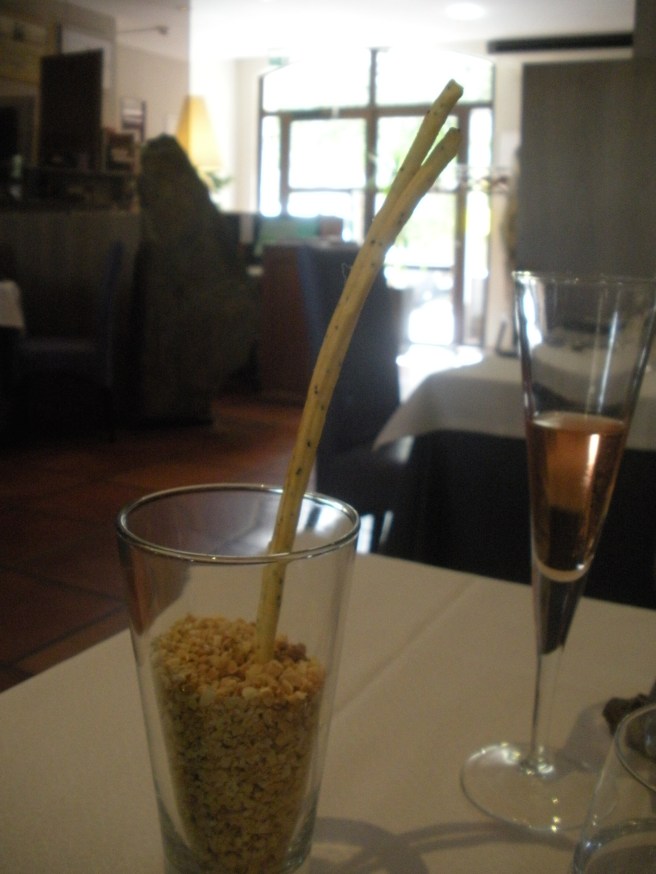
 We started our celebration with the obligatory champagne accompanied by parmesan galette presented in a rack.

galette in rack

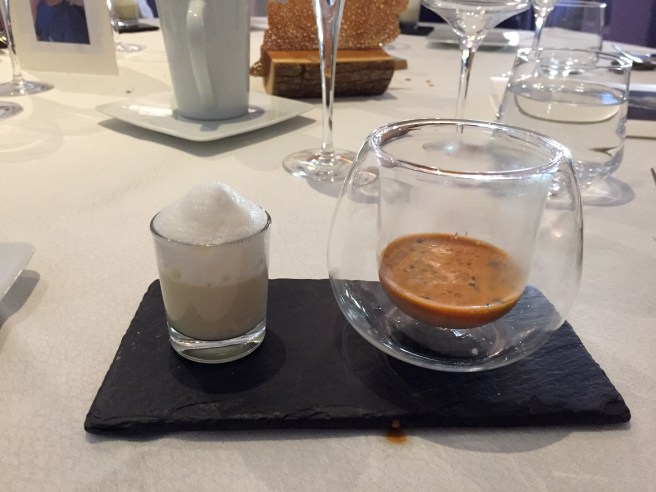
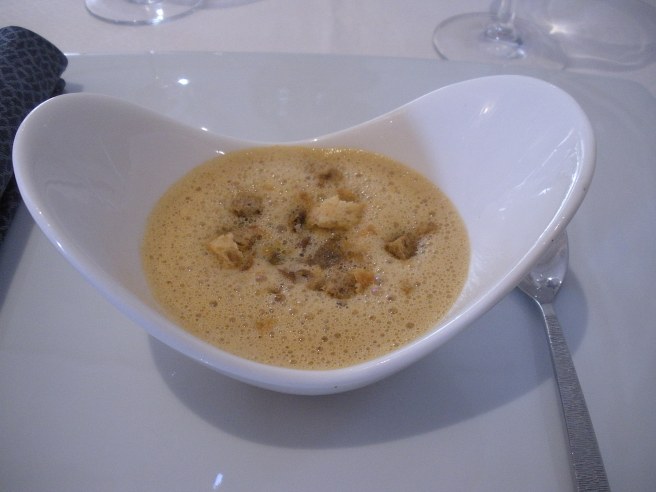
Then mushroom and lobster bisque with Roquefort cream and star anise foam.

course 2

Third course was foie gras poached in a duck bouillon with spring vegetables,

course 3

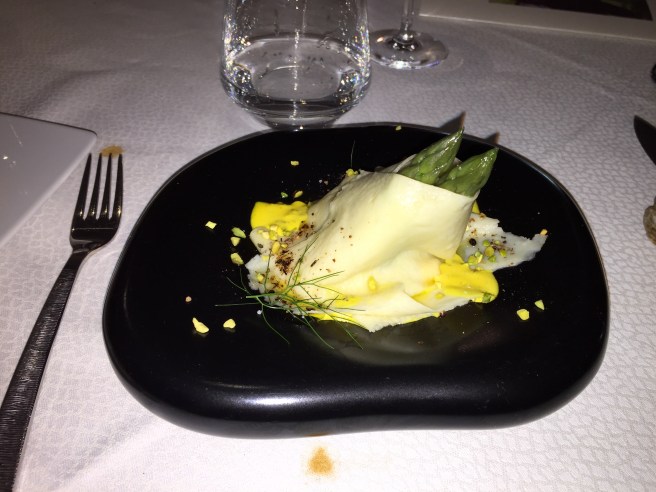
then asparagus wrapped in a lasagne noodle with cream of tarragon sauce and pistachios.

course 4

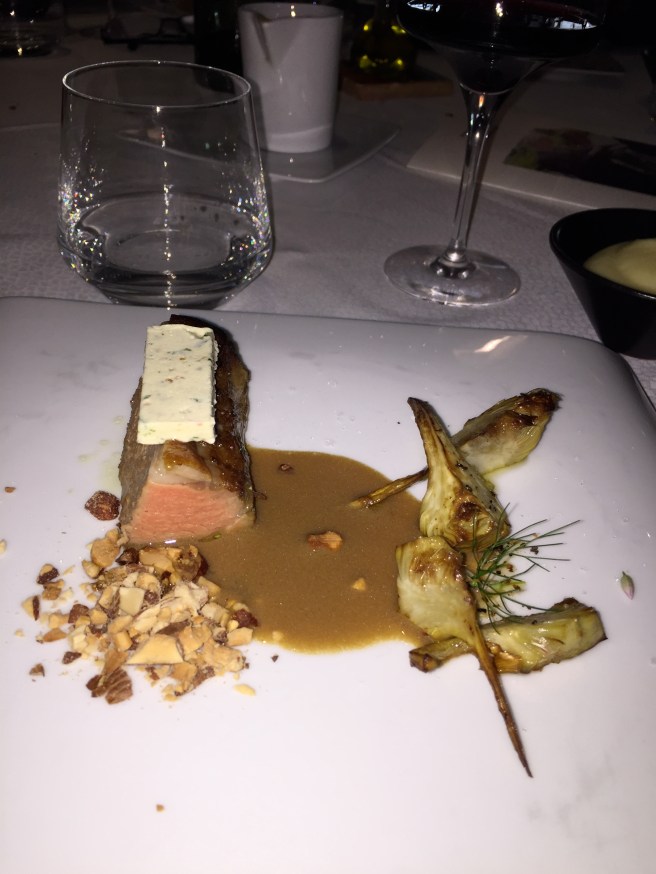
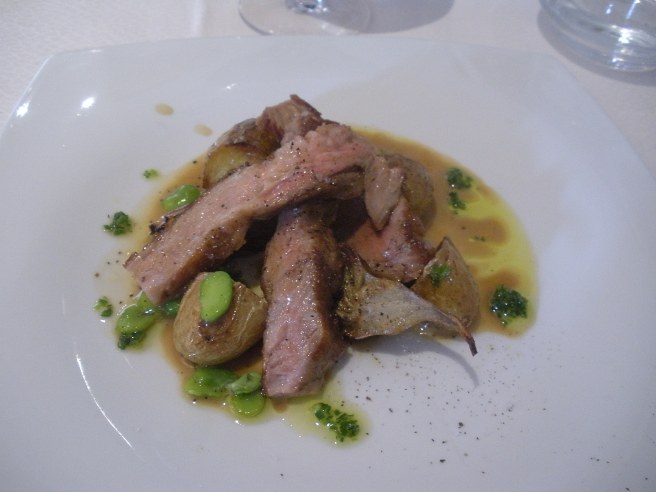
Fifth course was galinette (fish) topped with a paper-thin layer of blanched pork fat with fava beans and peas, citrus and spinach. Sixth was lamb topped with a slice of anchovy butter, artichokes, almonds and mashed potato with gravy on the side.

course 5

Desserts then arrived: pepper ice cream on red fruits and red galette,

dessert 1

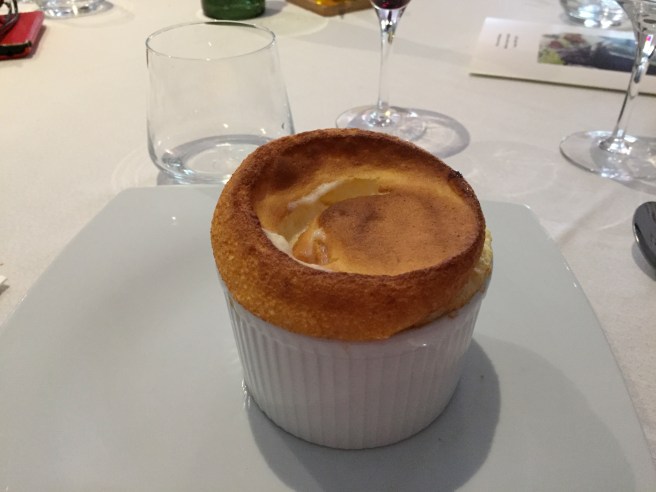
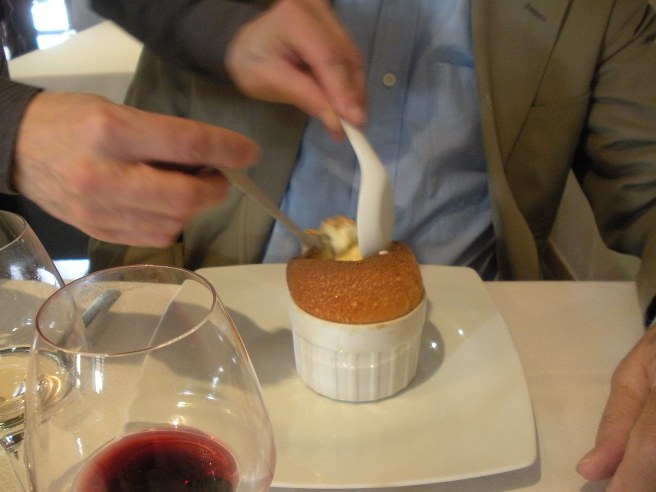
followed by lemon souffle with rhubarb sorbet.

dessert 2-souffle

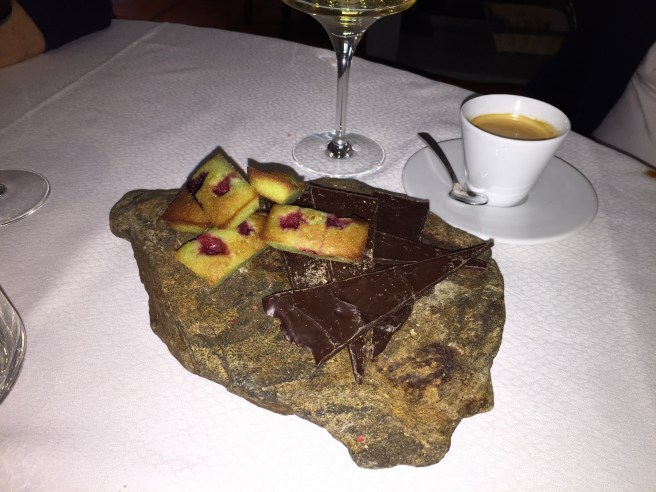
And finally coffee with chocolate slabs and pistachio financieres.

dessert 3

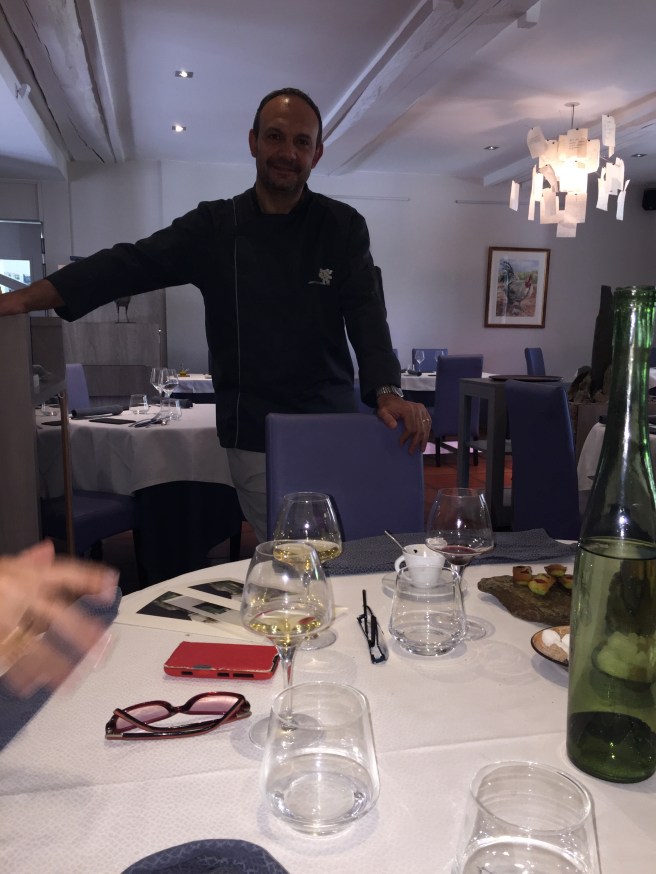
Four hours later…… Yes, it was a typical French luncheon presented by Grand Toque Chef Pierre-Louis Marin, with superb cuisine, wonderful wines and fabulous company!

Chef Morin

A month after our arrival, our new garage door was ready to be installed. I spent several days cleaning out the garage, trying to move anything that looked like it might remotely be in the way, into a more appropriate spot. The workmen arrived at 9 a.m. and were completely done by 4:30 p.m. They agreed that the old door was really heavy! We still have a “little door” within the garage door, just like in the old door. My American friends think this is “cute.” For us, it’s a convenience as we store quite a few things inside the garage, besides the car, and it’s easier to open the “little door” than to take up the entire door when we want something from storage. Now we just have to remember on our arrival each year to go upstairs to turn on our electricity, before we can open the garage door. That’s the only hitch!

new garage door

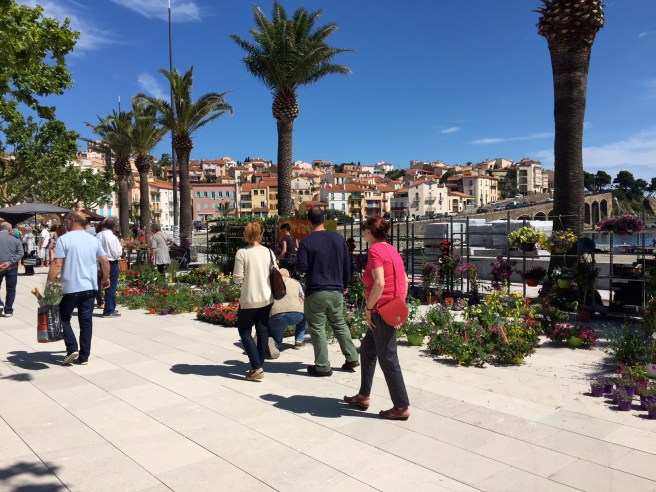
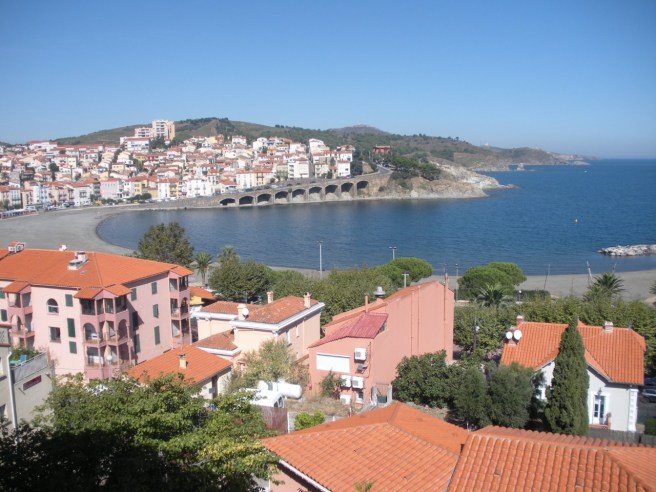
While we waited for our various workmen to arrive for this year’s projects, I continued my daily routine of walking down our steep hill to fetch the newspaper and bread every morning, then back up the hill to plan our noon meal. My happiest times are always spent in the kitchen, creating new dishes and happily preparing the tried and true ones. This year the village had decided to renovate the front de mer—the seafront. As usual there was much disagreement about what should be done or if anything should be done to clean up the seafront and create a congenial modern space for tourists and villagers to enjoy. There were always those who felt that nothing should change—all change was bad and we had enough tourists. And then the others, who wanted to modernize and bring more tourists to our village, would speak up and present their plans.   After much discussion over the winter, the plans were going forward. Several of our Maillol statues were placed in storage for safe-keeping, as was the cannon that pointed out to sea.   When the flower festival arrived in late May, the seafront was looking quite nice.

front de mer

The cannon eventually reappeared on the edge of the terrace later in the season, and once again guarded us from unfriendly visitors from the sea. But in the meanwhile, I was walking through rubble on my way to town. It took me a few days to re-route my usual walks in a way to avoid the rubble. As some of the villagers said with distain, “It looks like a bomb site in Afghanistan!” I was hopeful that when we returned the following year, all would be lovely and ready for the summer season.

Another two weeks passed before we heard from our window installers that the kitchen window had arrived. They quickly scheduled us for the installation the following week. I hadn’t been able to clean the outside of this window for over two years, so you can imagine how anxious I was to once again have a clear view of the sea, while washing my dishes! It’s bad enough to wash everything by hand; the lovely view is my compensation!

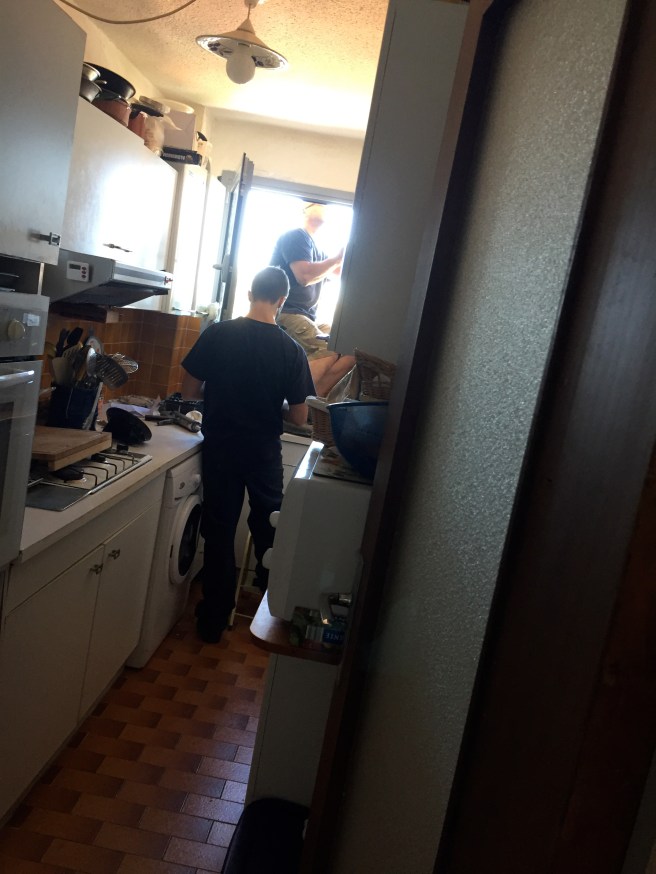
The workmen arrived about 1:45 p.m., but on the way to the elevator, the young apprentice dropped the toolbox, spilling screws and bits and pieces all over the terrace below! Poor guy! What a way to begin a job!

window workmen

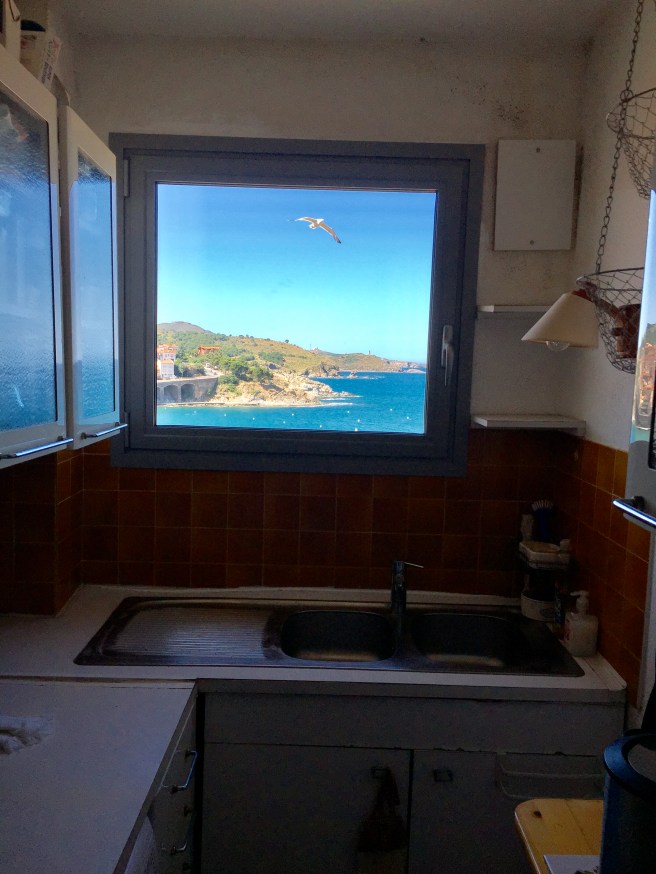
But their work was wonderful, as usual, and by 4 p.m. we had a new window—one I could actually clean on the outside!

new window

No more murky views of the sea for me! And no more murky views of me for the sea gulls!

new window-sea gull

I was ready to do some cooking, some inventing, and some experimenting!

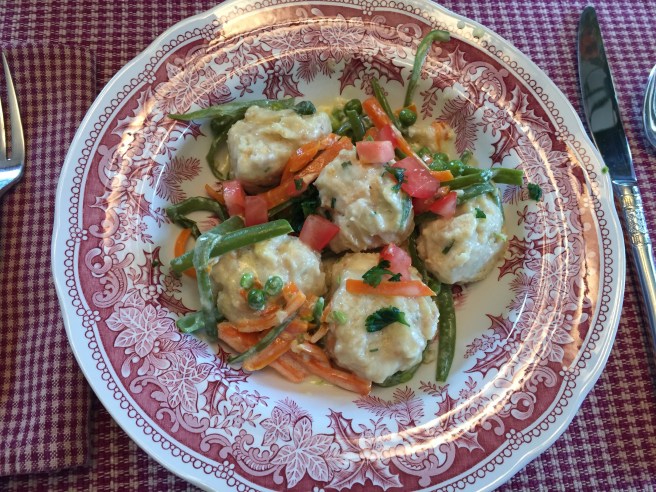
One of the new recipes I tried that season, was one I’d found in the Sunday magazine, Femina.   “Boulettes de poisson aux legumes” can be made with any white fish. I have used rascasse (scorpion fish) in France, flounder and whiting in the US. In English we would probably translate this recipe as “Fish Balls with Vegetables.” I prefer the French title. It’s easy to make and absolutely delicious! The fish is minced in a processor and combined with bread then formed into balls. The vegetables are stir-fried, then the fish balls and cream are added. The only time -consuming part is cutting up the pea pods (or fresh green beans) and carrots into julienned slices. I particularly like to use this recipe when finishing up odds and ends of fish after another favorite recipe, such as “Hashtag Fish.”  I also use the vegetable-cream sauce with seafood ravioli or any other pasta primavera dish.

boulettes de poisson

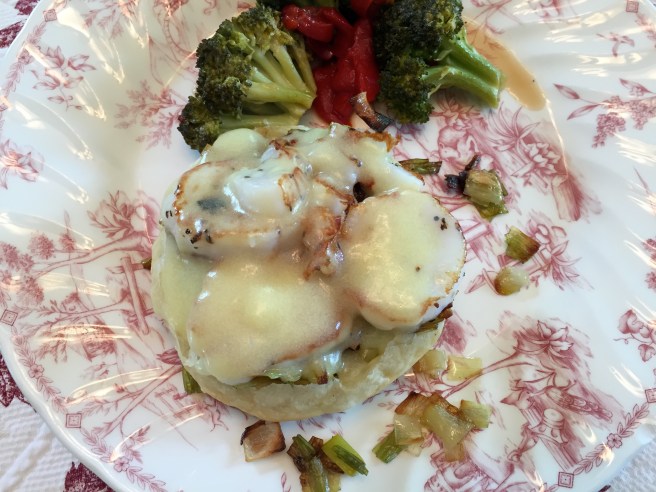
Another new recipe that has become a favorite is Tatins de poireaux aux St. Jacques (“Scallops with Leeks on Puff Pastry”). I usually have a package of puff pastry in the freezer, so it’s easy to pull out a sheet the night before to thaw in the refrigerator, and then to cut rounds that are ready to bake. The leeks are sautéed quickly and arranged in rounds on a baking sheet, then topped with the pastry rounds and baked. Once inverted onto plates, the leeks are topped with sautéed scallops. Often I add a beurre citron sauce over the scallops. A delicious recipe!

tatin de poireaux et st. jacques

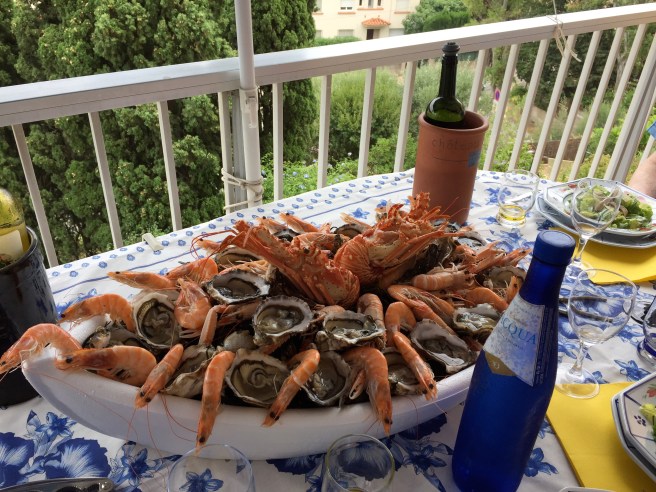
This was the year that both our daughters visited us within a few weeks of each other. The eldest came with her fiancé in late June, driving down from Germany. Since we are never sure what time they will arrive, we decided this year to order one our Poissonerie’s large seafood platters, instead of preparing a luncheon out of my little kitchen. Our guests were to arrive on a Monday, but the fish shop wasn’t open on Mondays, so I had to pick up the seafood on Sunday, with the proviso that I open the oysters myself on Monday morning. Our kind fishmongers put a wet towel over the oysters and instructed me to thaw the whole lobsters the following morning. The platter of seafood cost about 100 euros, but was well worth the price! We had such fun teaching our guests how to open the oysters and then putting together all the seafood on a bed of ice in the styrofoam boat. It was so heavy that we needed help carrying it out to the table on the balcony.

seafood platter

When our younger daughter arrived, she kept her boyfriend busy, taking him all around the village, visiting all her childhood memories. We then went the rounds of all of her favorite restaurants, and met with all her honorary aunts. Her boyfriend had never traveled to Europe and, being a picky eater at that time, was a bit worried about what he would find to eat in France. He quickly fell in love with French food and this young crab-lover from Maryland said he had to best crab ever, when we ate at our favorite fish restaurant in Perpignan. I could hear our daughter give a huge sigh of relief!

Our next renovations will include a Murphy bed for our daughter’s room and a new sofa. Then our plumber will replace the remaining radiators, so that we can more efficiently heat the apartment in early spring and fall. We are getting further down our list of projects with only the air conditioning and a kitchen renovation to come. Our guests will particularly appreciate air conditioning in the bedrooms. As for me, I cannot wait until I have a stove with four or five working burners and a base cabinet with drawers! Unfortunately, changing out a cook top inevitably starts a change reaction which then includes new base cabinets and a new countertop, so maybe a new sink, too! It will be a huge and disruptive project and looms on the horizon, over which I peer with anticipation and trepidation.

14. Renovations- Part 1


Over the years we have been in our new apartment, we have begun to make a list of renovations we some day hope to make to the apartment in order to make living a little easier for us. The building is now over 40 years old, as are all the appliances. So some changes are very necessary and some are simply cosmetic.

The radiator in the hallway was the first thing to be replaced, as it was falling off the wall. We also replaced the clothes washer a few times, but that is to be expected. Then the little heater, the chaudiere, which heats our water and gives us heat in the winter. was always a problem, so one year we went up to the city to visit the gas company service center office and picked out a new chaudiere. That has been wonderful, as it is so much easier to start up every year when we arrive. Then it’s just the matter of scheduling an annual maintenance visit, for which we pay a yearly contract fee.   Thankfully I can schedule that by email. The results of this visit are given to me and then I have to go downtown to the tabac to have two copies made: one for our insurance company and one for the co-op association, to prove that we have had the annual check completed. This is the law in France.

Next to go out the door was the horrible electric oven, dating from the construction of the building in 1976. The door never did stay shut on it and the temperature was never accurate. It was a real chore to use it. We replaced it with a nice convection electric oven that includes a rotisserie, so I can cook my own Sunday roast chicken on the spit! And it’s (drum roll!) self-cleaning! When the workmen replaced it, they ended up with a four-inch space above the new oven and said they would return to close that up with a grill plate. That never happened (just because a Catalan workman says he will do something, doesn’t mean it will ever get it done), but that turned out okay because that space is now where I store my cookie sheets and pizza and broiler pans.

A few years ago, we became tired of dealing with our leaky toilet that one workman had jury-rigged back together with putty and a ten-centime piece. So we started to look around for a new toilet. We enjoyed many an afternoon in Castorama, the huge DIY store in Perpignan. There we found a combination toilet-sink. The tank on the back of the toilet is topped with a sink. That seemed really ingenious to us, since our toilet (typically French) is in a separate WC—much like they are now doing in new houses in the US. When I told our local plumber about the toilet we wanted, he said he had never seen such a thing. So his wife looked online and found one from Italy and ordered it for us. It took several weeks for it to arrive, but finally we got a call from her to say that someone would bring the toilet the following day. Her brother arrived about 2 p.m., then a young helper arrived, and finally, the plumber himself arrived! Four hours and three plumbers later, we had our new toilet installed. Unfortunately, one of the workers had kinked the water pipe into the sink faucet, so the plumber had to return and repair that.

new-toilet

This was the year that we also decided that we needed a new sliding glass window and new metal roll-down shutter in the living room, which overlooks the sea. This is the window that gets the brunt of tramontane when it blows. There were numerous leaks around the window frame and the shutter was old and difficult to raise and lower. So we sprung for a lovely double-glazed window (avec le gaz dedans). The workmen who did this job for us were superb! It was interesting to stand at the opening, overlooking our fabulous view, without any glass in between!

banyuls-view

We thought maybe they would have to raise the window from the garden below, as we are on the third floor, but no. They came right up the stairs with the window, removed the old one and the old shutter from its box, then installed the new window and shutter.   They worked all morning on removing the window and frame and the shutter. I fed them water and rhubarb cake in mid-morning.

slice-of-rubarberkaka

Then they left for lunch for two and half hours. An hour after they returned, they were all done. They even cleaned up pretty well after themselves. The difference in no longer having cold air leaking in during the Fall and spring and the ease with which we can now shut up the apartment at the end of the season, made the expense well worth every centime.

Last year, we decided it was time to tackle the bathroom. As we have aged, it has become more and more difficult to climb in and out of a tub to take a shower. This was to be a major job as the tub had to come out and be replaced with a walk-in shower. In addition, the bidet was leaking underneath, because the porcelain had disintegrated over time. So that had to be replaced, and we wanted a double sink with a cabinet underneath.

We returned to our plumber and his wife to discuss options. They sent us to a showroom in Perpignan where we picked out a bidet, a shower, and faucets for shower and bidet. It took a while for the quote from the showroom to arrive at the plumbers’ because of a computer problem, but a week or so later, our estimate arrived in Banyuls. Then we waited for the plumber to have time to come and measure the space, and then we waited another week or so for their estimate to be ready. At last, after several trips downtown to inquire after the estimate, a quote from the plumber was ready, so we could see what we would need in funds for the following year. The devis (estimate) included the items we’d chosen plus the cost of the installation and the “eco tax” and the dechetterie fee. The latter is a recycle/trash fee charged to dispose of the old stuff they take out. The “eco tax” is fairly new French tax, which is attached to almost everything.

We decided that the new sink would have to wait until the following year, as it was really expensive; besides there was still the quote from the tiler to come to us. He wasn’t available to give us a quote until the following year.

In addition, we had ordered a heated towel rack from our gas company, to replace the old radiator in the bathroom. Bills were piling up! We had the heated towel rack installed, but of course it’s not heated unless we have the central heating turned on. It was fun figuring out to hang our towels in a new formation. We’re still trying to figure that out!

As for the rest of the bathroom, we had the plumber order everything ready to be installed when we returned the following year.

heated-towel-rack

The following spring, we took a ship across in order to spend spring in Banyuls. Driving through the Col de Banyuls, over the mountains was like driving through a wild flower garden!

We were scheduled to start renovations on April 28, but still had to wait for the tiler to return from vacation to give us a quote. But that got further delayed when the plumber’s wife got ill and she couldn’t reach the tiler. Then we found out the tiler’s brother was very ill, and the tiler was with him at the hospital up in Montpellier. He took time to come to us one afternoon and give us a quote. Then a week or so later, the brother died, so we waited through the funeral and mourning period before the tiling could be done. Work finally began May 11. We decided to move out of the apartment while the work was being done, as we would need to shower sometime during the construction!

Of course our first thought was to go to our friends’ hotel in Cerbere, and that is what we did for two or three nights. It was nice to walk around the village once again and to enjoy our meals at the hotel restaurant. Every day we returned to our apartment to check on the renovation progress.

One day we found that the bath had been removed and the wall prepared for the new shower, only we saw that they had prepared the wrong wall! So a quick call to the plumber the next morning brought a return call to us as we enjoyed our lovely breakfast at the hotel. “Monsieur,” I said, “you have prepared the wrong wall! The plan I gave you calls for the shower to be on the left wall, not the wall straight ahead.” “Oh, no, madame, it’s much nicer this way.” “But, it’s not what we planned and what we discussed with you!” “Oh, madame, but this is the way it should be. It’s the French way.” Well, okay, how can you argue with that! I threw up my hands, said “D’accord!” and continued to enjoy my breakfast.

new-shower-prer

The following day, we got a reservation at a fairly new hotel on the north edge of our village and stayed there for two nights. The first room we had was a lovely suite with a nice view of the sea. But the hotel was obviously having some maintenance problems, as the clothes rack on the back of the bathroom door was broken off, the sink stopper did not work, and the shower did not work! Since we were there only so we could have a shower, this room was not for us! We changed to a different room, this one on the ground floor. Once again the sink stopper did not work and clothes pegs were missing and the door handle was loose. But we did get a shower of sorts, although this was a handicapped room so the shower was low and not adjustable. By this time, we gave up and just returned to our apartment, taking sponge baths in the kitchen until we had the use of our lovely new shower.

The plumber gave me a choice on the placement of the hand shower, and although he said he thought it was prettier on the same wall as the waterfall shower, I insisted I wanted it on the right-hand wall. “D’accord, madame,” he said. No argument this time! We’d also requested a sliding door on the right side, by the bidet, but, thankfully, he suggested a corner-opening door. This has been a wonderful idea, as both sides slide open so we can easily get in and out! I have learned to choose my battles with the plumber, as he is invariably correct!

new-shower

When we returned to the States, we went to our nearby (2 hours away) Ikea and found a double sink with cabinet, smaller in width so that it would fit better than the French one we’d chosen at the store in Perpignan. We hoped that the Ikea in France would have the same sink or one like it, as it was much cheaper than what we would have ordered locally.

The following year, we arrived by plane in early July. This was a busy time of year for our village as it multiplies its population by four when the French go on vacation in July and August. It is these two months of the year that determine the annual income of our merchants, restaurants, and hotel owners. This also meant that, if possible, we would have to wait until after August in order to schedule any renovations. During the last week of August, the plumber arrived to discuss the work we needed done this year. In addition to our plans of installing a double sink in the bathroom, we had bought a new kitchen sink faucet at Lidl. That had to be inspected and passed by the plumber as “okay” to install. He wasn’t too happy about installing an inexpensive faucet, but I explained that it was just to carry us over until we could renovate the kitchen!

Two weeks later, I had succeeded in scheduling a trip to Ikea in Montpellier with the plumber’s wife. We had met several years previously when I volunteered to assist at the village English class. I was delighted that she would be able to accompany me for the day, as my husband’s health would not allow him to walk all over the showrooms at Ikea. However our trip got delayed a another week, and we ended up going to Ikea just two weeks before leaving to return to the States.

Meanwhile, she arranged for an electrician to come and install small spot lights in the bathroom, to provide more light for the shower, and a ventilating fan. Often in France the bathrooms have ventilating pipes, allowing air to flow in and out, but the fan part at the bathroom opening relies on the wind coming into the bathroom to make it move. Over time these little fans get stuck and are really completely useless. We have the same device in the WC.   Our electrician sent us to the lighting store in Perpignan, where we chose spot lights for the shower, and then we saw a lovely ceiling fan, which we could not resist purchasing, for the living room.

new-vent

The electrician arrived, very promptly, and worked solid for three hours. Then I asked for his bill, and he said he would drive up from Cerbere some day and put it into my mailbox. “Oh!,” I said. “You are from Cerbere? Perhaps you know my good friends who own the hotel?” “Yes,” he replied. “In fact, I am their son’s godfather!” Small world!

phillippe

The night before our trip to Ikea in Montpellier, I slept very little. So when it was time to awaken at 7 a.m., I was already very tired. I made coffee and cut the almond cake I’d made to take along for the journey.

almond-cake

By 8 a.m. I was at the plumber’s office to pick up his wife. It was a two-hour journey up to Ikea. The GPS in my car worked fine until I actually got near the store; then the voice (we’ve named her MABL—“most annoying British Lady) said, “You have arrived,” when we weren’t really at the parking garage at all! Several U-turns later, we found the entry to the garage. This was a new addition from the last time we had been to this Ikea, when we’d been able to park in a lot right outside the front door.

We walked all around Ikea without finding the bathroom displays, until a worker told us they were all in the Marketplace. We finally got to the right department, but had to go through the checkouts in order to get back into the Marketplace. We wanted a 100 cm double sink to fit into our space but didn’t have the 100 cm sink on display and the 120 sinks were too wide for our space. My friend talked with a clerk and found that they did have the correct sink in stock, so the clerk printed up our orders for us, and my friend made sure I had all the bits and pieces we would need, including the faucets. Then I treated her to lunch in the cafeteria where we had long discussions about our daughters, about our village, and about the differences of life in Banyuls vs life in the States. After a little more shopping and buying some Swedish food for my kitchen, we went next door to pick up the cabinet and sink. It took us two piled-high carts to get everything to the car and a lot of lifting (mostly by my friend, bless her!) to get everything into the car! The two-hour drive was further exhausting. By the time I returned home, we unpacked the car, and I drove my friend home, I had been speaking French for NINE hours! When we arrived at her house above the village, she invited me in to see her house. This is a house which is literally built into a steep hill. From the garage, we climbed several steps to a garden, then another dozen steps to a second garden, then another dozen steps to a third garden and the front door. There were further steps up to the second floor of the house. I sat a while in her lovely kitchen and we continued our conversation, but by this time I could hardly put together a sentence, nor could I concentrate enough to understand any of her very rapid French.   Finally I had to excuse myself to return home, but first we exited the house and climbed another dozen steps up to the summer kitchen and outdoor dining area, then another dozen steps up to the swimming pool!   Talk about total exhaustion!!!! That night I slept eleven hours.

Many years ago, after a trip to Ikea in Pittsburgh, I returned home, exhausted, and created a recipe I call “Exhaustion Chicken.” Whenever I go to Ikea, I think about this easy and delicious recipe.

joans-exhaustion-chicken

Over the next two days, my husband and I put together the bathroom cabinet. When it came to constructing the drawers, I found I’d confused the handles with the corners and the long poles with the handles! Anyone who has put together Ikea furniture knows what I’m talking about! We got it all straightened out in the end and the next day I arrived home from town to find my lovely husband had already installed the sliders for the drawers.

A week later, the plumber arrived with his helpers. It took them almost four hours to remove the old sink and install the new double sink, plus installation of the new kitchen sink faucet. They were delighted to see that we’d already put together the cabinet! What a treat it is to finally have our bathroom completely renovated!

new-double-sink

Three days later, our neighbor downstairs came up to tell me that we had a water leak in the kitchen, as there was a slow drip from his kitchen ceiling! I frantically, once again, removed all my cleaning supplies from under the kitchen sink, pulled out the stack of drawers beside the washer, in short, I looked everywhere for a leak, but found nothing! So it was time to recall the plumber, who came over and found not one, but two leaks under the sink!

kitchen-faucet

Apparently some joints were loosened inadvertently when the new sink faucet was installed! This was also the day that our friends from Cerbere were to arrive for dinner, so I ended up doing most of my food prep on the balcony! When the plumber left two hours later, I had only 30 minutes to finish my preparations before our guests arrived.

We celebrated that year’s renovations, and celebrated the life of my good friend, the patron of the Cerbere hotel who had died suddenly at the beginning of the summer, with a lovely meal shared with his family.

menu-for-yves

We started with herring on toasts (another good reason to visit Ikea) and olives,

herrring-on-toasts

then salade au foie gras (a recipe I’ve duplicated from a restaurant in Perpignan),

salde-de-foie-gras

and then my own invention of what I call “Hashtag fish,” using interlaced cod and salmon, served with a beurre blanc sauce,

salmon-and-cod-interlaced

spinach soufflé and sautéed fresh girolles. Dessert was pumpkin-walnut bread pudding.

So now. after four years, our bathroom was complete.   Three days later, we were on the ship, bringing us back to the US.

bathroom-complete

We are ready to move on to other projects, and the list is long! The kitchen renovation keeps slipping down the list, as other changes seem more important as we age. An automatic garage door is now at the top of the list, and the installation of air conditioning has moved up, as well. But these are two very expensive projects, so will happen one at a time. Meanwhile, maybe this year we can spring for a new fridge and a new sofa? And then there’s the new kitchen window….We’ll see. It’s always an adventure!

13. Memorable Moments

We have had many memorable moments in Banyuls over the years, making new friends, sharing good wine, celebrating American and French holidays together.

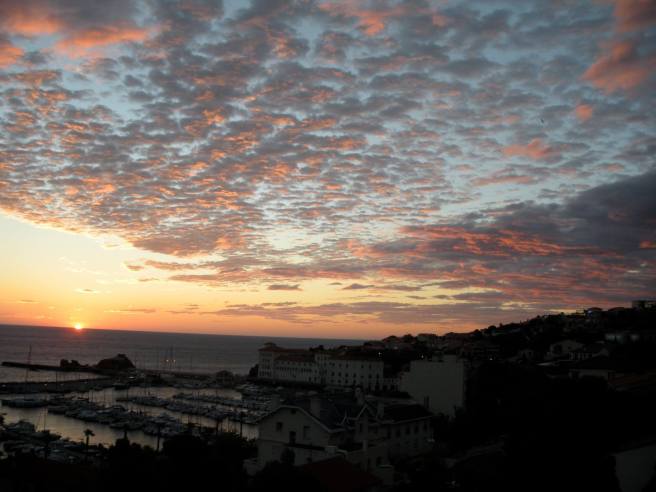
sunrise copy

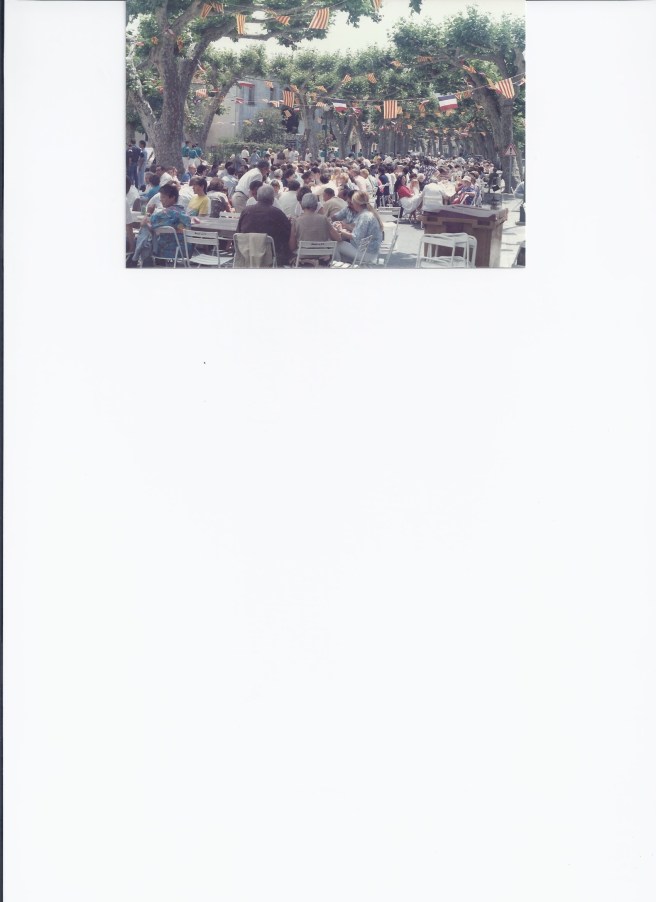
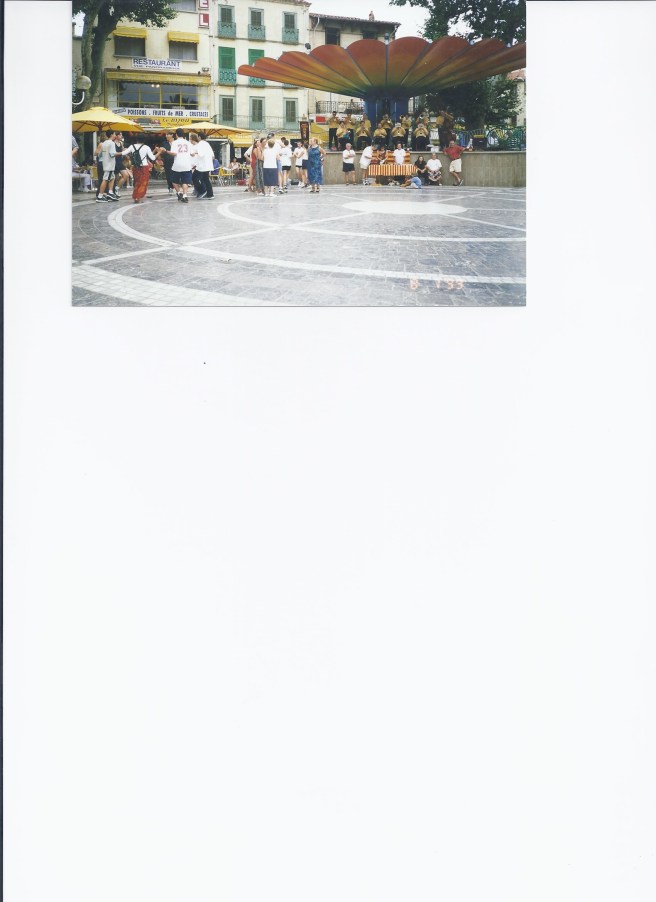
But one of the first village favorite moments was our first Catalan fest in 1986. Every summer the Catalan villages from both sides of the border get together for a day of celebration of all things Catalan, mostly food, music, dancing the sardana and crafts. That July day, we headed downtown about 10:30 a.m. to hear the speeches made by our mayor and the visiting majors from neighboring Catalan villages, both in France and in Spain. This was followed by the castellars, who are acrobats that form human towers right on the street. They climb upon each others’ shoulders, making a tower, with a young child climbing up to the top! This was very new to us, and I kept thinking about all the safety nets and harnesses they would have been required to have in the US.

By 1:30 p.m. two HUGE paella pans were cooking paella on the plaza behind city hall, just outside the post office. Tables were set all up and down the street that runs beside city hall, effectively closing off traffic for the afternoon. For 25 francs each (about $2.50 back then), we had a lovely meal of bread, wine, seafood paella and dessert. It was our first feeling of inclusion by the villagers, who welcomed us as one of their own.

first Catalan fest

Later we danced on our balcony to the music that floated up to us from the square. Amidst all the repairs and renovations we were doing at this time in our lives, our first Catalan fest was a spot of conviviality and feeling of warmth from the village, which we relished.

Catalan fest-place.jpg

Racing for a Win

One of my personal favorite moments was watching our young daughter beat the French boys in a swimming race! After she turned 12, she was encouraged to try a sailing class, as she was really too old to continue at Centre Aere, the village’s summer camp. Before the children were allowed to go out in the sailboats, they had to pass a swimming test by swimming a distance along the shoreline, while wearing lifejackets.   The boys in the class were all quite shocked that our daughter, whom they assumed was deaf or dumb because she didn’t speak French to them, beat them soundly in this race. I had to take a photo of the finish as she never would have believed it—and still doesn’t!  After that, she was treated like a princess by the boys!

Anne wins the race.jpg

Concerts

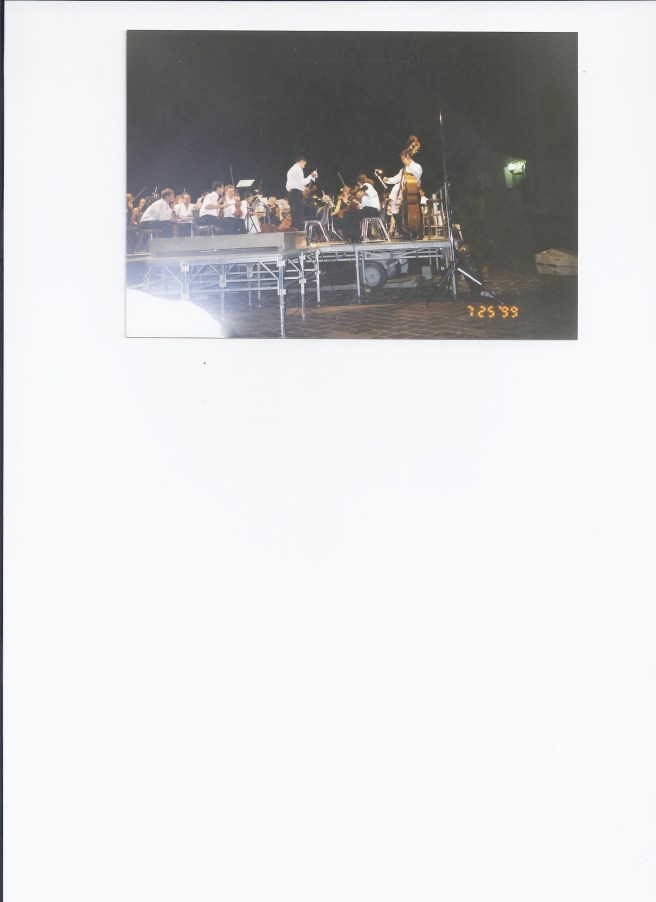
We have attended many wonderful concerts, some of which have been mentioned in previous stories. Two of our favorites were part of the annual Casals Music Festival and took place in the tiny hill village of Eus, west of Perpignan. In 1999, when our friend and her teen-aged daughter visited us, we attended the performance of two American musicians, Paul Bliss and Marian Fried. As it turned out, they used to live in our hometown in Ohio and knew lots of our musician friends. In fact, they had been hired at our university by our friend’s father, who, at that time, was head of the music department! What a small world!

Fried and Bliss.jpg

The following year, we were back in Eus for a concert by a group of eight bassists, called “The Geatles.” We arrived early so that we ended up with front row seats. They were the best bassists I had heard in a long time and were very entertaining. They were absolutely superb as they switched easily from Bach to Elgar to the Beatles to Haydn to wild, crazy stuff. They really showed the full versatility of their instruments. I remember that concert with a smile, because of all the fun they had playing together and entertaining us. Luckily we bought their CD, which they all signed, and can relive those memories whenever we please.

The Geatles.jpg

That year, we also attended a cello concert at St. Michel de Cuxa, another of the Casals Festival venues. Cellist Frans Helmerson ended the concert by playing Casals’ “Song of the Birds” accompanied by 29 cellists. At the demand of the audience, they repeated their performance. Fabulous and spine-chilling!

50th Anniversary Party in Cerbere

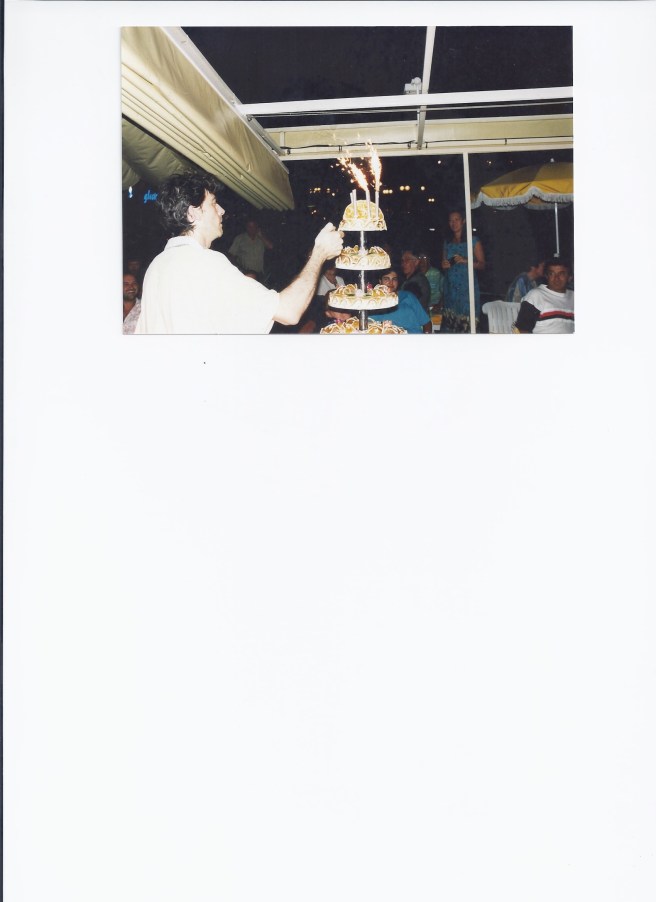
In July 1999, we were invited to the 50th anniversary party of our friends’ hotel in Cerbere. So at 9:45 p.m. we drove the winding road down to Cerbere to help celebrate this milestone. The chef had prepared a six-layer tower cake topped by Roman candles!

Dorade anniversary cake.jpg

Our friends had to open the awning roof before lighting the candles!

lighting the Dorade cake

We enjoyed a few hours visiting with the patron and his family and met a Swedish couple who had been coming to Cerbere for over ten years. When we left, the patron’s son, who now runs the hotel, gave us a fancy bottle of Banyuls wine and set of glasses. We were so pleased to be able to share this celebration with such good friends.

Coince!

Our apartment building has two elevators, one in either corner of the building. They are single-minded elevators, which means that they do not take multiple orders for stopping at the different levels. If you want to go to level 2 and your friend wants to go to level 0, the elevator will go to whichever floor’s button is pushed first, as it only takes one command at a time. We squeeze ourselves and groceries into these tiny elevators several times a week, and when we arrive with lots of luggage, the luggage and one person goes up the elevator while the other climbs the stairs.   There’s just not enough room in these tiny metal boxes for very much stuff.

On Memorial Day a couple years ago, at the end of the day, I took the trash and recycle stuff down the elevator to the basement of the building. After putting the trash in the trash bin and the recycle in the yellow recycle bin, I got back into the elevator to come up to our apartment. The doors closed, but the elevator did not move! I was coince (trapped)! After banging on the doors and pushing them apart, then back together, the elevator came up part way. After more banging and pushing on the doors, it finally came up to the second floor, but then the doors would not open for a while. I was getting really panicky by then, locked in that tiny box! Finally they opened and I got out! I had pushed the alarm button several times, but our neighbor, who is our resident “go-to” guy, was out of town, as were our other neighbors, and by the time my husband heard the siren, and had started down the stairs to find me, I was out of the elevator! It probably was only a few minutes that I was locked in that tiny metal box, but to me it seemed like hours! So we flipped the switch in the elevator to stop it, and I put “out of service” signs on all the elevator doors (all six floors!), then wrote emails to several neighbors to let them know of my experience.   Then I had a stiff drink! When our neighbor returned, he had a repairman check the elevator. He said that he always carries his cell phone with him when he uses the elevator, so he can call if he gets stuck. I told him I didn’t think I needed a phone to take the garbage down! He then reminded me that next year we were to have new elevators installed; these would have a phone in them “as well as a large mirror, so women could fix their make-up.”   Well….they do now have a large mirror, but no phone, and they now announce everything they are doing: “On descende” “On monte” “deuxieme etage,” in an annoying voice.

So this was a terrifying experience, not so much a favorite moment, but it happened on Memorial Day, so I guess it was memorable.

Fish Encounters

One year, when our daughter was ten, we went up to Canet Plage one morning to enjoy the lovely, and very long, white sand beach. This beach is more like we encounter in the US along the Atlantic coast, both in New Jersey and in Florida. While the beach in Banyuls is gravel, the beach at Canet is lovely white sand. Our daughter has enjoyed being buried up to her chin in the sand, until the sand fleas begin to bite, that is.

This particular day, the wind was down, so Canet seemed a good choice (when it’s windy, your legs get sand-blasted). By 9:30 a.m. the parking places were almost all filled, but we found one spot. The sand was lovely and warm, but not burning hot. I went into the water with our daughter. Within ten seconds, I had stepped on something that stung! I quickly backed out of the water and sat on the beach, wondering what I had stepped on! As I sat on the sand, the pain got worse. By then my husband and daughter were in the water together and far from our mats and towels, completely oblivious to my pain. So I tried to go for help, hobbling and limping through the deep sand up the beach to the children’s play area. The man in charge there directed me to a pharmacy up on the street level. It was too far and painful for me to walk all the way back to the mats to tell my family where I was going, so I had to stand there and wait for them to get out of the water and notice I was no longer there. By walking partway back and yelling and waving my arms, I finally attracted the attention of my daughter, who ran over to me and helped me to limp up to the pharmacy, which was quite a distance! There, a nice girl sat me on a chair and held a huge wad of cotton fluff soaked in ammonia on my foot for five minutes. Then she applied a white cream and said it should be better in an hour. She said I had stepped on a “vive,” a flat fish that buries itself in the sand and stings its predators, like me, apparently. After that experience, I wear water shoes on ALL the beaches!

Last year, my daughter and a college friend decided to visit Banyuls for a week, after traveling around Italy for a week of vacation, so I decided to plan a day at the local spa as a nice surprise for them.

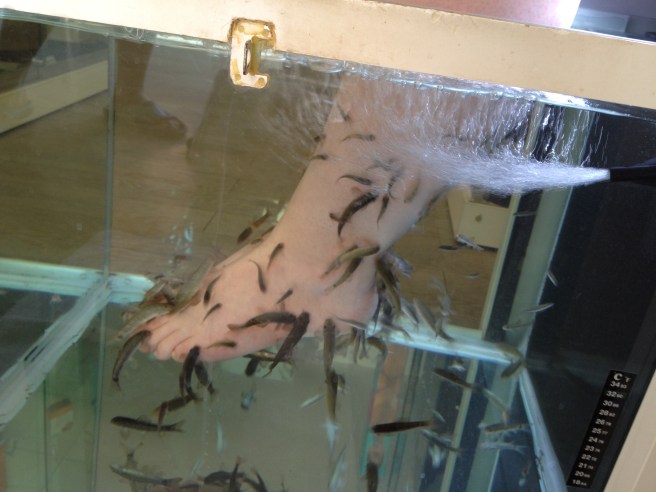
One day, my husband and I went to the spa to check it out. Besides massages and relaxing classes, a sauna, restaurant, and a pool, the spa offers fish massages! I had never seen this before, but decided this was just the right kind of exotic experience the girls would need.   You stick your feet into a tank of water and tiny fish nibble away all the dead skin on your feet and legs! I first took my step-daughter for a fish massage to try it out before booking the spa day for my daughter and her friend. We had a lot of fun, sitting on the bench with our feet in the tub of water, watching the fish eat away at our feet and ankles. It tickles for the first five minutes, but then you get used to it, and after 20 or 30 minutes, you have nice smooth feet! The tank is right out in the lobby of the spa, so other people were stopping constantly, watching in fascination and asking us questions. We all enjoyed that new experience!

fish pedicure.JPG

Boy Scouts’ 100th

In 2007, the Boy Scouts celebrated their 100th birthday. As a former scout, my husband wanted to be part of this celebration. We had read about the celebration planned by local scouts, so early one morning we drove up to Perpignan for an 8 a.m. service at the Monastere de Ste. Claire.  The church was filled with scouts and their families and friends. It was a very moving service and included the reciting of the Boy Scout pledge and other traditional customs, all in French, of course. Afterwards we went to the garden for petit dejeuner (breakfast) of juice, wine, breads and cookies. We met lots of people who all seemed pleased to have us there, particularly when they heard that my husband had attended the Boy Scout Jamboreee in Paris in 1947. One of the guests at the celebration had also been at this jamboree!

USS Avenger Visit

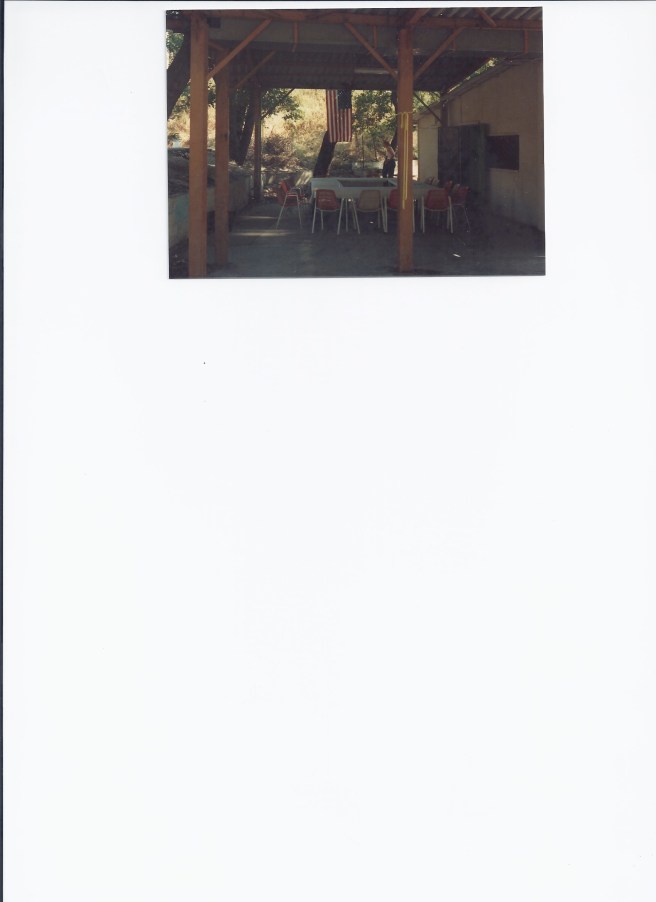
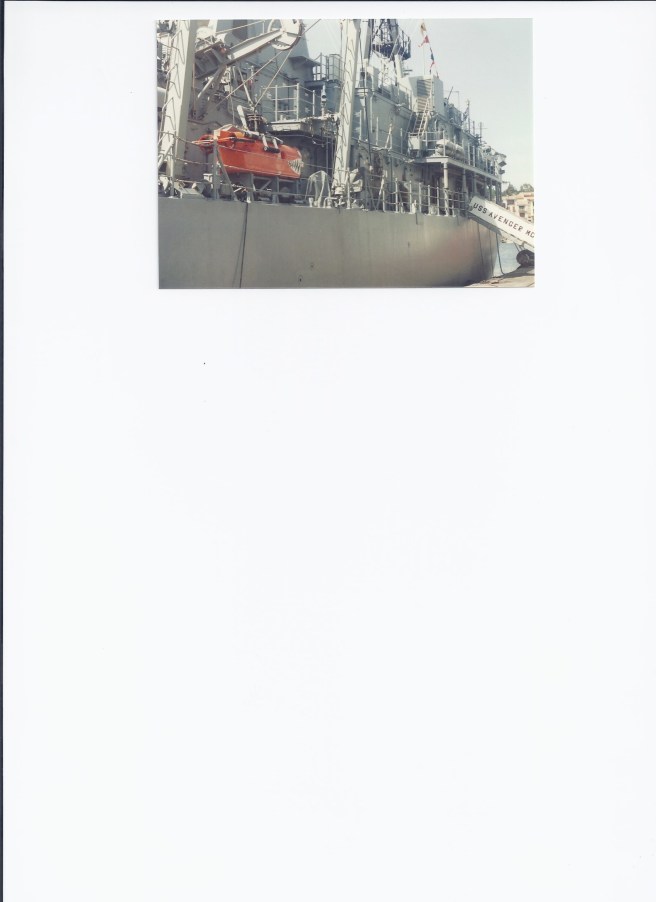
But the most significant event of our 30 years in Banyuls was the arrival in July 1991 of the USS Avenger.   This minesweeper had been in the Middle East during the Gulf War, and was on its way home after a year of deployment. So for the 4th of July, the Avenger came into the port of Port Vendres, our neighboring village, for several days to celebrate the American holiday. My best friend was enlisted to organize a picnic for the officers of the ship and to do all the translations for the ceremonies in Port Vendres and in Banyuls. So we few Americans in town were also enlisted to help with the picnic. I made a large bowl of cole slaw and baked a pot beans all night long, then opened six cans of Green Giant corn to heat up. (Fresh corn is only recently being seen in the markets of France and it is always, always seen with wrinkled kernels. The best option is to purchase canned corn!) Our friends bought pre-formed hamburger patties (rather unusual in France back in 1991) to cook on the grill. Then we helped decorate the campground pavilion in Banyuls with yellow ribbons on all the posts and trees and put American flags on the tables.

campground picnic.jpg

About ten officers arrived around 11 a.m. and we served them hamburgers, baked beans, cole slaw, lentil salad, potato salad, corn, lettuce, tomatoes, onions, chips, munchies, watermelon and peanut butter cookies—a little taste of home. After our picnic, we took them to the large winery in Banyuls for a tour, and then we all went to Port Vendres for a look at the ship and a ceremony at the American Revolutionary War monument.

4 July in PV

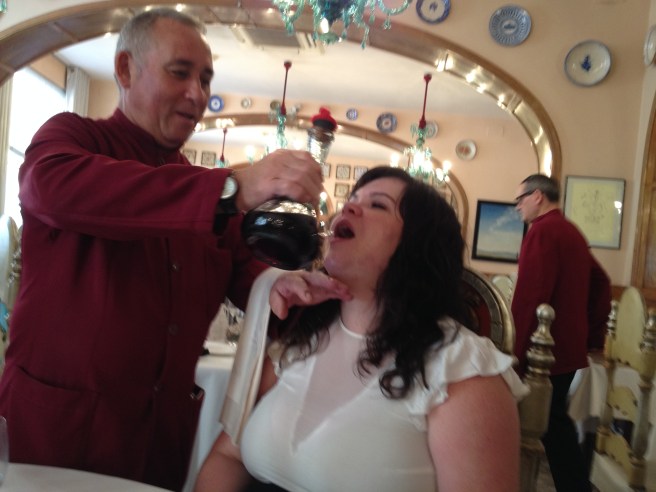
This was followed by a cocktail party at Club Nautique in Port Vendres, where the captain was shown how to drink from a porron (see “Adventures and Misadventures in Spain”).   Our three-year old daughter sat on a bar stool, singing “Itsy Bitsy Spider” and “Mary Had a Little Lamb” with the sailors, who all fell in love with her.

USS Avenger.jpg

After this, we returned to the ship for a thorough tour of this minesweeper (we were given USS Avenger caps, which I still wear proudly on the 4th of July), after which we took the captain and five other officers up to Argeles for tapas and authentic gypsy flamenco in one of the cafes.   We got home at 2 a.m.! Our daughter became very attached to one of the officers

Anne and Bill.jpg

and enjoyed being carried through town by the captain.

Capt. Cope and Anne.jpg

These fellows were really missing their families and anxious to get home to them. We were glad to be able to give them a little reminder of home as they headed back across the ocean.

Christmas for the Millennium

For the millennium, we decided to spend Christmas and New Year’s in Banyuls. This was an experience not to be missed. In addition to our favorite shopping trip for a tree (“Out and About”), we had wonderful meals with friends, sharing our Swedish Christmas with French friends and their Icelandic relative, and sharing an English Christmas dinner with the family from Cerbere.

We flew into Paris and took the train down to Banyuls. By now our daughter was 12 years old, so was no longer permitted to share a wagon lit bedroom with us. So, in order to stay together, we had to book a couchette, which is then shared with strangers—not the ideal.

When we arrived in Banyuls, we walked down through the quiet village and up our hill on the other side. It was fun to see the lights decorating the trees and the new stage with multi-colored shell overhead on the square. There was even a Christmas tree on the square, but only lights on it from half way up to the top! Typical for that time of year, the tramontane wind was very strong and cold.

After picking up a rental car in Perpignan the following day, we went to Auchan, one of the large grocery stores in Perpignan, and bought what we would need for our Christmas celebration, plus our daughter’s surprise present: our first TV. It was then we discovered that there is an annual tax to pay if you own a TV! Every year we receive a form from the government asking us if we still have a TV, so that they can add the TV tax to one of our annual tax bills.

We found our wonderful $5 tree on the 21st of December, and our daughter then spent about three hours making tree ornaments to add to those that had come with the tree.

tree and bookcase.jpg

The following day, we drove up to Toulouse, a 2-hour drive, to shop at Ikea for items for our Swedish Christmas. I was able to buy a Julbock (Christmas straw goat), some tomtes, herring, and lingonberry jam. The next two days were spent in the kitchen making syllta, Swedish meatballs, red cabbage, ham, cookies, cake for a Buche de Noel, salmon, and all the rest of our traditional foods for our Swedish smorgasbord. One of the bars downtown was owned by a Swedish family that year, and also was decorated with lots of tomtes.   We enjoyed a nice hot glass of glogg with the owners one cold evening. I think they were pleased to find someone who appreciated the Swedish Christmas customs.

On Christmas Eve, our French friends arrived for Swedish Christmas with their Icelandic “granddaughter,” just as Pere Noel arrived on the beach below us by Catalan barque, all lit up with lights and torches. He landed under the arcade and created a lot of excitement for the village children.

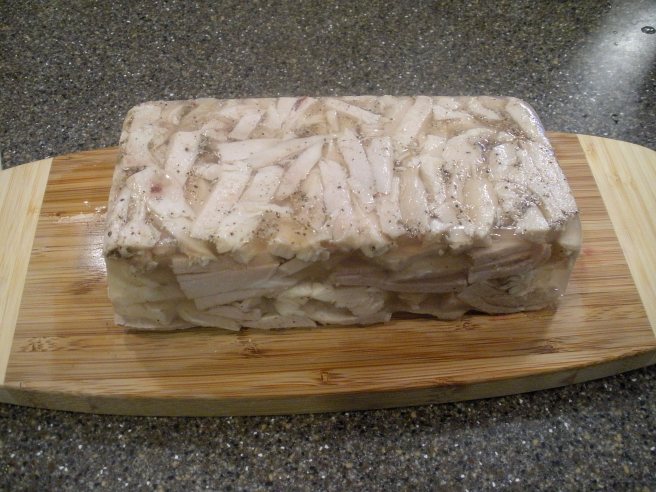
For our Swedish Christmas we all started with glogg and hors d’oeuvres of salmon mousse, anchovy paste, and boursin with hardbread and toasts. Then we went to the table for the first few courses of shrimp, herring, anchovies and sardines, salmon, and syltta.

syltta unmolded.JPG

Then we had the buffet of ham, Janssons Frestelse, beans, red cabbage and apples, meatballs, and cheese. We ended with the traditional French dessert of Buche de Noel. The tomte had come and left little packages for everyone, after which I played the Swedish Hymn, and then it was officially Christmas.

About 10:30 p.m. we all drove down to the village church for Christmas mass.  The priest headed the procession, carrying the baby Jesus into the church and placing him in the crèche. He was followed by about 20 children dressed as angels and in Catalan costumes; they stood or sat around the crèche. We sang several familiar carols in French and in the middle of mass, the children danced a Catalan dance and everyone clapped along. It was an unusual church service, but full of joy, and it lasted exactly one hour.

Christmas morning was special because all the presents were small—they’d had to fit into our suitcases!—except for the bookcase my husband had made for me and the really big box that had been intriguing our daughter for several days.

TV.jpg

She was so surprised in opening it to find a TV! She spent most of the day exploring the different French shows that were available, learning quickly that French TV shows never start on time!

Two days later, our Cerbere friends and their two small children arrived for our Christmas dinner. We had brought a frozen turkey with us from the US. It was only 12# because that is all that would fit into the suitcase, but to them, it was humongous! For this dinner, we did our usual roast turkey with oyster stuffing and chestnut stuffing, mashed potatoes, sweet potatoes, brussels sprouts, carrots, then pumpkin pie and Christmas pudding with custard. It was an unusual dinner for them, and I remember that the children did not eat too much, but enjoyed the dessert!

On New Year’s Eve, the entire village was invited to gather on the beach in early afternoon for a millennium photo. All the children sat on the sand and the older people sat on chairs. It took about an hour to get everyone ready, so it was a lot of standing around just waiting. But we’re very glad to have a copy to hang on our wall to remind us that we belong to this small village on the French coast of the Mediterranean.

beach millennium photo.jpg

Later we dressed up in our party clothes and attended an aperatif for a free glass of Banyuls wine served to everyone by the municipal police.

By early afternoon we began to watch the millennium on TV as it traveled around the world. This was broadcast on a Spanish station. It was really wonderful to see how each country celebrated. We had Pitt Island at 1 p.m., New Zealand at 2 p.m., Japan, China, Indonesia, India, South Africa, Russia, Egypt, Greece, Sweden, Finland, Norway, Germany, etc. At 11:30 p.m. we switched to a French station and began the Paris countdown—the most fabulous display of all. It involved three ferris wheels of acrobats and pictures, and then the Eiffel Tower exploded stage by stage—wonderful!

At midnight our daughter hit her “crystal” ball with a hammer to open the surprises inside and we shared a bottle of Moet-Perrier 1990 champange. Thus the new year and the new millennium arrived for us in Banyuls. We had celebrated the dawn of the new millennium in our little bit of paradise.

sunset-last.jpg

12. Menus and Meals

The other day, I made poulet aux pruneaux (chicken with prunes), a Catalan recipe. I know it is Catalan because it includes ham! Travel anywhere just over the border in Spain, and you will smell the pig farms. Pork and ham are favorite meats of the Catalans, and so you will find chopped ham included in many of their recipes. After Christmas, I freeze pint-sized zip-loc bags of ham slices from the Christmas ham, so I always have some on hand to throw into the skillet, as needed. At stores in Spain, we see large hams (smoked and dried) hanging on strings, waiting for customers. They even sell canvas cases for them; they look like covers for tennis rackets!

Several years ago, my best friend turned her creative talents from watercolors to writing and wrote a book about the artichoke, including recipes from grande toque chefs in the area. Villelongue de la Salanque is a village just north of Perpignan and is well-known for its artichokes, much as Castroville, California, is in the US. This is when I learned about violets, the young artichokes that are eaten whole.

violets


When an American friend visited us a few years ago, I showed her how to prepare these delicacies for artichoke risotto. The process is rather labor intensive, but I think they are well worth the effort.

artichoke risotto

They can also be prepared with other vegetables for Pierre-Louis Marin’s Legumes a la Grecque.

violets a la grecque

The main problem I face when returning to our small town in the US south, is finding really fresh fish. We have a fishmonger who is open only four days a week, but brings fish from the markets on the coast, so his fish are fresher than can be found in the grocery stores. One year I decided to make soupe de poissons (fish soup), so got my best friend’s recipe from her, and off I went to find fish heads. All the grocery stores had were filets. How do you know a fish is fresh if you cannot look it in the eye? I once asked the clerk at a fish counter how fresh the filets were that she was selling. She went to her card file and said “They came in on Thursday.” This was the following Tuesday! What happened to the expression: ”Guests, like fish, smell after 3 days”?

I had to ask the fishmonger to bring me some fish heads from the coast, as he only brought filets with him to sell. So he brought me two salmon heads and a few mullet heads. The salmon heads were too big to grind up in the food mill, but the resulting soup was delicious.

To understand the problem of getting fresh fish in our small US town, here is the experience I had a year ago. I had been on the look-out for mackerel to make some of my favorite Banyuls recipes here in the US. Our local fish monger had told me that the mackerel would be coming in around mid-March, but when I was there in March, he didn’t have any mackerel yet.

Meanwhile, I was in Krogers supermarket one morning and glanced at the fish counter—always full of nameless filets on display.  BUT that morning I saw–lo and behold!– three kinds of WHOLE fish!  That’s right—with heads and tails!  And one sort was mackerel.  I was so excited!  So I picked out just one, as they were really LONG and when I asked the young man if it was cleaned, he said, “Oh, I’m sure it is; they always come in cleaned.”  Then he kept feeling its belly and discovered that it was NOT cleaned, so of course I asked him to clean it (a mistake).  It took FOREVER for him to clean that one skinny fish!  He said at one point, “Wow, this is really hard!”  Finally I said “Oh, it’s okay; I’ll clean it out again when I get home.”  When he brought it to me on a styrofoam tray (with head and tail flopping over the ends), he said it was the first time he’d ever cleaned a fish.  “I used to go fishin’ with my dad, but he always cleaned the fish.”  I said I figured that was the case.  When he asked why, I said because it took so long!  Then he decided to transfer the fish to a humongous ziploc (2 gallon, at least) bag because that little styrofoam tray just wasn’t cutting it!  THEN he took $1 off the price because I’d had to wait so long for him to clean the fish.

I asked him what the other whole fish were—looked like a pageot, but pink with yellow stripes.  He didn’t know.  He asked a colleague who said he thought they were snapper, but he didn’t really know. The only other whole fish was a huge red snapper that was more a decoration than food. Is it any wonder that we head for the Poissonnerie for fresh fish as soon as we arrive in Banyuls?!

Papillotes de maquereau

After having mackerel steamed with vegetables in foil packets one day, we often have leftover fish, which I then prepare cold with curry served on a bed of sautéed leeks and zucchini the next day. This latter is a recipe I copied from the restaurant at Clos de Paullilles.

Mackeral in curry.JPG


Of course, in France I can get lovely fresh sardines every day, and enjoy trying different recipes with them. They are nothing like the canned sardines I grew up with in the US!

fish copy.JPG

I set myself two recipes to master this year. One was joues de porc a la sauce de Banyuls (pork cheeks in Banyuls sauce), such as I first had at La Pardalere. The second was foie de lotte (monkfish liver), such I first had a 7ieme Vague, in the suburbs of Perpignan. I will have to tackle the latter in France, as there is no way I will ever get a monkfish liver where I live in the US. We do find pork cheeks (jowls, they are called) here in the South, so this month I will do my first trial.

Last week I tried a new recipe from our local Roussillon newspaper, L’independent, which daily has a recipe for its readers to try. I often clip them and bring them back to the US to try, if they include ingredients that are readily available here. Today was Tagliatelle a la ratatouille. Luckily I still had some ground veal left from another dish I’d made recently.

tagliatelle a la ratatouille.JPG

Reading through the recipe reminded me that emince does not mean “to mince.” It means “to thinly slice.”   It’s one of those French words, which my colleague calls “false friends,” when teaching her French classes. They look like an English word, so we assume that is their meaning. My very young French teacher in high school told us a story about one of her faut pas when visiting France. She’d been out with a group of young French people and had enjoyed herself very much. She wanted to tell the guy she was with that she envied him, living in France. So she used the verb envier. When she said to him, “je vous envie,” she thought she was saying, “I envy you.” She didn’t realize she was actually saying, “I desire you.”   A false friend, indeed! As a teen, I often wondered how she got out of that situation.

We have had many fabulous and interesting meals over the years. I always get ideas from the restaurants, other chefs, and my friends. The three of us (my best friend, my French friend and I), with our husbands, often get together for meals, and, I must admit, often vie with each other for the most interesting dishes to present. I have served French friends elaborate salad bars, where they had quite a lot of difficulty piling various ingredients onto their plates, as one does in an American salad bar. The French like their salad foods separated. I have introduced them to barbequed ribs, cole slaw and fried green tomatoes with remoulade sauce.
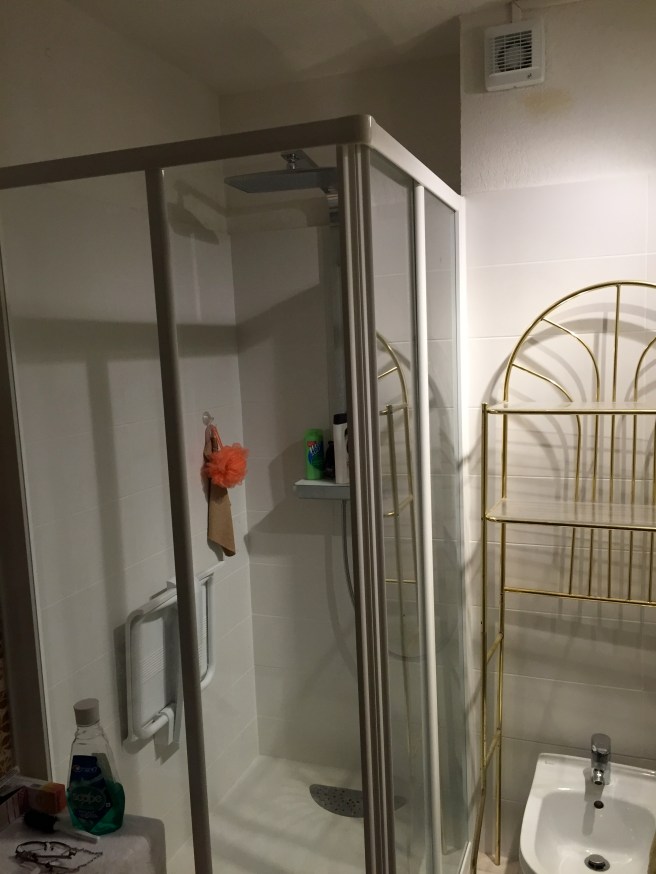
And I have reproduced our Swedish Christmas smorgasbord and English Christmas dinner, and 4th of July picnics. Then I return to the US and invite friends in for a Catalan dinner or Spanish tapas. Our daughter’s favorite, escalivada, is always on the menu. This is a combination of roasted vegetables, served cold with a vinaigrette—all ingredients are easy to find in the US.

Escalivada.JPG

The trick to making meals outside of the regional cuisine where I happen to be is to find the proper ingredients on either side of the pond!

Our friends in France have made frog legs for us, tuna-avocado salad on a Pringle chip, smoked trout on toasts,

 Smoked fish canapes

 salade aux geziers,

Salade aux gesiers

grilled bananas, boar stew, appetizer cake,

cake sale.JPG

and Tupperware tuna mold!

tuna mold.JPG

The tuna mold was quite a surprise for me when my French friend served it to us. I found it delicious and asked her what it was. “Oh!” she said. “It is a recipe from Tooperwar!” What? “You know. The plastique mold? Tooperwar.” Ohhhh….Tupperware! Yes, it’s in France, too! I was happy to add the Tupperware recipe, coming to me via France, to my repertoire.

My French friend said one day, “Come for luncheon this week. It’ll just be a simple meal, nothing fancy.”   After years of her wonderful meals, we have become skeptical when she says the meal will be “simple.” This was a meal for the six of us, so we knew it would be anything but simple!

We started with champagne and with this were Pringle chips topped with tuna and avocado salad. She had served us this appetizer several times before and have never seen this idea anywhere else. What an interesting way to use Pringles! Another easy appetizer she uses is pinwheels of puff pastry filled with tapenade.

Verrines have become very popular in France in recent years. They even sell the tiny glasses or dishes that are used for these mise en bouches in plastic! They are lovely little bites of fish and vegetables or anything that looks lovely layered, as you want to see the layers through the sides of the glass. They are also used as desserts with layers of fruit and custard and crumble. This particular day, my friend served us verrines of salmon mousse, pureed watercress and toasted squash seeds.

j's verrine.JPG

then shredded celery root and apple topped with smoked salmon,

J's fish course.JPG

then grilled gambas, calamar and monkfish

J's grilled parillada.JPG

with grilled vegetables,

J'sgrilled veggies

then cheeses,

J's cheese

then tarte aux pommes,

 J's apple tarte.JPG

then coffee and pots de creme!

J's coffee.JPG

This is considered a simple luncheon! We also had a fabulous meal at her house one January, when she served us anchovies and butter on bread, foie gras and magret de canard (sliced duck breast) on a leaf of endive, pheasant in cream and cider sauce with fried apples and rice, then cheese, then cherry tart. Another day her meal for us included a salad with dried maigret de canard (duck breast), which she prepared herself. She buries the duck breast in coarse salt for 24 hours, then peppers it and puts it in the fridge for 20 days! These meals last about six hours from champagne to coffee. Nothing is really simple at a French home.

My best friend, who is native French, but grew up in the US, rivals these meals with those she creates for us, adding her own artistic touches. One we particularly remember started with rillettes on bread and lady bug creations made of tapenade and tomatoes! Then seafood salad stuffed into lemons with long spears of olives and grape tomatoes stuck into them. Then potatoes and frog legs, followed by fresh fruit and whipped cream. She is always introducing us to something new!

Another year she served us three different canapés, which included ham and cheese, heart-shaped bread topped with omelet and anchovy and bread topped with herring. Next course was tarte aux feves with salad. Then cold salmon stuffed with spinach and carrots, rocket and three sauces: béarnaise, tartar and aoli. Then blueberry crumble.

Feves are a lima bean-like vegetable that are quite delicious. However, you must plan well ahead of time when cooking them. First you take them out of their pods, like shelling peas. Then you parboil them to loosen their skins. Then you slip them out of their skins. You may start with two pounds of feves from the market but will end up with half of cup of beans! They are very labor-intensive to prepare. After having prepared them myself several times, I am always very appreciative of receiving them in a restaurant or at a friend’s home!

When the six of us got together at my best friend’s home in Pia several years ago, she served us a variety of appetizers: caperberries, garlic cloves, pain au tomates, bread sticks, and egg-salmon-caper canapés. Then we had vichyssoise, then grape-stuffed quail with vegetable omelet on lettuce. Then cheese, then grilled bananas and grilled pineapple with strawberries. This was another six-hour luncheon!

In return, I have served our friends many interesting meals. The menu for our British friends one year began with seven different appetizers with Perelada (a cava, bubbly Spanish wine) then Collette’s Cucumber Salad (from the Ratatouille cookbook for children), stuffed squid with carrots and potatoes, served with Albarino white wine, then melon au Banyuls and red currants served with white Banyuls wine. We always share our favorite recipes. Last year, I learned a lovely recipe of melon and cucumber salad from them.

When the six of us got together at our apartment one year, I served six different appetizers with Perelada in the living room. Then we sat at the table on the balcony and had our meal: spring roll, fried sardines and vegetable terrine with accompanying sauces,

Sauces.JPG

then veal chops and potatoes, then cheese, then panna cotta and kumquat cake with our coffee.

One other year I wove strips of cod and salmon together, then poached them, for our main course.

Salmon and Cod interlaced.jpg

Another time I fried squash blossoms to put on top of stuffed artichokes for our entrée. Last year I tried a new recipe, which was a seafood lasagna with safran sauce—both elegant and delicious!

lasagne saffronee

One year we took fresh corn, from our local farm in Ohio, in our suitcase. Twenty-four hours later I had it cooking for my best friend who was longing for real corn on the cob. Her Spanish husband would not eat it, but my friend really enjoyed every bite! Then we had veal in tarragon with potatoes and spinach soufflé, then palmiers and Junior Mints (also arriving in the suitcase) with coffee. Yet another day, I made her Manhattan Clam Chowder, chicken with chestnut stuffing, sauced turnips and carrots, then Tarte aux Pommes Alsacienne. I try to remember what foods she might be missing from her childhood in the States, and include them on my menus for her. She teases me because I keep a card file on what I serve to our friends, so that I do not repeat the menu for them. But this is also helpful when it comes to remembering that one friend likes only white wine, someone else likes only red wine, another likes whisky and orange juice, another doesn’t eat chocolate, one can’t eat lettuce or cabbage, and another is left-handed and likes her silverware at her place setting reversed.

It takes a long time to prepare these meals for each other, but we so very much enjoy that time in the kitchen, creating, thinking up new ways to present our chosen courses, that it is always a pleasure. Sometimes it takes me a up to a whole week to find the ingredients, then another day to start the preparation, and then all morning to do the cooking so that we are ready to enjoy our guests by the time they arrive at noon. Yes, it’s a lot of work, but I’m happiest in the kitchen, working with food and creating; I know that the meal will last four to six hours with lots of wonderful conversation and camaraderie, so that all that hard work is worth it!

Menu board.JPG

Restaurants also inspire me to try new recipes in my kitchen. When I eat a particular dish that I think I can duplicate, I can’t wait to get into my kitchen for a bit of creative fun! At Restaurant Le Vauban in Perpignan, I ate a salad with Serrano ham and manchego, which is very simple to make. In the US, I use prosciutto ham. It is, quite simply, greens, dressed with vinaigrette, then topped with sliced ham and thin-sliced manchego cheese. This is then put under the broiler (or in the microwave) for a few seconds to melt the cheese!

Manchego Salad

And, of course, our favorite meal we always look forward to is the luncheon we traditionally have at our friends’ hotel in Cerbere. Over the years, the mussel dishes have changed a bit, from the time of my chef friend’s Moules Sang et D’Or

moules sang et d'or.JPG

(mussels in a saffron sauce with red peppers) to his brother’s moules gratinee et citronee; both recipes are equally fabulous.

moule gratinees-Cerbere.JPG

I have spent many years trying to recreate these recipes, which have remained firmly locked in the kitchen of the hotel in Cerbere. Chefs do not readily share their recipes!

For several years, our daughter attended music festivals in France, including a piano camp located in Castelfranc, near Albi. One year, we took my best friend and her husband to attend the students’ final concert, staying in a B&B in Albi to extend our visit over the week-end. The day after her concert, we all went to luncheon at L’Esprit du Vin, a wonderful restaurant in Albi. There we began with kir and appetizers of fried favettes, fried olives with parmesan, and fried cod balls. Mise en bouche was melon soup with fried sage leaf and chevre and flowers. The next course was anchovy wrapped in the shredded-wheat-like dough seen in Greek pastries, after which we were served another mise-en-bouche of shrimp and cod and flowers. Then my husband and I had gambas and langoustine, while our daughter had fried foie gras on melon balls. Entremet was campari and lemonade granite. Then we had fried apricots on pain perdu. Then, of course, coffee and more tiny chocolate desserts—almonds, raisins, orange peel, hazelnut cakes.

For special occasions, we go to Pierre-Louis Marin’s restaurant in Montner, a small hill village west of Perpignan. Our first visit was with my best friend and her husband. We started that meal with a mise en bouche of beet gazpacho served in a leaning shot glass and salmon sushi. The entrée was two soft-boiled eggs with toast points topped with anchovies and red pepper strips. The main course was bourade de morue (cod) on scalloped potatoes and toasts. Then a dessert of touron ice cream and wet rousquilles (traditional Catalan anise-flavored “dry doughnuts”). We ended with coffee and tiny pots de creme with small glasses of Maury wine.

For our anniversary a few years ago, we ordered his Mena i Calla menu, with wine pairings. This is a menu completely at the discretion of the chef, so we did not know exactly what we were going to get for our meal, but we knew it would be absolutely fabulous. We were asked if we were allergic to anything or really could not eat any particular food, and then we were in for a treat! We began with Charpentier pink champagne with very thin bread sticks stuck into a glass of chopped nuts (or bread crumbs?).

PL's bread sticks.JPG

Pierre-Louis brought us the first course of soupe de poissons (fish soup), all frothy and with tiny croutons in it.

PL's mullet soup.JPG

The second course was foie gras with caramelized onion and delicious oblong purple radishes served with Domaine Comelade white from Espira de l’Agly.

PL's foie gras.JPG

The third course was a variety of vegetables, including tiny artichokes, carrot and beet shavings, white asparagus, dots of sauces, dill and mint, on a bed of crumble with feta brebis cheese (made locally), served with Mont Noir Rose, Cote de Roussillon.

DSCN2738.JPG

The fourth course was bonite (a fish) on a bed of Chinese pea pods, white asparagus and onion with a lovely coriander sauce, served with a Domaine Deveza white, Cotes Catalane.

DSCN2739.JPG

The fifth course was Catalan lamb with feves, artichokes, and new potatoes, served with Mont Noir 2009, Cotes Villages.

DSCN2740.JPG

The sixth course was brebis flan, strawberries and sorbet cassis (black currant) on a crumble bed—with a candle lit for our anniversary!—served with Mas Amiel Blanc.

DSCN2741.JPG


The final course was hot rhubarb souffle, into which our waiter put a small scoop of vanilla ice cream!

DSCN2744.JPG

This was followed by the inevitable coffee with orange-flavored chocolates. Yes, that’s a luncheon! Perhaps this explains why we have given up eating in the evenings!

Not all the restaurants we have visited in France are this fabulous, but who wants to talk about the ones that are not?


For our anniversary a few years ago, we ordered his Mena i Calla menu, with wine pairings. This is a menu completely at the discretion of the chef, so we did not know exactly what we were going to get for our meal, but we knew it would be absolutely fabulous. We were asked if we were allergic to anything or really could not eat any particular food, and then we were in for a treat! We began with Charpentier pink champagne with very thin bread sticks stuck into a glass of chopped nuts (or bread crumbs?).


Pierre-Louis brought us the first course of soupe de poissons (fish soup), all frothy and with tiny croutons in it.

The second course was foie gras with caramelized onion and delicious oblong purple radishes served with Domaine Comelade white from Espira de l’Agly.

The third course was a variety of vegetables, including tiny artichokes, carrot and beet shavings, white asparagus, dots of sauces, dill and mint, on a bed of crumble with feta brebis cheese (made locally), served with Mont Noir Rose, Cote de Roussillon.


The fourth course was bonite (a fish) on a bed of Chinese pea pods, white asparagus and onion with a lovely coriander sauce, served with a Domaine Deveza white, Cotes Catalane.


The fifth course was Catalan lamb with feves, artichokes, and new potatoes, served with Mont Noir 2009, Cotes Villages.


The sixth course was brebis flan, strawberries and sorbet cassis (black currant) on a crumble bed—with a candle lit for our anniversary!—served with Mas Amiel Blanc.

The final course was hot rhubarb souffle, into which our waiter put a small scoop of vanilla ice cream!


This was followed by the inevitable coffee with orange-flavored chocolates. Yes, that’s a luncheon! Perhaps this explains why we have given up eating in the evenings!

Not all the restaurants we have visited in France are this fabulous, but who wants to talk about the ones that are not?

11. Adventures & Misadventures In Spain

The Roussillon, (Catalan region, where we live,)is very closely related to the Catalunya region of Spain. Historically, the Roussillon has sometimes belonged to Spain and sometimes to France. They share a common language, Catalan, spoken mostly by the older people in our village.   Road signs announcing the beginning and the ending of villages are written in both Catalan and French in the Roussillon. The oral tradition of Catalan lives on in the older generation of both the Roussillon and Catalunya, but is gradually dying away, so the schools in Catalunya decided how to make it a written language, and the French schools in the Roussillon are now teaching this written form of Catalan to the children. I hear that French children in our area then come home and try to speak this new Catalan with their grandparents, who haven’t any idea what they are saying. In Barcelona, you will find that the directions on train ticket machines are all in Catalan, not Spanish. And there are always Catalan dishes listed on the menus on both sides of the border. In Catalunya, they have their own Catalan police force and are pushing to separate from Spain. I finally bought myself a large Catalan-French dictionary, as well as a pocket one to carry in my purse.   If you see a funny word with an “X” in it, it’s probably Catalan.

Because our village is so close to Spain—only 20 minutes through the Col de Banyuls—we often travel to Spain for our shopping needs and to explore wineries and restaurants, although since Spain joined the Common Market, prices have drifted upwards; we don’t find as many bargains as we used to find. Still, Spain grocery stores often carry many American and British products, which we do not find in France. For many years, we had to go to Spain to buy Philadelphia Cream Cheese and Listerine Mouth Wash; now both of these items are available in the stores in Banyuls. We still have to go to Spain for cheddar cheese, but it’s not worth the trip as it is very mild. There are many Brits between the French border and Barcelona, and this is why we find so many British goods. There’s always corned beef on the shelves, and Jacob’s biscuits, cans of baked beans, and different teas. I shop mainly for the Spanish anchovy-stuffed olives and sugar-free chocolate, Jello, cottage cheese, and paella pans, while my husband searches for wonderful albarino and tempranillo wines from the area.

Traveling through the Col has also given us the opportunity to encounter the local wildlife, mostly boars and goats and cows.

Sangliers through the Col de Banyuls.jpg

One day we arrived at a restaurant up in the mountains on the Spanish side and found our car surrounded by wild boar! They were headed toward the kitchen door of the restaurant to raid the dog food!

It always gives a giggle when we cross into Spain and see the signs: “Caca privado,” which is Catalan for “No hunting,” but our minds turn elsewhere.

The eight-hour drive down from Paris became tedious after a few years, so we often fly from the US directly into Barcelona. This gives us a fairly easy two and half hour drive up through Spain to Banyuls, while battling our jet lag.

Over the years, we have had many adventures in Spain, some are lovely and some are exciting. But the one that we will always remember with anger and chagrin, is the time we were robbed. I still have nightmares about it. I couldn’t bear to write about it in my diary for three days after it happened, and then it was only a few sentences about how we dealt with the aftermath.

We arrived in Barcelona in late June after a very trying trip up to JFK from the Philadelphia area. We’d decided to take a van up to JFK to ensure that our nine pieces of luggage would actually arrive with us in Barcelona. Unfortunately, the van got a flat tire along the Jersey turnpike. We waited for over 30 minutes for another van to come along and collect all of us and our luggage to get us to JFK in time for our flights. When it arrived, it already had five people in it and was full of luggage! Somehow we all squeezed in and put the luggage in the aisles of the van and off we sped, rocking all over the road, then getting stuck in a traffic jam ten minutes from the airport. Even after all this, we were only 30 minutes late, but an hour-long line at check-in was waiting for us. When we did get all checked in, and all of the luggage was out of our hands, we found we did not have seats together. (Sometimes you just have to accept these foul-ups.) Then the inevitable wait on the JFK tarmac started; two and half hours later we finally took off for Barcelona.   We were unaware that the plane came down in Lisbon the next morning, but it was a short stop, as we had arrived into Lisbon two hours late. We stayed on the plane while the cleaning crew came through, and security came onboard to make sure all the luggage in the cabin was really ours, not left by departing passengers. Less than an hour later, we were once again on our way to Barcelona.   We arrived when they said we would, and all of the luggage arrived—a miracle in itself! Outside of the immigration/customs area, a man was waiting for us, holding a sign with our name on it. This was the agent with our lease car. We had begun leasing brand-new Peugeots for our long stays in France, as this was less expensive than rental cars. We still do this. As we exited the airport, we saw our new car being unloaded from the car carrier truck right in front of the airport. There seemed to be quite a few men standing around, looking with interest at it and at us.

We were delighted to get everything stowed into the car and were soon on our way north. Getting on the highway was very easy that year, but within five minutes, we were in a traffic jam. It was then I noticed that the car’s side mirrors were folded in, so we couldn’t see traffic on the sides of the car. Several minutes later, we had a flat tire! My husband pulled over to the side of the road and stopped to check the tire. It was most peculiar to have a flat tire, as this was a new car. Very quickly, a man stopped his car in front of ours and offered to help us. He said we should follow him off the highway, where it would be easier to change the tire and that he would help us. Ah! –the Good Samaritan! So we followed him, and he led us to a residential street just off the next exit.

We parallel parked in front of a large apartment building. First he started taking luggage out of the back of the car to get at the spare tire, until we showed him that the spare was actually on a rack under the back of the car. I had our daughter stand next to the one large piece of luggage that was left outside the car, instinctively not trusting the neighborhood. Before lifting the car on the jack, he seemed to want to make very sure that the brake was on in the car. I had already done that, but he insisted on getting into the driver’s seat and making sure. I figured it was a male thing, not trusting what I’d said. We then watched as he helped my husband get the old tire off and start to put the new one on. As the nuts began to be put back on the wheel, our Good Samaritan insisted that our daughter and I also help to put them on, so he soon had us all huddled around the tire. At about this time, his cell phone rang, but he didn’t answer it. I looked at him, as if to say, aren’t you going to answer that? I looked back at me, and I will never forget the fear in his eyes. Within just a few minutes, he excused himself, saying he had to make a phone call, and he walked down the street, away from us. I helped my husband with the last of the nuts, getting the wheel solidly tightened on the car, and asked him if he thought we ought to give our Good Samaritan a little money when he returned for helping us. Then I opened the car door to get my folder of Spanish money. My briefcase, full of papers and medications, and a little good jewelry, my Canon SLR camera, and my coin purse were GONE.

By the time we got home to Banyuls, two and a half hours later, and called the credit card company, someone had already charged several thousands of dollars on the card. Even as I spoke with the agent in the Fraud Department, someone was trying to charge something else.

I still get angry when I think about how some gangs of thieves prey upon the gullible and the trusting and the kindly American. Thank goodness I always carry my passport on me, as I am sure that would have been their prime target!

We reported the theft to the police in Banyuls, who said we would have to go to the police in Spain. So the following week we went to Figueres, looking for the police station. We were eventually told to go to Mossos d’Esquadra, the Catalan police. There we found a female officer who spoke English because her mother had been British. We told her what had happened and she said, “Yes, these are gangs who work together. They slit the tire of your car during a traffic jam. Then the Good Samaritan gets you all down on the ground around the tire, so that you cannot see his colleague enter the car from the other side and grab your valuables. When he reset your brake, he probably did not fully close the door on that side of the car.” Then she asked us for a description of the man. “What color of skin did he have? Was it dark or light like ours?” I was befuddled for a moment, because the Spanish mostly have olive-toned skin and so, to me, it is all dark, compared to my Swedish/English very pale skin. What she was asking was if his skin was dark like a Mexican, because, apparently, they were being plagued by gangs coming over from Mexico and Central America. She wasn’t ready to believe that it was a Spaniard who had robbed us. He looked like a normal, clean-cut Spaniard to me! So we had to look through several books of mug shots, and what a hoot that was! Every criminal made a weird face for the camera!

We never found anyone who looked like our Good Samaritan in the mug books, but I can still see him in my mind, and I will never forget the frightened look in his eyes, as his phone rang to signal him that the deed was done.

We were told by someone, I forget who, that in Spain, if the thief does not use a weapon and is caught, he gets off lightly. But if there’s a weapon involved, then he’s thrown in jail. They, therefore, prefer to con you out of your belongings, or snatch and grab, as happens often in the airports.

We spent the next week on the phone with various banks and agencies in the US. We needed a replacement for my international license, so had to call AAA back home. Then we needed to replace our travelers’ checks and had to go to Perpignan to do that. I had to order more medications from the drug store back home and arrange for someone to pick them up and send them to me. My state driver’s license had to be replaced once I got back home. We lost French francs, Swiss francs, dollars, travelers checks, our check books, Spanish pesetas, medicines, all our papers for the sale of the old apartment, which we was to happen that summer, some jewelry, an old coin purse, and my camera. I carried that police report around with me for years, every time I went back to France, just in case I actually saw some of my jewelry or the camera in a flea market in Spain. Wishful thinking!

One of our daughter’s friends back home had started a neighborhood newspaper during the summer, so our daughter wrote an article about our robbery and sent it to her for her newspaper.

Two weeks later, a friend and her 13-year old daughter flew over to visit us for a week. They were flying into Barcelona, and I was really nervous about going back to the airport with our car. But we made our preparations: I bought a disposable camera and gave it to our daughter to take photos of any cars near us during a traffic jam.  I took only a fanny pack with enough pesetas for tolls, and put my passport back in its neck pouch. Then I found a baseball bat in a souvenir shop (why the French would sell a baseball bat in a souvenir shop is beyond me—do they even know how to play baseball?!).   With bat in hand, I entered the Barcelona Airport and quickly rushed our friends out and into our car.   I did get some strange looks, but no one was going to mess with my friends! Our daughter stared out of the windows with the camera until we were well on our way back up to France. And then we relaxed.

I still feel traumatized about this event that happened 17 years ago; it has taken me two weeks just to write these few paragraphs. There is the anger from being robbed, and there is the even greater anger from being conned.

We ventured back into Spain with our friend and her daughter that year. As usual, we took our guests to Figueres to visit the fabulous Dali Museum, and then stopped at Hotel Duran for lunch. We had discovered this hotel when our daughter was a baby; we were searching for a restaurant that had a high chair (not very many restaurants had them!). The Hotel Duran had a high chair, and we had a lovely meal there. Every since then, we have taken our guests to this hotel restaurant when we take them to the Dali Museum. We had a lovely meal that day and our daughters quickly named their waiter “Romeo,” and made sure they’d taken a photo of him—they were very young teen-agers, after all! My friend ordered her first course of Spanish ham and sausage; what arrived at the table was a great surprise to all. It was a lovely selection of Spanish ham and different sausages, hanging from a rack. The waiter showed my friend how to slice what she wanted from the different sausages. Her daughter quickly dubbed this course: “Sausage on a Coat Rack.” I stuck with the aubergine terrine (eggplant terrine) and monkfish.

Last year I was once again at Hotel Duran for lunch, this time with my daughter and her college friend who came for a week’s visit. The girls had greatly enjoyed the Dali Museum and had dutifully examined all the Dali artwork and memorabilia displayed in the hotel lobby before lunch. We had an older waiter that day, and he was very attentive to us three ladies. We got to talking with him and discovered that he had been at the hotel for 30 years, so he was there the very first time we discovered Hotel Duran when our daughter was a baby. He was thrilled to know that he had been part of that discovery, and at the end of the meal, he brought over a porron of wine and showed the girls how to drink from it. This is a traditional custom in the Catalan.  A porron is a glass carafe with a spout through which you drink by holding the carafe in the air and allowing the wine to land in your mouth (without touching the spout!). It can be a bit tricky!

Drea and porron.JPG

Our Catalan friend demonstrated his technique for us at a restaurant in Espolla.

Abdon with Poirou.JPG

We then had to take our friend and her daughter back down to Barcelona Airport to fly home, and once again we went prepared with baseball bat and camera! When we returned, early in the morning, we approached the border, and noticed signs posted announcing the closure of the border to trucks between 11 and 11:15 a.m. because of the solar eclipse. All trucks in France were required to stop during the eclipse! I can only surmise that this is a safety measure, as so many people would be trying to see the eclipse. We watched the beginning of the event from our balcony, using the pinhole method, then had our lunch. By then we noticed lots of people on the beach, but no one was swimming. I could see the reflection of their mirrored eclipse glasses as they gazed upward, so we rushed back to the balcony and viewed more of the event using our mirrored glasses, the pinhole method and binocular reflection. We had about 80% eclipse in Banyuls, so it was just a small crescent at its peak. It took about two and a half hours to go through the whole process. It did get darker, but the sun still shone through.

We have taken many short trips down to Barcelona for a bit of shopping at the large department store, El Corte Ingles, and have enjoyed having tapas in the early evening. We learned early on that Spaniards do not eat the evening meal until after 10 p.m., when the sun goes down and the air is cooler   Before our daughter was born, this was fine with us, and we enjoyed many lovely evening meals at Renos, a wonderful restaurant where I remember eating stuffed quail for the first time.   Our first visit to Renos was very memorable. My first meal at Renos was fettucini with truffles, quail stuffed with foie gras and truffle sauce, champagne sorbet and coffee.   My husband had Catalan salad, duck in pear sauce, and fresh raspberries. Another time, we had goose liver pate, poached egg with truffles, fish and salmon in puff pastry, raspberry sorbet with eau de vie, beef sirloin with rice, ending with cream and fruit in a cookie basket with a lattice of drizzled sugar on top. What a meal! But in recent years, we enjoy tapas near the Placa Catalunya around 6 p.m. and skip a late dinner.

During one visit to Barcelona, my husband decided he wanted to visit a few art galleries. We had found two and were looking for the third on his list, but had trouble finding one of the streets.  We were standing on a street corner, looking a map. This is something you always want to avoid doing—read the map and memorize it before leaving your hotel! A middle-aged couple stopped and asked us if we needed help. The man could speak a little English, and when we said we were looking for this particular art gallery, he said we should follow him. So off we trusting Americans went, following these strangers several blocks until we came to a store. It was a leather goods store, and the man and his wife were the owners! We ended up drinking glasses of sherry while my husband tried on leather jackets that made me laugh, as he is the last person you would expect to look like a motorcyclist! It took some doing to get out of there without buying anything! We never did find the other art gallery.

Of course most visitors to Barcelona want to see the Gaudi works.  Every few years we have tried to visit the cathedral that Gaudi started so many years ago, to discover the progress that has been accomplished. The first time I saw it was in 1972 on my first trip to Europe. Since then they have added towers and elevators up the towers.

Sagada Familia-towers.jpg

So that there are now twelve towers (one for each disciple), covered with pieces of tile.

sagrada familia-close towers

They have installed an altar and finished more doors.

sagrada familia.jpg

There is always something new to discover.

To visit Parque Guell, in Gaudi’s planned residential district, we always take a taxi as it’s a long way out of the city. Our daughter enjoyed many hours playing on the tire swings,

Parque Guell-tire swing.jpg

being lifted into the alcoves in the pocket wall,

Parque Guell.jpg

visiting the serpentine-shaped tile bench up above

Parque Guell-bench.jpg

and always greeting the dragon at the entry.

Parque Guell-dragon.jpg

And, of course, we could not miss the opportunity to head down to Valencia several times to see the Lladro factory. The first time we went was by train and that took seven hours. We took a taxi to our hotel and found that the rates were double those quoted in our Michelin guide. Then we tried to get to the factory. The hotel told us to take bus 6 or 16, then we were told to take bus 10. Finally we walked to another hotel where we told it would cost less than 1000 pesetas to take a taxi, so that’s what we did. However the taxi took us to a seconds store where we were told we could not tour the factory. So we shopped and chose lots of figurines for our collection, then had to go to a bank to exchange money.   The first one would not take a French check and exchanging the travelers checks would take all day. The next one had about 20 people waiting in line. The third one could change a French check and could change the French travelers checks, but the US travelers checks! By the time we got enough cash together, paid for the figurines and were ready to return to the hotel, we had two large boxes, two medium sized boxes and two small boxes. The clerk called us a taxi and off we went! In the midst of all this, our daughter’s stroller broke, so we ended up at yet another El Cortes Ingles department store, buying a wrench and nuts and bolts to repair the stroller. Then the seven hour train trip back up to France and then a long, difficult walk down from Banyuls train station, across town, and up our very steep hill to the apartment—with six boxes, a suitcase and a toddler in the stroller.

Two years later, we returned to Valencia, this time by car.   We found it was 546 km from Banyuls. This time we stayed at the Expo Hotel where our room was air conditioned, had a telephone, TV , mini-bar, and lovely bath. And, best of all, there was a rooftop pool, which was great after the long, hot drive. The city was building a new metro system that year, so driving around the city was a bit tricky. It took us quite some time to get to a Lladro shop, where we found prices about half the US prices. After shopping there, the clerk sent us off to the factory, where we had scheduled a tour, but the factory was not where she said it was, so we wasted an hour wandering around lost. When we finally found the factory, we were 15 minutes late for our tour. However, we were given a personal tour, which was great for keeping our young daughter’s attention. We saw several new pieces in production and enjoyed watching how everything is put together with liquid porcelain. Then we made another stop at the seconds shop, before returning to the hotel with another five Lladros for the collection. So our second visit to Valencia was a bit more successful.

We always gave our daughter her choice of where to eat or what to do on her name day. Name days in France are determined by the saint with whom you share a name, and you celebrate that day. Everyone says “Bonne Anniversaire,” as if it’s your birthday. This was confusing to her the first time it happened at Centre Aere.   In the Catholic calendar, every day in the year is dedicated to a saint, so when we are in France, we celebrate her name day, since it is during the summer when we are often there. Of course she often wanted to eat her dinner at Clos de Paulilles, but she would request a day at Canet Plage, the big sand beach north of us,

Canet Plage.jpg

or a day at Aqualand, the water park.

Aqualand.jpg

One year she decided she wanted to visit Dali’s home, two hours south of us along the Spanish coast, at Cadaques. So we called for ticket reservations and headed south.

We parked at a tiny church in Port Lligat and walked down to the Dali House. The house was wonderful! It was full of tiny rooms; we were allowed to stay in each area of rooms for 5-10 minutes, so the tour, done in English, was over in about 40 minutes. Metal bars kept us away from the original furniture. Dali’s wife, Gala, had a fondness for yellow dried flowers and put them everywhere. They’re called “Everlasting.” Their pool was also fabulous—long and narrow with fountains. Afterwards, we walked back to the car and had some cold water before heading back to Cadaques, where we had lunch at Es Truell, which was very good. We had mussels then zarzuela then dessert. Zarzuela is a sort of Catalan bouillabaisse, or fish stew. I have made is several times in the US, when I can find monkfish!

zarzuela

Several times we have traveled south to La Bisbal d’Amporda, a small town near Girona , well-known for its many tile and pottery stores. Our first visit to this area was prompted by a desire to tile the sunroom in our house in the US. We wanted to see what Spanish tiles were like. We went to a factory near Bisbal, which had been suggested by one of the pottery merchants. They only did wall tiles and sent us to Fabrico Blancos, which we found after stopping several times for more directions. They only sold through their stores and sent us to one of these on the outskirts of Bisbal,, which we found only after stopping at another huge pottery warehouse. There, the girl spoke only in Spanish, so we had quite a time communicating. She seemed quite taken aback at the idea of sending tiles to the US. So we just looked and measured and loved everything we saw. Finally we left, realizing it would take about 20 boxes of tile to floor the sunroom, which would be a lot to carry home!

After walking up and down the main street of Bisbal for several hours, we enjoy going to the tiny fortified medieval village of Peratallada, about 22 km east of Girona.   The 1991 film, “Robin Hood: Prince of Thieves” was partly filmed here. There we wander through the tiny streets,

Peratallada.jpg

peer into shops and then eat a late lunch at a lovely Catalan restaurant, Can Nau.

Can Nau.jpg

We always look forward to a relaxing luncheon, which usually includes rabbit encrusted with almonds. The Catalan title of the dish translates as “the indentation in the grass where a rabbit has had his afternoon siesta.” What a lovely description!

Our most memorable meal in Spain was in Roses in 1998. We had heard about a restaurant called “Die Insel,” owned by a German-Spanish couple.   Our daughter ordered the wienerschnitzel from the children’s menu, and my husband and I ordered the tapas menu. What followed was an unending list of small courses, including my favorite: sea urchin soup. We had two sorts of ham, foie gras, dilled smoked salmon, escargots, raw oysters, quail eggs fried on foie gras, shrimp in garlic, gambas, something that looked like dragon fingers and smelled of iodine, gambas, clams, sea urchin soup, and scallops in a cream sauce. Then dessert was crepes Suzettes for me, whisky coffee for my husband, and flambéed raspberries for our daughter. Everything was delicious!

One year we traveled by train to Italy to visit Venice, Pisa, Florence and Milan.   For our return to Banyuls, we boarded the train in Milan to travel back to Perpignan, France, and were happy that we’d reserved a room in a sleeping car on a Spanish hotel train. The train came into the station early, before it was even posted on the board, so we boarded it and settled in quickly. By 10 p.m. we were beginning to go to sleep, when the conductor knocked on the door and told us we could not have a compartment for four people when we were only three people, and he insisted we pay another 9000 pesetas. When we argued with him, he said he would take away our rail pass. Then he saw that this was the last trip on the pass, so he said he would keep our passports and have us arrested in Barcelona! When we said we were not going to Spain, he said he’d have us arrested in Perpignan. My husband said, “FINE!” and slammed the door. But I was worried, so I paid the man $50 and he still wanted more, so I had to give him 8000 lire, too! I told him I was robbed in Barcelona the year before and I considered this a robbery as well. I also insisted on having back our passports immediately. He returned them to me, but we did not sleep much of the rest of the night.

The following morning we were up at 5 a.m., but the train was late. By 6 a.m. we still did not have our tickets or receipts returned to us. One of the conductors finally came with our railpasses and a receipt for 9100 pesetas. I insisted that I have the reservation ticket, too, which showed that I had already paid for the room, and she finally was able to get that to me. We were one and a half hours late arriving in Perpignan, and we were told that we could get reimboursed because the train was over an hour late. But, of course, that turned out wrong as it was late due to the fires near Marseilles, which was considered an act of God, not the fault of the French rail system, the Spanish rail system or the train.

I rewatch the “Alias” series and think, “Oh, if only I were young and bad-ass like Sydney Bristow!”

10. Out and About

Out and About

We are often asked, “What do you do when you’re in France?” Frankly, we live! We eat and read and rest and visit with good friends. I spend a lot of time in the kitchen, creating, and my husband watches the boats going in and out of the harbor and the sailboat races on Sundays.

sailboat races

But occasionally, we also do some shopping and wine tasting and even some sight-seeing.

One of our favorite shopping stories is about the purchase of our wedding rings. We were in France for the week of Easter and, during that time, decided to look at wedding rings to see if we could find something beyond the usual band of gold. We had a lovely day in Perpignan, looking through the stores and eventually came upon the street filled with jewelers. Perpignan garnets are highly prized in the area and are now difficult to find as the synthetics flood the market. However, there is a guild of jewelers who are licensed to deal in garnets, and that day we found ourselves in one of those shops. While we were not looking at garnets, we did figure that this jeweler was very reputable, since he was a member of this prestigious guild. What we did find were gold rings that were round on the inside and square on the outside—very unusual, indeed! Getting a ring to fit my finger was no problem at all, but then the jeweler measured my husband’s finger and his eyes grew big. “Oh, la la!” he said. “I’m not sure I have enough gold to make a ring for monsieur!” We explained that we only a few days left of vacation and would need the rings before we left for the US. So the jeweler said to give him a day or so and he would call his colleagues to see if he could gather enough gold to make the ring. We were excited, but a little apprehensive. Would we get the ring in time?

The next day, the jeweler called to say he had the gold and could make the ring by Saturday. We were leaving by train to Paris on Saturday evening. “Well,” he said.   “The train stops in Perpignan for 20 minutes before going on to Paris, so I will have my associate meet you on the platform. Look for her when the train pulls into the station.”   So, with fingers crossed, we boarded the train in Banyuls and headed for Perpignan. When the train came into the station, I explained to the conductor that we were just getting off the train for a few minutes to meet someone and would return immediately. He watched us carefully as we left the train; I’m sure he thought it was a strange proceeding! Luckily, my husband is tall and very distinguished-looking, so the woman from the jewelry store saw us immediately and handed us the ring in a little box. I said: “Try it on and make sure it fits!” My husband chuckled as he put the ring on and said, “What am I going to do if it doesn’t fit?” What, indeed! But it did fit, and that is how we ended up with French wedding rings.   When our daughter was 12 years old, we took her to the same jeweler and bought her a garnet cross to wear for her confirmation at church.   I still look in the windows and salivate over their lovely garnet jewelry!

The other memorable shopping experience happened at Christmas when we were in Banyuls for the millennium. We had been looking for a small artificial Christmas tree all week, something not too big and not too small. Every store seemed to have sizes we did not want. Finally, on Christmas Eve, we stopped in a supermarket in Mas Guerido, on the outskirts of Perpignan. There they had a tree that was just the right size, but it was their display tree—no more boxed trees available. “But you can purchase the display tree, madame!” said a clerk when he saw my look of dismay. So with much excitement, I began to undecorate the tree, as it was covered with ornaments provided by different food companies. “Oh, no, Madame! You take the ornaments, too! No need to take them off the tree.” My goodness, I thought. This is wonderful! Then I asked the price and he said 25 francs—the equivalent of about $5. Good heavens! Then the clerk picked up the tree and carried to our car for us! Unheard of!   That tree still sits in our garage, covered with a tree bag, and the additional ornaments we made for it are carefully stored, ready for the next time we decide to spend Christmas in Banyuls.  We will never forget our $5 tree!

Every year I plan at least one shopping trip with my best friend, who now lives in Perpignan. Sometimes I drive up and sometimes I take the train, but always we meet for coffee and pastry at L’Espi, a delightful patisserie and restaurant.

L'Espi

We always spend a good 30 or 40 minutes of conversation over coffee and pastry before feeling well enough fortified to face a morning of shopping. Then we head for the shop where I purchase my annual santon. Santons are figurines of various sizes—the best are made by Claude Carbonel in Marseille. Each figure is a typical person from a French village and is dressed with provencal cloth.. Santons are placed around the crèche at Christmas time as if all have come to worship the Christ Child. It makes a nice display, and I enjoy choosing a new santon every year, a man one year and a woman, the next.

Santons

Then we head for Sephora, where I find products not found in the American Sephora stores. A stop in the tea shop to look at the unusual tea pots and a stop in the embroidery shop for supplies are usually on the list, as well as the required stop in the little Arab store on the edge of the Arab section of Perpignan. There I buy my pate de coing, which comes in a block. This is pate de fruit, which is the consistency of gum-drops. Coing is quince in English. A familiar Spanish dish is slices of manchego cheese topped with slices of pate de coing and drizzled with honey. This is served as either an appetizer or as a cheese course or dessert. At Christmas we purchase large boxes of pate de fruits, which are like rectangular gum-drops in all different flavors and are really delicious!

And then my friend and I head to a restaurant for lunch. We have tried many different ones over the years, but we still have our favorites. At Café de St. Jean, we sit in the open air under the ramparts of the cathedral. One of my favorite dishes served there over the years was a foie gras salad with strawberries, which I am always pleased to make at home.

Salde de Foie Gras

Always there is a new restaurant to try, once a quiche café, once a seafood restaurant. Then there was Le Devil, the tapas restaurant we visited for a book-launch one night! Perpignan is full of restaurants to explore. I also squeeze in a quick look through the fabulous Catalan store, Maison de Quinta and a shopping spree at the department store, Nouvelle Gallerie. We wander through the little streets, visit an antique store where we sometimes find antique Quimper dishes, and, of course, peer into the windows of our jewelers’ shop—he who made our wedding rings. The last stop is always the Belgian chocolate shop for an assortment of candies to take home to my family.

Having a husband who likes to pour over the annual Guide Hachette des Vins means that we frequently have a list of local wineries to visit and prized wines to try. They might be wineries in Banyuls or they might be further afield north to Maury or Cases de Pene or Tautavel or even on to Tavel.

vineyard grapes.JPG

We have had several wonderful wine-tasting experiences. Of course the usual one is at Chateau de Jau, where we have the dejeuner degustation, which is a luncheon with about nine wines to taste throughout the courses, served under a very large, old tree on an open-air patio. When it’s cold or rainy, blankets are passed around! The menu stays basically the same: fougasse with olives or bacon, pain au tomate and Serrano ham, lamb chops,


lamb chops at Jau.jpg

Catalan sausage, Roquefort cheese,

Roquefort at Jau.jpg

ice cream and cake (except one year when they experimented with orange rice pudding) and then coffee. We have been eating this meal there for about 25 years. The meats are grilled on an open fire of sarments (grape vines), and we eat beside a pool full of carp, which have grown to mammoth sizes over the years (due to diners feeding them their bread, and sometimes the sausage, by mistake!).

feeding carp.JPG

We have enjoyed tasting many of their wines over the years, but particularly the new vintages from their vineyards in Chile. When our daughter was small, she would enjoy wandering around the pond while we lingered over the wine and her father enjoyed all the Roquefort cheese for himself. When our daughter was about 14, the one of the owners told us very seriously that our daughter should be tasting the wines so she would learn what a to taste in a wine and would learn to respect wine as a pairing with food, not as just another alcoholic beverage.   So whenever we were in France, we let her taste the wines, and she learned very quickly. We realized very quickly that she was a “nose,” someone who can smell all the different nuances in a wine (much like a perfume “nose” is used in the perfume industry).   This made her tasting experiences so much more meaningful.

For a few years, Chateau de Jau also hosted an evening concert and dinner during the Tour de France Music Festival. We enjoyed hearing some wonderful British singers, as well as pianist, Clive Lythgoe, who used to be on the faculty of our daughter’s institute in the States. The concerts began about 8:30 p.m., then there was a break for dinner at 10 p.m., then the other half of the concert, which ended about 1:15 a.m., so we would get home about 2:30 a.m.   It is over an hour drive for us to get up to Cases de Pene.

Beside the restaurant (Le Grill) is a large building which has become an art gallery for annual summer shows of very esoteric and eclectic art. One of my favorite works of art was a completely flattened Citroen car, hung vertically on the end wall. The title was “Citroen Presse,” which is a play on words or a double entendre, as a citron presse is lemon squash, or what we Americans call lemonade! Another wonderful piece was a piano set up to play wine glasses of water, like a glass harmonica, instead of strings.

Their sister winery, Clos de Paulilles, which is situated just outside Banyuls, , offered evening wine-tasting meals, which we also enjoyed. Their menu included foie gras, Catalan chicken, manchego cheese, and a chocolate dessert. It was one of daughter’s favorite restaurants and where she often chose to eat for her name-day celebration. When she was very small, she collected pine needles from the tile floor and had a great time pretending that these needles were a family, while my husband and I enjoyed tasting all the wines. Those pine needles came home with us, carefully wrapped in a yellow paper napkin, “because they were a family and had to stay together.” Several years ago, during a cleaning spree, I found them, and I hadn’t the heart to throw them away! Clos de Paulilles is now owned by Domaine de Caze, so the meals are not the same, but it is still lovely to sit on the patio and enjoy the views of the sea.

While our daughter was involved in her summer camp, my husband and I often took the opportunity to explore other wineries. One of my favorite adventures was visiting the tiny village of Calce. My husband had been researching local wines and found that the whites from Calce that year were very good. So he directed me through many small roads and lanes and fields, and I thought we’d never find this place!   But finally we came upon the village we sought. We passed the winery just as we entered the village, but it looked closed, so we drove through the village and saw only two people—they were sitting on chairs outside their house, watching us go by. It was siesta time, so of course everything was closed. We returned to the winery and, by waiting a bit, were able to call someone and arrange a tasting.   They were delighted to sell their wine to Americans!

Another time we’d had our usual lovely meal in Montner at L’Auberge du Cellier and had enjoyed a local wine. Pierre-Louis sent us home by way of the village the wine came from, so we could buy some. There we found some workers along one of the village streets and by mentioning the name of the wine, we were able to find the right vintner. He took us into his garage, and there we tasted the wine again and bought a few bottles. It’s always an adventure, as some wines are made in very small establishments, like personal garages, and others come from cooperatives or from very large wineries. However, there is never a tasting fee, as you find in Napa Valley!

Last year we headed to a new winery, La Toupie, near Perpignan. I dutifully turned on the GPS in our lease car, and we soon found ourselves lost in a maze of streets within a new housing development. We call our GPS lady “Mabl” (Most Annoying British Lady), and she really does annoy us when she gets us lost, often when we’re up in the mountains where she thinks there are not any roads! But this time, we finally did find a sign for the winery and proceeded down a narrow driveway to a large gate. I timidly opened the gate and entered the back garden of a very nice house! But nothing ventured, nothing gained, so I continued past the swimming pool and up to the open back doors of the house, calling out as I went. Two teen-aged girls and their mother arrived and explained to me that the winery was actually in another town. She gave me their card and took my phone number. That evening, her husband called and we arranged a tasting at his winery the next day. He met us in the center of that village and we followed him up the hill to his new building. He’d only been in business a few years but already had won acclimations for several of his wines. And he’d worked in Napa Valley for a while, so could speak to us in English. But the best part was that he had plates of fresh bread and cheeses ready for our wine-tasting at a tiny café table with chairs. It was so elegant and private and the wine really was very good. What an enjoyable experience! We saved a bottle for New Year’s Eve, and when I sent a photo of my husband with this wine to my friend in Banyuls, she responded with a photo of her husband with the same wine, which they also had for New Year’s Eve!

As our daughter grew, I decided that we needed to explore something different every year. It became a groaning joke of what would mother drag us to this year! Sometimes it was simply a drive up to the top of the mountain behind Banyuls to visit the Tour de Madeloc, the watchtower overlooking our part of the coast.

tour de madeloc.jpg

This is a one-lane winding road that is best driven after a wine tasting at the large Templiers winery on the way up! Meeting a car coming down when you are going up, with a stony hill on one side of the car and the steep cliff down on the other side (remember we’re talking ONE-lane here), takes a lot of Dutch courage!

road up to madeloc.jpg

But the views from on top are fantastic and well worth the nail-biting drive up the mountain.

We got to the butterfly exhibit in Elne when it first opened (before they realized that dogs should really NOT be permitted inside the butterfly house!), we visited the ramparts and caves of Villefranche de Conflent, where my daughter and I sang in one of the circular rooms of the towers to test the wonderful acoustics! We took a trip on Le Petit Train Jaune, a tourist train up to the edge of Andorra, and we went to Carcassone several times to visit the walled city, which can be seen from the autoroute as you travel north.

carcassone from autoroute.jpg

Carcassone is a rebuilt ancient city (rebuilt in the 19th century), which is often described by the French as very Disneyesque. It is full of boutiques and knight-themed exhibits. In the summer, it is quite a lively place, particular for children. One time we went to a restaurant for lunch and had a lovely luncheon on an open patio, where chickens wandered around our feet!

carcassone gate.jpg

In 2001 a leg of the Tour de France cycling race left Perpignan, headed to Ax les Termes, up in the mountains. We decided this was an opportunity not to be missed, even though the tramontane had been blowing all day, so we drove up toward Marquixanes, near Eus, which was along the route. But we got no further than Thuir, because the road was closed for the race. We finally found a place to park in Thuir, with difficulty, as hundreds of people were there to line the route. Then we stood for two hours in the wind, waiting and waiting, while the parade of sponsor cars came by, throwing gifts to the spectators: flags, coffee, candies, toys. At long last we saw the cyclists, all in a group, then “whoosh!” In 10 seconds they were past us and on their way. I’m not sure my family ever forgave me for having them stand in the tramontane wind for two hours, for ten seconds of “whoosh!,” but it’s an experience they have never forgotten!

tour de france.jpg

This was the year I also dragged them to Peyrepetouse, a Cahors castle in the Aude. It had been a trip recommended by a friend, and since we’d not visited any of the many Cahors castles in the area, we decided this was a chance to see one. First we had a lovely lunch at Auberge du Vieux Moulin, where we ate under a huge weeping willow tree, then a visit to the source d’amoureux (a water spring with magical powers for lovers).

Moulin restaurant-Pyerepetouse.jpg

We then drove up toward the castle as far as we were permitted, paid an entrance fee, and then had a 20 minute climb of very hard walking over slippery rocks up to the fortification. Once we got there, it was all climbing up and down and, did I mention that it was an extremely hot day? We never did get to see the newer part of the castle as we were too hot and tired by then. Our plan for continuing on to Queribus, another Cathar castle, was quickly scrapped, and we returned home to a long rest.

Peyrepetouse.jpg

And then there were the trips up to Les Angles in the mountains. Les Angles, a twin village of Banyuls, is a small ski resort town of about 50 habitants. There is an ice skating rink there. and this was important at one stage of our daughter’s life, as she was taking skating lessons during junior and senior high school. We had tried a skating rink in Bompas, near Perpignan, but this had been a bit of a disaster. I should have realized something was odd when there was a fan going as we walked in. No need for our sweatshirts, as the “ice” was wax! “How do you skate on this stuff?” I asked the attendant.   “It will warm up after you skate on it for a while,” he answered. “Just tell her to keep skating around the rink!” Hah! No chance of practicing fancy footwork, then! So we took her up to Les Angles several years, spending the week-end to allow her a few days of skating on real ice. The first time we visited, I dragged the family to the nearby animal park. We trekked along the 3.5 km footpath to see the animals amongst the trees. It took two hours to complete the circuit. Unfortunately, it was very foggy that morning and we saw mostly only shadows through the trees!

Our other ritual trip was up to Andorra, the tiny country nestled in the Pyrenees between France and Spain. That is a four-hour trip up mountain roads, through very twisty roads, which we named the “small intestine” and the “big intestine,” because that is what they looked like on the map, then over the border at Pas de la Casa (a shopping mecca), and through the narrow valley of Andorra to the capital, Andorra la Vella. By 1999, they had built a long tunnel through the mountains in order to eliminate the “large intestine.” We were very happy this was done, but one year when we went through this tunnel, we arrived at the other end in a thick cloud where we could not see the road at all! It’s really scary when you can’t see the edge of the road as it winds it’s way up and down the mountains! They are not big on edge-of-road barriers! The cloud lasted all the way through Pas de la Casa, where we couldn’t see the town at all.

Because Andorra la Vella is squeezed between the mountains, we would drive in on one street, park the car in a garage, then take an elevator down several floors and exit on the adjacent street. We had fun shopping, mostly at a jewelers’ , which added Lladro figurines to our expanding collection. At the end of the week-end, we would return to Banyuls with our daughter smushed into a tiny corner of the back seat of the car, practically buried in Lladro boxes—one year she had, literally, 4 inches of space. That is what she remembers most about Andorra!

About ten years ago, our friends in Banyuls asked us what route we usually took to get to Spain. We had two alternate routes: one inland and across the frontier on the autoroute and the other one down the coast on the winding road along the cliffs above the sea. They asked, “Why not go through the Col de Banyuls?” I asked about the kind of road this was and where it went. “Oh, it’s very easy! In 20 minutes you are in Spain! Just follow on out this road and keep going. You’ll have one section of the road that is kind of rough, and then there are some sharp turns, but always you climb up to the top, which is the border between France and Spain. We do it all the time!”

It was through the Col de Banyuls that many refugees escaped France during World War II, some hiding in the bottom of carts full of manure that were being wheeled up the mountain for the vineyards. The Resistance was very active in Banyuls and many of the older generation still have stories to tell. The Col was also the sight of numerous battles between the French and Spanish over the centuries, and a very large painting of one such battle hangs in the town hall.

So one day we decided to give the Col de Banyuls a try. When we got to the “kind of rough” spot, we found that it was like a dry river bed covered with boulders of rock! I don’t know how the car survived going over that patch, but then we had the hairpin turns to look forward to! There are five hairpin turns on the French side, always climbing and often only one-lane until you arrive at the top, where many tourists stop for photos of the views (and often the customs officers are there to inspect the trunk of your car!).

View from Col de Banyuls.JPG

Then one last hair-pin turn and down you go on the Spanish side, over five cattle grates until you arrive, going through a very narrow “luge-run,” into the village of Espolla. Whew! By the time we arrived back in Banyuls the following year, the road on the Spanish side had been resurfaced and the “rough patch” on the French side had been filled in. Since then, we have used this route into Spain whenever we go down for a bit of shopping or sight-seeing in Figueres, and even to head back to Barcelona, as we can pick up the autopista in Figueres.

Last year when we arrived in Barcelona, we picked up our lease car and headed north, as usual. When we got to the top of the Col and headed down into France and around the five hairpin turns, we suddenly realized that we’d forgotten that there had been torrential rains and floods the previous Fall. The road was almost completely washed out! It took a long time to drive over the rough surfaces at very slow speeds before we got into town. So we’ll forgo our shortcut to Spain until the road is all repaired again.

Because Spain is close to our village, we are often traveling over the border for shopping or for eating at favorite restaurants. The opening of the borders between countries in Europe, and the institution of the euro as a common currency, has made it easy to go back and forth, much as we do between States in the US. Although, I must note, that custom police still patrol NEAR the borders. Once, when returning from Andorra, we were stopped by customs just a few kilometers into France. I kept asking the officer if he wanted to see our passports, but no, he just wanted to see what was in our trunk. When he started fussing about the bottles of alcohol we were bringing into France, stating that only so many liters was allowed to be imported into the country, I asked him, yet again, if he didn’t want to see our passports. “No, madame, it’s not necessary, but you cannot bring all of this into France.” At this point, my husband jumped out of the car and explained in halting French that we were Americans and that it was all going to the US. “Oh, then, monsieur, no problem!” Apparently, (according to my husband) my French was too good—the officer didn’t realize we were Americans!

Our adventures in Spain have many and varied, and did not always turn out so delightfully, and for that reason they deserve a chapter all their own.

9. Village Life

Village life during the year centers around major holidays, tourist season, the wine festival and annual fires.

Banyuls

If the village’s mairie budget allows, we have fireworks for Fete de St. Jean (June 24), Fete Nationale (July 14) and Fete de Banyuls (August 15).   Luckily all of these holidays are during the summer tourist season, which is primarily June, July and August. If the budget is low, we get only one fireworks display during the summer, which is always a disappointment for the tourists.   This will then affect the amount of trade in the village. Since the village relies on tourist trade from March to October, most mayors try to attract as many tourists as possible during the season.

We have been in our apartment for many Fete de St. Jean holidays and always enjoy watching the torch come down from Canigou (the major mountain peak in the Alberes mountains, which overlooks the Perpignan plain). From the torch, the lanterns of the school children are lit, and then the children throw their lanterns on a huge pile of wood to make the traditional St. John’s Day bonfire on the beach.   Tradition states that lovers who hold hands and jump over the coals from the bonfire on St. Jean night will be in love forever (or some such belief).

bonfire

Some years there are the “fire walkers” (pyrotechniques) who spin long rods of fire around as they parade through town. Sparks fly everywhere and the fire engines are always nearby. We just enjoy sitting at our big window overlooking the beach and watching all the frivolity from there.

Fireworks.jpg

As the fireworks begin, we have a family tradition of eating chocolate bread pudding and having a cup of coffee. I don’t remember how this got started, but our daughter insists that, as a family tradition, it is now de rigueur.

The national holiday is, of course, Bastille Day, or 14 juillet. On this day there is always a parade through town with the laying of flower wreaths on all of the war memorials in the village.

14 juillet parade

There’s the revolutionary war memorial on the main square, the DeGaulle memorial on the way out of town towards the Col de Banyuls, and the Maillol war memorial behind the mairie, where speeches are made. This is also where other war memorial ceremonies take place, such as the June holiday that commemorates DeGaulle’s call to arms from London during WWII and the November 11 holiday, Armistice Day, when more speeches are made and the national anthem is sung.   Fireworks are scheduled either July 14 or the night before and the quality varies depending upon that year’s budget. We have seen some tremendously wonderful displays some years and pitiful ones on other years.

In addition to the French national independence day, there are also ceremonies at the war memorial in nearby Port Vendres on AMERICAN Independence Day, as the memorial there is also in honor of those Frenchmen who fought for our independence in 1776! Since Port Vendres is twinned with Yorktown, VA, we have attended several ceremonies and walked in parades in Port Vendres on the 4th of July, including the festivities for the visit of the USS Avenger.

4 July in PV

The Fete de Banyuls is a village celebration with local produce and crafts markets during the day. A parade with floats (very homemade) that carry some of the children (we cheered one year for our daughter’s Centre Aere friends on a float) is also part of the day’s festivities.

lace making

Two other major festivals occur during the year. One is the Fete Catalane, when sardana dancing groups come to Banyuls from both French Catalan and Spanish Catalan villages and dance on the square to the very unusual Cobla, a group of musicians playing Catalan instruments.


Several locals dress in Catalan costumes, there is a parade, with Castellars, and Geants, and lots of rifles being fired in the air. The Castellars are a troupe of tumblers that builds a tower by standing on each others’ shoulders, with a small child on top. They do this in the street—no mats or safety ropes. The Geants are huge giant papier- mache people, a king and a queen, etc. that are “danced” down the street, probably by someone inside on stilts. They cause a lot of excitement with the children.

The other really major festival in our village is the Fete de Vendange, which is the wine festival for our local wine and occurs the second week-end in October. October is a wonderful month to visit any wine district, as the air is full of the musk of the grapes that arrive throughout the day at the wineries in town.

Grapes.JPG

We have about twelve wineries in Banyuls, so making wine is an important industry of our village. Banyuls wine is aged in large barrels painted red on the ends and set out in the sun. It is drunk as an aperatif or as a degustif.   White Banyuls goes well with fruit desserts and custards. Red Banyuls wine marries perfectly with chocolate and cigars!

barrels of wine with Anne.jpg

During the Fete de Vendanges, about 10,000 visitors descend upon our tiny village, all on that Sunday to taste the many Banyuls wines available through the morning and afternoon. A barrel of wine is blessed by the bishop after Sunday mass, and then the fun begins.

Small musical combos play at various locations throughout the town as the visitors purchase a glass and then walk up and down the street near the church, pushing through the crowds, and tasting all the different wines there are to sample. My favorite musical group is called “Les Enjoliveurs”—the hubcaps!

The rest of the summer is filled with Kermesses, which are fun fairs for children to support the Red Cross, traveling circuses and Guignol (Punch and Judy) shows. At the kermesses, children play games like fishing for plastic ducks or fish, walking on stilts around a little course, etc. They win tickets, which are then exchanged for prizes. The prizes are, I believe, donations from people and are sometimes chipped or broken, but we have quite a few of these dog figurines, glass fish ornaments, and other such knickknacks that were highly prized by our little girl.

kermesse.jpg

Grillades, which usually include fried sardines or mussels and sausage cooked on large grills on the beach and pan o tomate with anchovies are also scheduled throughout the summer.

grilled sardines.jpg

Often they make giant paellas, made in huge paella pans on open fires on the beach.  Some people take large plastic containers with them to have them filled with paella, then take their dinner home to eat.

giant paella.jpg

The “discos” at night often keep us awake with their loud rock music, but after a week or so, we barely hear the noise and it always ends by 2 a.m. when the bars close. Then every Thursday evening there is a Sardana, when the village people and visitors dance the sardana, the traditional Catalan circle dance to the music of a cobla.

Sardana.jpg

Weather also plays an important part of village life. The main concern throughout the year is always the tramontane, a strong wind that whips across the Pyrenees mountains and hits the coast with gale-force winds. There is a Catalan saying that tells how long a tramontane will last—1, 3, or 7 days and another that says if the tramontane arrives at night, then rain will follow. During the summer, the wind is a wonderful friend, keeping our un-air conditioned apartment nice and cool.  Whether it’s playing with the blowing curtains,

playing with curtain.jpg

or just standing on the balcony, the tramontane during the summer is a welcome ally. But we learned to never go to the beautiful sand beach in Canet on a day when the tramontane is blowing as you will end up with sand-blasted legs! And full skirts are not a very good choice of clothing to wear when that lovely wind is blowing.

Anne and tramontane.jpg

But in the winter it can be treacherous, bringing snow and ice down from the mountains, all of which paralyze our little tropical paradise.

Marie Claires2.JPG

One night, when our daughter was about 10 years old, she came into our bedroom at 3:45 a.m., frightened from a nightmare. I talked with her a few minutes to calm her down and then suddenly I noticed that the wind was blowing all sorts of leaves and debris into our bedroom. We quickly closed the window and went out to the living room to see what was happening. Rain was blowing around so hard that we had white-out conditions! The storm was fierce and we soon discovered that a mini-tornado had descended upon the village. We sat on the sofa bed with our daughter, sipping tea, watching the storm develop and the sea turn quite ugly. Then CRASH! The lightening hit something big very near to us and we lost our electricity! An hour later we heard the chain saws busy at work. Apparently, a huge tree had been struck in the street below us, uprooting it and landing on the electric lines. We saw the results the next day. We also saw that a catamaran had sunk in the bay; it was recovered, but the mast was bent. Then we found that a downspout had been blown down off our building and the new balustrade along the fourth floor of our building had been blown in! The streets and walks were littered with branches, leaves and flowers, so the clean-up process went on all day long. Villagers still talk about that “mini-tornado” of ’97.

tree down in tornado.jpg

Winter storms along the coast are pretty frequent. The tramontane blows so fiercely that it is often difficult to stand or walk.   The sea swells up and enters the village streets, looking at first like huge soap suds, until all is flooded up to four feet or more.


OLYMPUS DIGITAL CAMERA

Boats from the harbor sometimes end up either on top of each other or floating up and down the village streets. Our friends’ hotel in Cerbere has been flooded more times than we can count, necessitating a lot of mud shoveling and washing up. Hopefully the new breakwater they built in Cerbere a few years ago is protecting the village now.

Almost every year, there is a fire in the vineyards up and down our coast.   Sometimes it stays north of us, sometimes it devastates the vineyards just over the border in Spain, and sometimes it rages through the local vineyards, blackening the hills around the village. One summer many years ago, I rented our apartment to a professor and his family for five weeks.   It was a summer of such a fire, so I got a phone call at my office one morning, asking me what they should save from the apartment if the fire came down into the village! Having had no news of France, I had had no idea that there was any danger to our village. The campgrounds on the edge of the village were burning and Canadairs (fire-fighting planes) were dipping into the bay then swooping up just above our balcony as they hurriedly dumped their load of seawater onto the fires in the hills behind our building.

Several years ago there was a huge fire on the Spanish border. When we arrived that year, the hills were all black. It was a stunning picture.

Fire raging on Spanish border 2012.jpg

But actually I need to tell you about the “fruit sellers” first. In our many trips over the border to shop in Spain, we often noticed around the La Jonquera area, that there were often young ladies standing along the side of the road, sometimes with a small table. I always assumed they were manning small fruit stands, until one day my best friend was bemoaning increase of the prostitute rings in Spain. “What prostitutes?” I asked.   “Didn’t you ever see the young girls standing on the side of the road down around La Junquera?” she asked me. “Oh!” The penny dropped! She had quite a laugh at me when I exclaimed, “But I thought they were fruit sellers!” Apparently young girls come from Eastern Europe and then work several years in order to get their legal papers and a passport for Spain. Their work entails standing in skimpy clothing along the side of the roads frequented by truckers, then going off into the fields for a “quick transaction.”   So the day we arrived after the devastating fire that year, the hills were absolutely black, but standing on the road in the foreground, against the absolute black hills, was a prostitute with long black hair and a bright red outfit. It was, indeed, a very striking picture!

During the summer there are always lots of activities going on in the village and we try to make sure we have a monthly schedule on hand for our guests when they arrive. Friday mornings are flea markets/antique markets next to the harbor, Thursday and Sunday mornings are market days at Place de marche. Evenings are often what we call “night market” when there are stands of Indian and African wares, jewelry, and, at one time, garnet jewelry from local artisans, paintings, and other artisanal crafts. There are concerts scheduled throughout the summer by visiting artists or local musical groups. Some are better than others.

One summer quite a few years ago, we attended a concert given in our village by the summer festival orchestra of North Carolina School of the Arts. It was made up of students from music schools and conservatories all over the US and we were pleased to find a few familiar faces from our daughter’s music institute. So when they turned up a year or so later for a concert in Collioure, we decided to go see them again. This was, of course, a different group of students, but we still found a cellist who studied with a professor we knew quite well. I proceeded to tell him about my father’s gold frog bow, which I had sold to the professor and suggested that the student ask to see it when he got home.   He brought out his hand from behind his back, and there was my father’s bow! He’d bought it from his professor and was using it for the concert that night. I was so stunned that I could hardly speak the rest of the evening. I still get chills down my back remembering that sensation, knowing that the cello bow had made it to the Roussillon even though my father did not live long enough to come visit himself.

Jacob and Dad's bow.jpg

And so the summers are filled with swimming in the sea, riding on the merry-go-round, visiting the various markets and fairs, watching the men (and women, now!) play petanque every evening, going for long walks up the hill and through all the narrow, twisting streets of our village, and spending long evenings of reading through our private, and by now, very extensive library.   Not having a TV in France for the first 15 years, was a wonderful thing! But now we say our new TV is a great excuse for learning more French. And the cooking shows are quite fantastic, too!

Our daughter kept busy during those summers of her youth, reading or practicing her music lessons, going to the beach for churros

churros.jpg

or huge croque-monsieurs

croque monsieur making-1.jpg

or just blowing bubbles on the balcony.

Anne and bubbles.jpg

We played Checkers and Uno and Chess and invented new recipes. Every day was a new adventure.

As the summer winds down and the tourists go home, the village settles down to its winter pace, knowing that the stores will close for two weeks at Tous-Saints (All Saints’ Day), then gear up for the Christmas season. Shops will be filled with santons and lots of chocolates. We will load up on fresh foie gras and nuts and pears and Roquefort cheese, as the Fall and winter season arrives. People will begin to bundle up against the tramontane and the plane trees will be trimmed of their branches (this always reminds me of how we “murder” crepe myrtle trees in the South). Most hotels close on October 1 and the owners will plan their winter vacations in warmer climes. But on Christmas Eve, the children of the village will don their Catalan dress and dance during midnight mass and Catalan music will continue to sound through the winter season, waiting for spring flowers to arrive and the busy tourist season to once again bring in the much needed annual revenue.

Sunrise


8. Filling the Gaps in 2 Kitchens


By the time our daughter turned 12, we had decided that it was time to purchase a larger apartment, so she could move out of the living room and into a bedroom of her own. We wanted to stay in the same residence, although the local realtor tried to get us to purchase a new two-story condo at the edge of town. In time this new complex would become known as the Danish Ghetto, as that is where most of the Danes settled when they came to our area of France. Now it is a mixture of Brits and French and other nationalities. They are very nice apartments, but we knew that as we grew older, we would not be able to climb the steps from the garage to the kitchen with bags of groceries, nor be able to navigate the staircase for the middle of the night bathroom visits. So we were determined to stay in our building.

The only two-bedroom apartments were on the corner of the building, with a picture window overlooking the sea, like our current balcony, and a long balcony overlooking the boat harbor and aquarium. So at the annual property owners’ meeting I timidly stood up and announced that we were looking for a 2-bedroom apartment and asked the four owners of these apartments to contact me. As I left the meeting, an elderly woman approached me and said that they had decided to sell their apartment as her husband could no longer manage to come down for vacations. This was a Godsend! We once again went through all the legal machinations, this time with the help of my best friend. To sign the sous-signe prive, we met the couple in their home in Perpignan, discussed the price (no negotiation), then signed the papers. As soon as all was accomplished, Madame walked into her kitchen and returned with a tray holding a bottle of champagne and five glasses. This sealed the bargain!

When all the final papers were signed at the notaire’s office, we picked up the previous owners and took them to the apartment so that they could explain some things to us. Among other information was the announcement that they would leave us the twin beds, a double bed, lots of dishes and pans and glasses, two living room chairs, two wicker chairs and a heavy balcony table. Eventually we would give the beds to our friend who was starting up a B&B, but we are still using the chairs and table and kitchenware. It took another year to sell the small apartment, but in the meanwhile, we used it for guests, putting mattresses on the floor.

So now I had a larger kitchen and it had a window over the sink with a view of the sea!

new kitchen2

Of course it had only 3 cabinets, so a trip back up to Ikea was put quickly on the agenda. By adding four base cabinets with a wooden countertop and four wall cabinets along one side and adding two wall cabinets and a set of drawers along the other wall, I felt a little better about this new kitchen. Over the years, we have replaced the electric oven and the clothes washer. Next on the schedule is to replace the window so it opens in two directions and the gas cooktop, so that all burners actually work for me!

Once again, the little fridge was located under the oven. No room for a tall fridge, so that went into the hallway. Then we had to have four outlets installed, as there were NO outlets except one at the door into the kitchen. We Americans do love our electric gadgets! And that meant the electric company had to come and increase our power again. Once again my husband told the electrician that it was an “American kitchen,” and the response was rapid: increase the power!

There are always ingredients that are not available in one country or the other, and that is where we try to “fill the gaps.”

Over the years, we have made our own relish, as that is still not available in France, using my mother’s recipe for green tomato relish.

relish making

We would each take turns grinding the tomatoes and onions, cranking the handle of the meat grinder that I screwed onto the table in the living room.   We found that we have to go into Spain to find green tomatoes in the markets. I remembered to do this when, several years ago, I began to share southern cuisine by making fried green tomatoes for my friends in France.

fried green tomatoes and relmoulade

The only time I was able to purchase green tomatoes in France was when I did so directly from the uncle of a friend who had a garden and agreed to sell me some green tomatoes from his vines.

I have also made quite a few jars of bread and butter pickles and dill pickles, as the only pickles available in France are the tiny cornichons, traditionally served with pate. I like real dill pickles with my wienerschnitzel!

One year my French friend gave me a huge bag of kumquats! I had to research that fruit quickly and made a kumquat compote, then kumquat and orange marmalade. Kumquats are not a fruit I find often in my American supermarkets!

Making French recipes in the US and making American recipes in France often present challenges, which I relish!   Last year I wanted to make sorrel sauce when I was in the US. The only sorrel I found was at Fresh Market in a tiny “herb-sized” packet, at quite a high price. I needed a pound! I’ll wait until I’m back in France to make that recipe.

Looking for peanut butter in France for our young toddler, was impossible, so we ended up importing a fresh jar each year. Now they have a sort of peanut butter that tastes quite awful, so Jif is still on the packing list. Decent cinnamon was also difficult to find when we first arrived in France, as was vanilla extract, so they have remained on the packing list.   I thought a few years ago that France had finally discovered shortening, as a product called “Vegeline“ appeared in the supermarches. Sadly, it’s just solid oil for frying purposes and doesn’t replace my Crisco.

When we return to the US, we miss the fresh sardines and the fresh white anchovies from Collioure. If you’ve never tasted a white anchovy, then you really do not know what anchovies taste like. We miss the thon catalan, but I’ve made my own from fresh tuna steaks.

thon catalan, served

We miss the numerous pates and cheeses; we miss the veal and Catalan chicken on Sundays. But mostly, we miss the fresh fish.   And when we are in France, we miss the good beef and wonderful lobster that we have in the US.   In France we use crème fraiche and I make my own sour cream. In the US we use sour cream and I make my own crème faiche.

Shopping for meals on a daily basis has long been part of the French culture, so those tiny refrigerators that are so common in French kitchens are just the right size.   I learned early on that, as an American, I would need a much larger fridge! But then, of course, it did not fit into the tiny kitchen, so it stood in the living room.

When in France, we have learned to shop by the season. In the US, we are used to obtaining produce year-round, but in the villages of France, this is not the case. Fresh cherries come from Ceret in the spring. Strawberries appear in June, with peaches and apricots throughout the summer. I quickly learned not to ask for walnuts or hazelnuts in the summer—nuts come in the Fall. So if I want to make something with walnuts when I am there in the summer, I must remember to bring them from the US. Lately that has meant taking along pecans, so I can make Southern pecan pie for our French friends. Pecans have just begun to appear in the French markets in recent years, but only in the Fall. Pears and packages of fresh foie gras appear in the Fall. And, of course, Roquefort cheese is best in October with a glass of sauterne.

In the Fall, we also see piles of dried cod in the markets.

dried cod

I have made morue several times. The trick is to soak the fish at least 3 or 4 days and change the soaking water several times each day. I don’t think I will ever get to the point of making Swedish lutfisk, but I don’t mind the French recipes for morue!

Every day in France, we purchase the local paper for our daily French lesson, and every day there is a new recipe on the back page. From time to time there is something interesting to try and then the fun begins translating not only the ingredients but also the directions. The Sunday paper also includes a magazine and TV guide, both with additional recipes. One recipe for scallops required that I “snacker” the scallops. Well, what the heck is THAT? I asked both of my friends, and they put their heads together and puzzled over this obviously English word turned into a French word. I was confident that the author did not want me to take tiny bites out of the raw scallops before sautéing them! We finally decided that they simply meant that the scallops were to be sautéed very quickly “hwtt, hwtt,” as my friend says while turning her hand over quickly.

When our British friends visited for a meal a few years ago, I made a new recipe that I seem to remember was presented in a stack, with magret de canard (duck breast) and foie gras. While I was cooking the foie gras, I remember thinking that it didn’t seem the right consistency, but it wasn’t until I took my first bite at the table that I realized I had purchased magret de foie gras, not foie gras de canard. It was a duck breast from a duck raised for its foie gras, but it was not the foie gras! So I ended up with duck breast topped with duck breast! We learn from our mistakes!

Another foie (liver) that I had for the first time two years ago, was foie de lotte (monkfish liver). This was served at a wonderful seafood restaurant 7ieme Vague on the outskirts of Perpignan. It was served as an entrée and was delicious.

Foie de Lotte

It has now been added to my list of things I would like to learn how to prepare. When I ordered monkfish in my local US supermarket this past year, the clerk looked at me like I was nuts when I asked if it would come with the liver. Guess I will have to wait until we are back in France to explore this recipe.

Last week I received the Valentine Menu from our favorite chef at L’Auberge du Cellier in Montner. Since we cannot be there to eat the meal prepared by Pierre-Louis Morin, I decided to try to make it here in the US, just for the two of us. The ingredients include Thai bouillon, coriander, eggs, mussels, saffron, monkfish, fresh pasta, thyme, parmesan, pigeon, spice bread, fresh foie gras, Jerusalem artichokes, macarroons, and raspberries. I decided I could find something close to the Thai bouillon; there are several oriental restaurants near us and surely one of them would have something similar, so that’s one thing I wouldn’t even have to prepare. Monkfish would be a problem; I ordered some last summer from Publix and it cost “an arm and a leg,” but we ate the last pound two weeks ago, so I decided to substitute lobster (a backwards substitution!). Pigeon….hmm…I thought a substitution of quail, which is very prevalent in this area, would be a good choice. I know the area restaurants serve fresh foie gras from Hudson Valley, but was not sure if I could purchase a small piece in a supermarket. And Jerusalem artichokes are probably unheard of in this area. But, joy of joy, I know I saw French macarons at Sam’s Club! But the puzzling part was that the eggs are served “embeurre de chou.” According to my French friend, embeurre de chou is simply cabbage that is parboiled, then chiffonnee (sliced in shreds with a knife) and quickly sautéed in butter. Then do I put the egg on top, or will I do something different, like bake the egg in a puff pastry shell? Decisions, decisions, decisions! Then there were to be mussels on the same plate!   I know Pierre-Louis will be very innovative in designing the plate to look fabulous, but could I come up with something equally exciting?

A search through our supermarkets turned up very small and mushy Jerusalem artichokes (called “sunchokes” in this area) in one store, so they stayed in the store. Sam’s Club no longer had macarons; apparently they are a “seasonal item.” No foie gras available at any store and the Publix was even out of quail. So here’s the menu I ended up with:

St. Valentin, 14 Fevrier 2015 (chez nous)

Pate Feuillete a la tapenade

…………………

Bouillon Thai aux shiitakes et coriander fraiche

……………………

Un oeuf au four dans un vol au vent sur

un lit de l’embeuree de chou et les moules saffranees

……………………

L’homard et crevettes en raviole, jus de cuisson au thym et au parmesan

…………………..

Pintadeau saupoudre de Speculoos, puree de pommes de terre

…………………..

Crème Catalane aux framboises et Macarons aux framboises et Chantilly


Using Pepperidge Farm puff pastry sheets, I cut strips and covered one side with homemade tapenade. This is a common appetizer at L’Auberge du Cellier. Since I didn’t find a jar of tapenade in my local supermarket, I made my own, using a David Lebovitz recipe. The result was delicious, but I think next time I will not triple the thickness of the dough.

Feuillete with tapenade

The bouillon was an instant Thai soup, “Tom Yum,” from which I removed the noodles and the tofu before mixing it; it was quite spicy, but easy to make.

Thai bouillon

The raviolis were frozen and I boiled them in seafood broth, adding fresh thyme, scallions, and grated parmesan at the end.

lobster:shrimp ravioli

The two original courses were created after much thought and consideration. Although it was Pierre-Louis who created the combination of flavors for the egg course, I was in a complete puzzlement as to how he planned to accomplish this. All I knew for sure was that there would be an egg, some mussels, and embeuree de chou. So after much thought, I decided to bake the egg in puff pastry. I baked the puff pastry shells for about 15 minutes, until almost completely cooked, then removed the center “lid” and carefully poured an egg into each pastry shell. They were then returned to the oven and baked for about 10 minutes, melted butter added, and baked for another 5 minutes. I then added ground pink pepper on top. L’embeuree de chou is simply parboiled cabbage leaves which are then thinly sliced and sautéed in butter.  Then I used my usual recipe for the mussels in saffron sauce and added some chopped red bell peppers for color.

Baked egg en vol a vent

Morin’s next course combined pidgeon and spice cake, foie gras and sunchoke puree. I had to forgo the foie gras and sunchokes, as they were unavailable. So then I decided to use ground-up ginger cookies with a small Cornish hen. I combined a recipe of Jacques Pepin, my fried chicken recipe, and Pierre-Louis’ idea of using spice cake with his pidgeon. After dredging each half hen in flour, egg and ground pepparkakor (ginger cookies), I fried the inside of each hen in butter, then turned them over and added a heavy iron skillet to weigh the hen down. Pepin uses foiled-wrapped bricks as weights, but I opted for my iron skillet and a hamburger press for good measure. The meat cooked in about 30 minutes and was tender and delicious. Adding a wine sauce made from the drippings was simple.

cornish hen pane with pepperkakor

For dessert, I ended up trying to make my own macarons, and that was a bit of a disaster. But they were tasty anyway. The idea for the “macaron sandwiches” is from Pierre-Louis’ original Valentine menu. They are stuffed with whipped cream and fresh raspberries and very delicious.   Crème Catalan is always a treat to make and common in our area of France, so I added that second dessert.

valentine dessert

And so we learn to combine and adapt and use the ingredients available wherever we are residing. We learn new recipes from our friends and the chefs around us. We pick up ideas in magazines and newspapers and just sitting down with a new cookbook on our laps. I am always ecstatic when my daughter calls to say she has tried a new recipe. She is exploring the art of food science in her kitchen much earlier in life than I ever did. My mother taught me how to make mashed potatoes, meatloaf and jello. My father taught me how to make Swedish gravy and bif a la Lindstrom. The rest I have had to learn on my own, and I will never stop learning!


7. Now We Are Three

Our daughter’s first visit to her home in France was at the age of 6 months. For the first few years, my husband would accompany us over to Banyuls and stay a week or so, then return to the US to work for a month, then return for us. So she and I had some interesting adventures together during those early years. The first year we took powered formula and cereal, then let her teethe on the ends of French bread.

Teething on bread


Baby food and diapers were definitely very different in France. I found the most wonderful food in little jars for babies! Fish! And all kinds of vegetables that are unheard of in American baby food. We tried several kinds of diapers until we found one that would not give her diaper rash. Most, like their toilet paper, were very rough textured. She learned to stand in her portable crib that first summer and she learned to crawl on that horrible burnt orange carpet.

Anne learns to crawl

Pushing her around the village in her stroller always seemed to bring out all the kind-hearted “grandmas” and “grandpas.” “Quelle sage!,” they would say and then touch her very white skin, as if they had never seen such a color. Eventually the Danes would invade our village and light-skinned blonds became not so much of a novelty.

I asked my best friend why the French seemed to think our daughter was so “sage,” as soon as they saw her. She said it’s because she’s so wide awake and active, always moving. At my questioning look, she explained. French babies, she said, were fed starches in their milk and kept full and rotund, so they tended to seem always so sleepy.   Hmmmm.

Our good friends in the village and in Cerbere became her tantes and oncles, and so our family grew.

Anne and Jacqueline

She still remembers playing with my best friend, making pretend omelets out of a set of plastic eggs. Now they share recipes of omelets, including one particular one we made a few years ago which involves serving a tiny omelet in an egg shell on a bed of coarse salt!

egg omelet in the shell

Raising a child, partly in France, meant having experiences with her that we could not have had in the US.   As our daughter grew, we involved her more and more in the life of the village, enrolling her into the village summer camp, Centre Aere, every summer for several years and then a sailing course. We took her to as many concerts and movies as possible and always involved her in our shopping at the marche, where she became a favorite of our “roast chicken man.”

Along the way, we met some other children, at least enough for me to make a few play dates for her. One of the children came to our apartment for lunch one day. We said our usual blessing before eating and that was an entirely new experience for her. As the girls played some card games and Dames (Checkers), I listened in to help, if needed, with the language. I soon discovered that French children don’t always play by the rules—cheating seemed to be an accepted way of winning a game, for this little girl.   Nothing I said made any difference to her.  Another of her childhood friends had a German mother and French father, so was brought up speaking both languages equally well. We attended her 5th or 6th birthday party and I remember being impressed how carefully she unwrapped each package, saving every piece of tape and wrapping paper carefully, and of being surprised that this little girl was receiving bottles of perfume! Her mother told me that the French children were not receiving any music education in the schools, so she was teaching her daughter’s friends little songs whenever they all got together.

One of her earliest visits to the village doctor was for hives, a reaction to a medication her American doctor had prescribed for a cold. The doctor took one look at her very white skin and proclaimed that she would be plagued with allergies all her life. I thought that was ridiculous and still do not understand the correlation, but he was 100% spot on!

We still laugh when we remember the adventures our daughter had at our village’s Centre Aere. She was the only English-speaking child in the group, so most of the children thought she was, perhaps, deaf, as she did not speak all day long. And these were long days! The day began at 9 a.m. and ended at 6 p.m. So this was 9 hours a day of total immersion in French! By the time she got home to us, the words for just pouring out of her, telling us all about her adventures and what she had observed. It was perhaps the first words she had uttered all day long.

Every day they ate lunch in the Cantine, where they had 4 course meals: entrée, main course, cheese, dessert. This is the typical school lunch in France. After cleaning the plate of the main course, they turned their plates over and put the cheese on the clean bottom of the plate. Very economical! Then they walked to a secluded beach on the north side of the village for their afternoon swim.

She was mostly impressed with the absolute focus French children had with stringing beads. To our daughter, this was a really tedious and boring activity! But every day, she came home and said with disgust that they had strung more beads into jewelry.

Once a week, a field trip was planned. One time they visited a chestnut tree forest and ended up exploring a cave. She told us that the leader went into the cave first, then the children went in one at a time, crawling on their bellies through a hole to get into the cave and then in a single file, they side-stepped along a one-foot wide ledge to explore deeper into the cave. She told us that the drop-off beside the ledge was very deep. We kept thinking of all the disclosure forms and safety measures we would have had to sign if they had done this in the US!   But she came home very happy and covered with dirt from the top of her casquette (baseball cap) to the tip of her tennis (sneakers). My favorite photo that summer was of her lying in the bath tub of bubble bath with only her smiling dirty face showing amidst the white bubbles!

Another week they all went to the water park, north of us, up the coast. I’d lathered suntan lotion on her and sent her with more. Then I warned the group leaders that they had to keep applying more lotion and keep her out of the sun as much as possible. “Oui, madame. Bien sur!” But children in the Roussillon are mostly of Mediterranean stock and have olive skin, while our daughter had Scandinavian-English very white skin, easily burned. The leaders just didn’t really believe what I was trying to tell them. She had a wonderful time, but she came home red as a beet! Literally! It was quite painful. Then she told us about going down the tube slide with one of the other girls. The following week I discovered that this was one of the children who had lice. It was a normal announcement at least once every summer that lice had appeared on the heads of one of the children. I took to taking a “Nit” kit with me from the US, just in case. Then we’d stand her on the balcony in the sun and inspect every hair on her scalp—and never found any, thankfully!
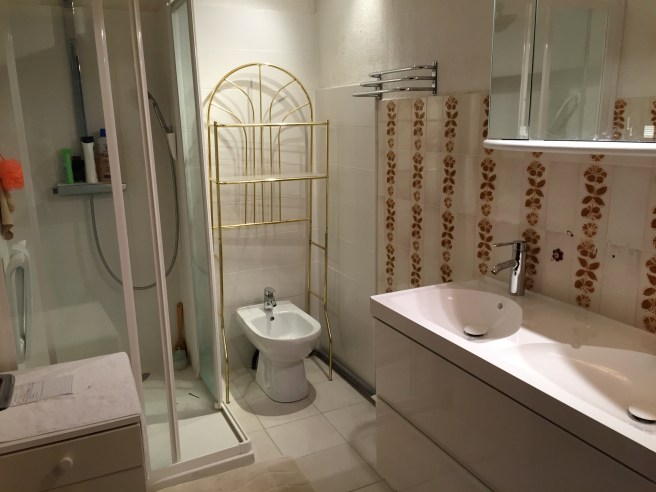
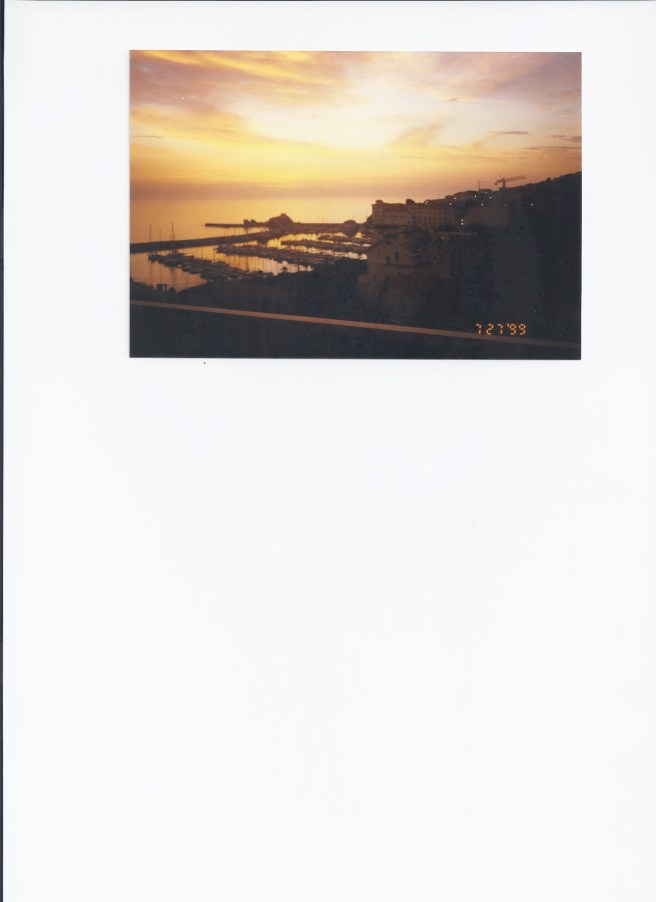
She vividly remembers the hike they took one week, through forests and fields. For a picnic lunch they each had a tomato, a hard-boiled egg, and bread and cheese.   By mid-afternoon, she desperately had to find a toilet, but of course there was nothing in the great outdoors. Finally she got up the courage to ask one of the leaders in French for a toilet and the leader just waved her hand, indicating to our daughter to just go off and find a bush. She was stunned, but after a while realized that that is exactly what other children had been doing when they had wandered off from time to time. She doesn’t remember, but when she was 3 years old, she’d had the same problem in a hardware store in the city; the clerk told me to just take her out into the parking lot. That was normal in France, children peeing wherever they found a place, usually a storm drain. We ran into the same problem several years later when we attended a concert in the old church in our village. No toilets anywhere to be seen. So at intermission, we found that the cemetery next to the church was the place of choice of the concert goers!
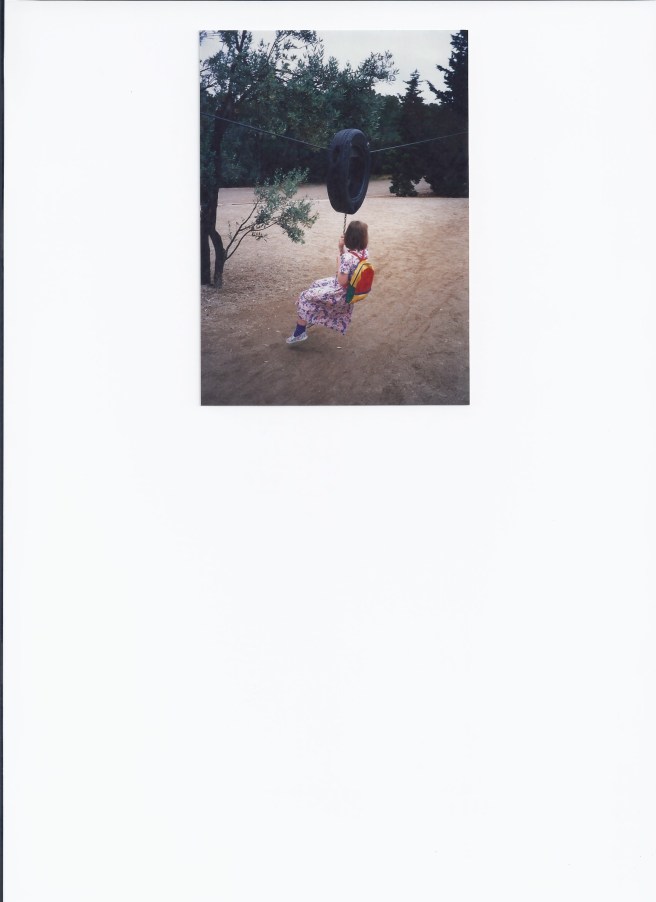
After several summers of attending Centre Aere, she became too old to attend and was advised to sign up for some of the other activities. So we signed her up for sailing lessons, through which she very reluctantly persevered. She thought her command of the language was pretty good, but when it came time for her to go out in the boat with another student, her partner, a boy, insisted on doing everything as he just assumed she didn’t understand anything. So she just laid back, trailing her hand in the water, and had a relaxing time, while he did all the work! I’m sure he felt very pleased with himself.

One funny incident happened at a friend’s birthday party one summer, which was a rude awakening for our little girl. We’d been invited to a large birthday party on the 14 juillet, the national holiday in mid-July, in the neighboring village of Port Vendres. The host had been cooking a whole lamb on a spit over an open fire all day and had tables laid out, covering almost the entire terrace, for all the guests. Our daughter had fun playing with the other children, running around and just being kids. When it was time to eat, she wanted to sit with the other children, so we were happy to comply. She figured that she had eaten with the children at Centre Aere for several years and understood enough of the language to get through a meal. About half-way through our lovely dinner, I felt a tap on my shoulder, and there she stood with a look of shock and anger on her face, and perhaps a few tears forming, ready to fall. “What’s wrong? What happened?” I asked her. “I was sitting having my dinner and the girl next to me asked me a question.” “Okay,” I said, “What was the question?” “I don’t know!” she said. “I thought I knew, so I said ‘oui’, then she took my olive off my plate and put it into her mouth!” Aha! Our daughter had just lost one of her favorite foods because she had said “oui” to the wrong question! Lesson learned: never say “oui” unless you know what you are saying “oui” to!!

Until the millennium, which we spent in Banyuls, we did not have a television in our apartment. Our life centered around reading, practicing math problems, writing stories, going to the beach, practicing piano, violin, and voice, and playing card games. When the French soccer team was in the Coupe de Monde, we walked down to a café to watch on their TV set with dozens of other banyulencs, all sitting and standing way out into the street. We dutifully cheered on “Les Bleus,” while our little girl calmly sat on a chair, reading a book.   We decided to purchase a television as our only Christmas gift for the millennium. That’s when we found out that having a television means paying a special TV tax of about $200 every year. My friend said, “Just think of it as you would a contribution to PBS!”   Okay, but it’s a TAX!!

One of the first toys I bought in France for our daughter was a toy piano, and I had quite a time finding one that was actually fairly in tune. Having begun her music lessons at a very early age, she was always inclined to find music in the objects around her.

One year we noticed that when we took her to the beach, she lined up rocks (our beach was all rocks and coarse gravel) all along the edge of the mats and then she played her piano pieces on them, singing the tunes as she played them by hitting them with a stick. A few days later, she was “tuning” them by arranging them more carefully according to pitch! Soon she was composing tunes, playing the rocks as a rhythmic accompaniment. This meant that we really needed to get a piano into our apartment, so that she could continue to practice when we were in France. After visiting friends in Bordeaux, who had a digital piano, we decided that was what we needed for our apartment. It sounded fairly decent and would never have to be tuned! A year or so later, we found what we wanted at Harrods in London and had it shipped to friends in the village to await our arrival. It has been a godsend to all of us!

New Piano

My fondest memory was the summer our daughter composed a musical story, entitled, “The Boy, the Butterfly, and the Jar.” How I wish we could have recorded that wonderful little opera! She has practiced her recital pieces on that piano and prepared for Fall lessons, she has performed for friends and family and created evening concerts for her parents, including a New Year’s Eve concert for our millennium celebration. And then she prepared her college auditions on it, not losing a day of practice during her summer vacations. In time we also had to bring along an extra violin, so she could keep up on her violin lessons, as well, and that meant a memorable trip to a violin shop in Ceret to purchase a new bow.

buying a new bow

When she began college, our daughter explored several music festivals in France and had one memorable very hot summer in Nice at the summer music academy there. That was one of the summers of canicule (heat wave), when the TV announcers and newspapers warned old people to go spend several hours a day at a shopping mall, or some other large store that was air conditioned. Stores were generally not air conditioned until recent years, and houses were certainly not even beginning to be air conditioned until about five yeas ago. We have always found that there are very few days during the summer that are hot and still. Generally, the tramontane (wind from the mountains) is blowing to some extent. So hikingup and down the hills of Nice to get from the dormitories to her lessons and practice sessions was a chore and she came home at the end of the week with terrible heat rash. But she’d gone swimming at 10 p.m. with fellow students and she’d even gone parasailing, so the adventures continued. Her fondest memories were the summers she spent at a piano festival near Albi, situated in an old castle on the site of an old observatory.   Students attended from all over Europe and prepared a recital for the end of the session. We enjoyed taking our friends up to hear her perform.

During one of our weekly phone calls with her, she told us about her dinner that evening. Apparently there were several Swedish students attending the festival that summer and before dinner, they all began to sing the traditional Swedish drinking song. Anne, of course, knew this song as we sing it every Christmas as part of our Swedish Christmas Luncheon ritual, so she joined in with the students, singing along. They looked at her at the end of the song and said, ”Wow! How do you know that song? You’re an American!” So she explained her Swedish heritage and instantly became part of their “family.”

One of the important lessons a child learns in France is to be quiet in a restaurant. It was a lesson that we, as adults, also had to learn. French people, for the most part, talk quietly, concentrating on the food and each other’s company. For a child, this is often a difficult lesson to learn. For Americans, it is an eye-opener. When we take American guests out to a restaurant in France, we are immediately reminded of this lesson, as the diners around us stare and mutter at the loud voices to which they are suddenly subjected.   And sometimes, we receive very poor service because of this. To Americans (and Brits!), the quiet peace is simply a peculiarity of a French restaurant, which some never notice because they are too busy listening to the sound of their own voices.  Now that our daughter is an adult, she is also keenly aware of this characteristic of a French restaurant. I don’t think that as a child she ever considered the quietness of the restaurants in France, but once she began traveling with classmates through France, she began to notice that something was indeed different!

Every afternoon, while her father was napping, my daughter would join me in our tiny kitchen and become my sous-chef, as together we would prepare the evening meal or a special dessert. One of the recipes she enjoyed making was a simple potato salad, created by an American friend who lived for a while in our village. It used one of our daughter’s favorite ingredients: olives! It is simply potatoes, green olives stuffed with anchovies, crème fraiche, and plain yogurt, but is very refreshing.

Potato Salad


We stock up on anchovy-stuffed olives when we shop in Spain, as this there we can find cans of olives packed in quantity-packs, like we might find in a big box store in the US. We are able to purchase anchovy-stuffed olives in the US, as they come in jars from California, but not all stores stock this item. The more difficult thing to get are small containers of plain yogurt in the US! The only kind of plain yogurt I ever find comes in a large tub. And, no thank you, I do NOT want vanilla yogurt!

We have created several wonderful desserts with puff pastry (pate feuillete), including our favorite, which we named “Chocolate Decadent Delight.”

Chocolate Decadent Delight

Over the years, we have enjoyed her Roasted Potato Medley and my Exhaustion Chicken, recipes created out of what was on hand in the cupboard.

Joan's Exhaustion Chicken

We both enjoy playing with new ideas, finding stunning presentations in our favorite French restaurants, then trying to recreate them. Because she learned about wine tasting at an early age, she has been able to appreciate good wines and found that saying “no” to a bottle of plunk wine that college friends bought because of a pretty label, was pretty much an easy thing to do! She knows the different between a rose and a Tavel and the difference between a good champagne and a Prosecco, and she hangs onto her Mas Christine for the special events in her future life. I’m pleased that she is on her way to exploring recipes in her own kitchen, and I am always eager to see what she creates next!

Now that she is an adult and out on her own, our daughter still tries to get to Banyuls once a year or every two years. Her home in the north now belongs to another family and her home in the south is where her parents live, and she is making her own home to fit her current lifestyle, but Banyuls will always be her true home: full of memories, friends and extended family.