Our daughter’s first visit to her home in France was at the age of 6 months. For the first few years, my husband would accompany us over to Banyuls and stay a week or so, then return to the US to work for a month, then return for us. So she and I had some interesting adventures together during those early years. The first year we took powered formula and cereal, then let her teethe on the ends of French bread.
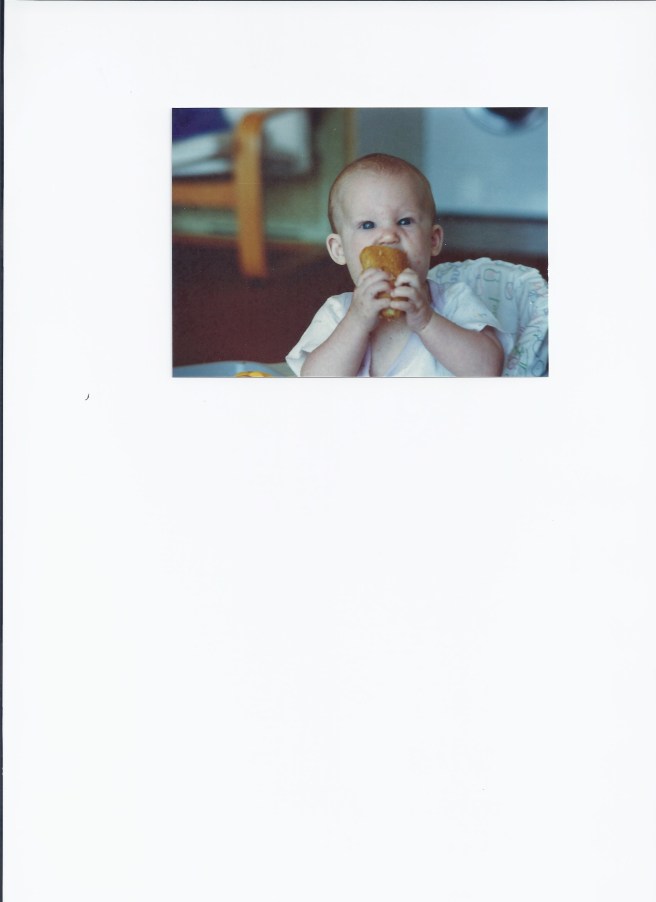
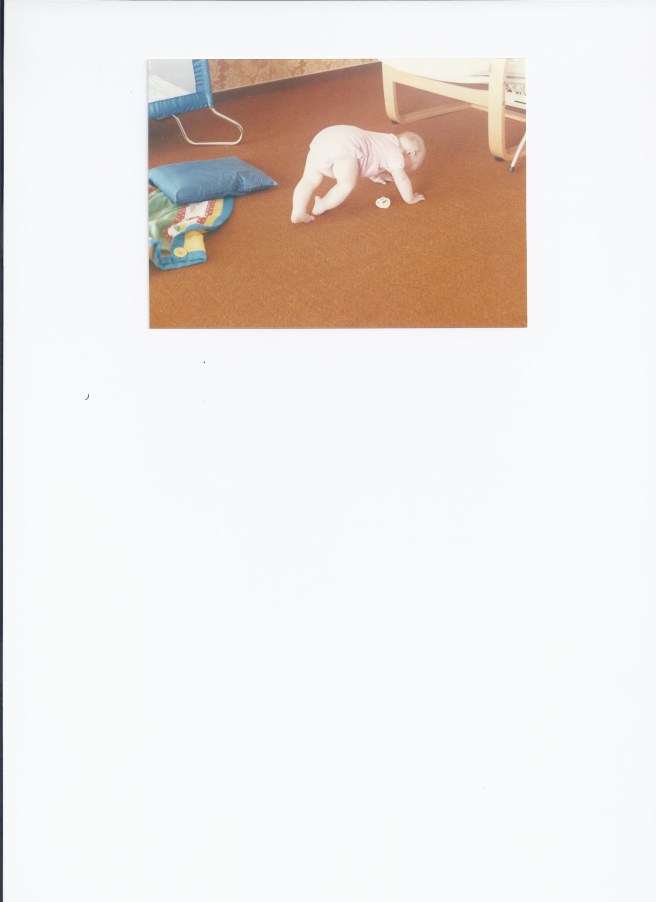
Baby food and diapers were definitely very different in France. I found the most wonderful food in little jars for babies! Fish! And all kinds of vegetables that are unheard of in American baby food. We tried several kinds of diapers until we found one that would not give her diaper rash. Most, like their toilet paper, were very rough textured. She learned to stand in her portable crib that first summer and she learned to crawl on that horrible burnt orange carpet.
Pushing her around the village in her stroller always seemed to bring out all the kind-hearted “grandmas” and “grandpas.” “Quelle sage!,” they would say and then touch her very white skin, as if they had never seen such a color. Eventually the Danes would invade our village and light-skinned blonds became not so much of a novelty.
I asked my best friend why the French seemed to think our daughter was so “sage,” as soon as they saw her. She said it’s because she’s so wide awake and active, always moving. At my questioning look, she explained. French babies, she said, were fed starches in their milk and kept full and rotund, so they tended to seem always so sleepy. Hmmmm.
Our good friends in the village and in Cerbere became her tantes and oncles, and so our family grew.
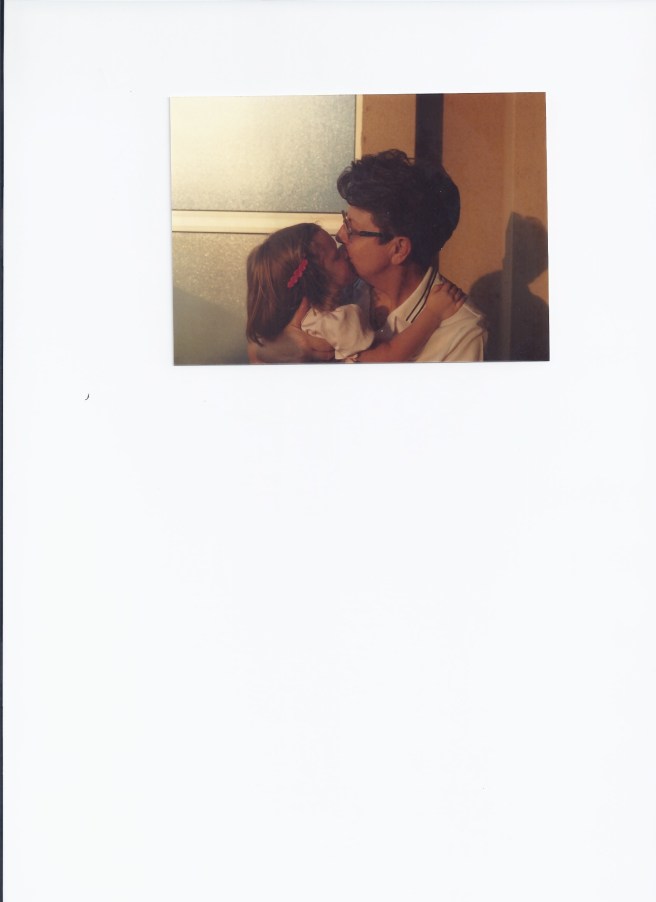
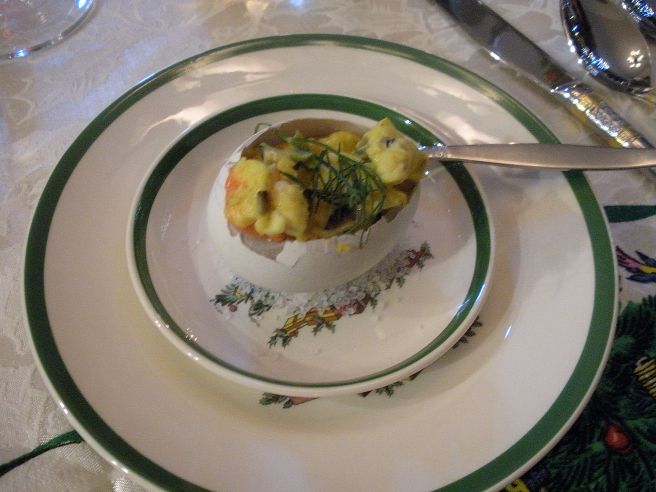
She still remembers playing with my best friend, making pretend omelets out of a set of plastic eggs. Now they share recipes of omelets, including one particular one we made a few years ago which involves serving a tiny omelet in an egg shell on a bed of coarse salt!
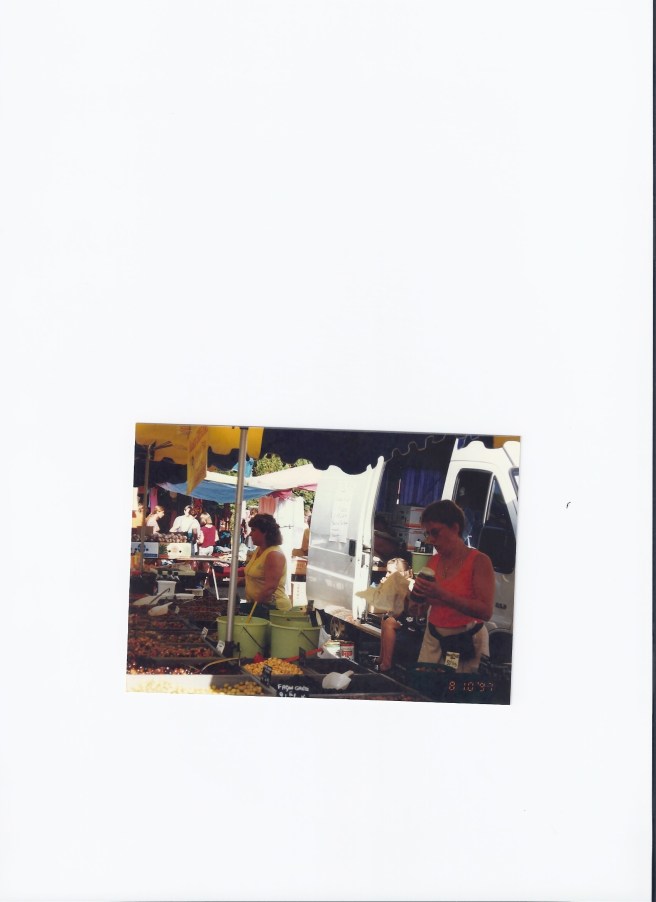
Raising a child, partly in France, meant having experiences with her that we could not have had in the US. As our daughter grew, we involved her more and more in the life of the village, enrolling her into the village summer camp, Centre Aere, every summer for several years and then a sailing course. We took her to as many concerts and movies as possible and always involved her in our shopping at the marche, where she became a favorite of our “roast chicken man.”
Along the way, we met some other children, at least enough for me to make a few play dates for her. One of the children came to our apartment for lunch one day. We said our usual blessing before eating and that was an entirely new experience for her. As the girls played some card games and Dames (Checkers), I listened in to help, if needed, with the language. I soon discovered that French children don’t always play by the rules—cheating seemed to be an accepted way of winning a game, for this little girl. Nothing I said made any difference to her. Another of her childhood friends had a German mother and French father, so was brought up speaking both languages equally well. We attended her 5th or 6th birthday party and I remember being impressed how carefully she unwrapped each package, saving every piece of tape and wrapping paper carefully, and of being surprised that this little girl was receiving bottles of perfume! Her mother told me that the French children were not receiving any music education in the schools, so she was teaching her daughter’s friends little songs whenever they all got together.
One of her earliest visits to the village doctor was for hives, a reaction to a medication her American doctor had prescribed for a cold. The doctor took one look at her very white skin and proclaimed that she would be plagued with allergies all her life. I thought that was ridiculous and still do not understand the correlation, but he was 100% spot on!
We still laugh when we remember the adventures our daughter had at our village’s Centre Aere. She was the only English-speaking child in the group, so most of the children thought she was, perhaps, deaf, as she did not speak all day long. And these were long days! The day began at 9 a.m. and ended at 6 p.m. So this was 9 hours a day of total immersion in French! By the time she got home to us, the words for just pouring out of her, telling us all about her adventures and what she had observed. It was perhaps the first words she had uttered all day long.
Every day they ate lunch in the Cantine, where they had 4 course meals: entrée, main course, cheese, dessert. This is the typical school lunch in France. After cleaning the plate of the main course, they turned their plates over and put the cheese on the clean bottom of the plate. Very economical! Then they walked to a secluded beach on the north side of the village for their afternoon swim.
She was mostly impressed with the absolute focus French children had with stringing beads. To our daughter, this was a really tedious and boring activity! But every day, she came home and said with disgust that they had strung more beads into jewelry.
Once a week, a field trip was planned. One time they visited a chestnut tree forest and ended up exploring a cave. She told us that the leader went into the cave first, then the children went in one at a time, crawling on their bellies through a hole to get into the cave and then in a single file, they side-stepped along a one-foot wide ledge to explore deeper into the cave. She told us that the drop-off beside the ledge was very deep. We kept thinking of all the disclosure forms and safety measures we would have had to sign if they had done this in the US! But she came home very happy and covered with dirt from the top of her casquette (baseball cap) to the tip of her tennis (sneakers). My favorite photo that summer was of her lying in the bath tub of bubble bath with only her smiling dirty face showing amidst the white bubbles!
Another week they all went to the water park, north of us, up the coast. I’d lathered suntan lotion on her and sent her with more. Then I warned the group leaders that they had to keep applying more lotion and keep her out of the sun as much as possible. “Oui, madame. Bien sur!” But children in the Roussillon are mostly of Mediterranean stock and have olive skin, while our daughter had Scandinavian-English very white skin, easily burned. The leaders just didn’t really believe what I was trying to tell them. She had a wonderful time, but she came home red as a beet! Literally! It was quite painful. Then she told us about going down the tube slide with one of the other girls. The following week I discovered that this was one of the children who had lice. It was a normal announcement at least once every summer that lice had appeared on the heads of one of the children. I took to taking a “Nit” kit with me from the US, just in case. Then we’d stand her on the balcony in the sun and inspect every hair on her scalp—and never found any, thankfully!
She vividly remembers the hike they took one week, through forests and fields. For a picnic lunch they each had a tomato, a hard-boiled egg, and bread and cheese. By mid-afternoon, she desperately had to find a toilet, but of course there was nothing in the great outdoors. Finally she got up the courage to ask one of the leaders in French for a toilet and the leader just waved her hand, indicating to our daughter to just go off and find a bush. She was stunned, but after a while realized that that is exactly what other children had been doing when they had wandered off from time to time. She doesn’t remember, but when she was 3 years old, she’d had the same problem in a hardware store in the city; the clerk told me to just take her out into the parking lot. That was normal in France, children peeing wherever they found a place, usually a storm drain. We ran into the same problem several years later when we attended a concert in the old church in our village. No toilets anywhere to be seen. So at intermission, we found that the cemetery next to the church was the place of choice of the concert goers!
After several summers of attending Centre Aere, she became too old to attend and was advised to sign up for some of the other activities. So we signed her up for sailing lessons, through which she very reluctantly persevered. She thought her command of the language was pretty good, but when it came time for her to go out in the boat with another student, her partner, a boy, insisted on doing everything as he just assumed she didn’t understand anything. So she just laid back, trailing her hand in the water, and had a relaxing time, while he did all the work! I’m sure he felt very pleased with himself.
One funny incident happened at a friend’s birthday party one summer, which was a rude awakening for our little girl. We’d been invited to a large birthday party on the 14 juillet, the national holiday in mid-July, in the neighboring village of Port Vendres. The host had been cooking a whole lamb on a spit over an open fire all day and had tables laid out, covering almost the entire terrace, for all the guests. Our daughter had fun playing with the other children, running around and just being kids. When it was time to eat, she wanted to sit with the other children, so we were happy to comply. She figured that she had eaten with the children at Centre Aere for several years and understood enough of the language to get through a meal. About half-way through our lovely dinner, I felt a tap on my shoulder, and there she stood with a look of shock and anger on her face, and perhaps a few tears forming, ready to fall. “What’s wrong? What happened?” I asked her. “I was sitting having my dinner and the girl next to me asked me a question.” “Okay,” I said, “What was the question?” “I don’t know!” she said. “I thought I knew, so I said ‘oui’, then she took my olive off my plate and put it into her mouth!” Aha! Our daughter had just lost one of her favorite foods because she had said “oui” to the wrong question! Lesson learned: never say “oui” unless you know what you are saying “oui” to!!
Until the millennium, which we spent in Banyuls, we did not have a television in our apartment. Our life centered around reading, practicing math problems, writing stories, going to the beach, practicing piano, violin, and voice, and playing card games. When the French soccer team was in the Coupe de Monde, we walked down to a café to watch on their TV set with dozens of other banyulencs, all sitting and standing way out into the street. We dutifully cheered on “Les Bleus,” while our little girl calmly sat on a chair, reading a book. We decided to purchase a television as our only Christmas gift for the millennium. That’s when we found out that having a television means paying a special TV tax of about $200 every year. My friend said, “Just think of it as you would a contribution to PBS!” Okay, but it’s a TAX!!
One of the first toys I bought in France for our daughter was a toy piano, and I had quite a time finding one that was actually fairly in tune. Having begun her music lessons at a very early age, she was always inclined to find music in the objects around her.
One year we noticed that when we took her to the beach, she lined up rocks (our beach was all rocks and coarse gravel) all along the edge of the mats and then she played her piano pieces on them, singing the tunes as she played them by hitting them with a stick. A few days later, she was “tuning” them by arranging them more carefully according to pitch! Soon she was composing tunes, playing the rocks as a rhythmic accompaniment. This meant that we really needed to get a piano into our apartment, so that she could continue to practice when we were in France. After visiting friends in Bordeaux, who had a digital piano, we decided that was what we needed for our apartment. It sounded fairly decent and would never have to be tuned! A year or so later, we found what we wanted at Harrods in London and had it shipped to friends in the village to await our arrival. It has been a godsend to all of us!

My fondest memory was the summer our daughter composed a musical story, entitled, “The Boy, the Butterfly, and the Jar.” How I wish we could have recorded that wonderful little opera! She has practiced her recital pieces on that piano and prepared for Fall lessons, she has performed for friends and family and created evening concerts for her parents, including a New Year’s Eve concert for our millennium celebration. And then she prepared her college auditions on it, not losing a day of practice during her summer vacations. In time we also had to bring along an extra violin, so she could keep up on her violin lessons, as well, and that meant a memorable trip to a violin shop in Ceret to purchase a new bow.
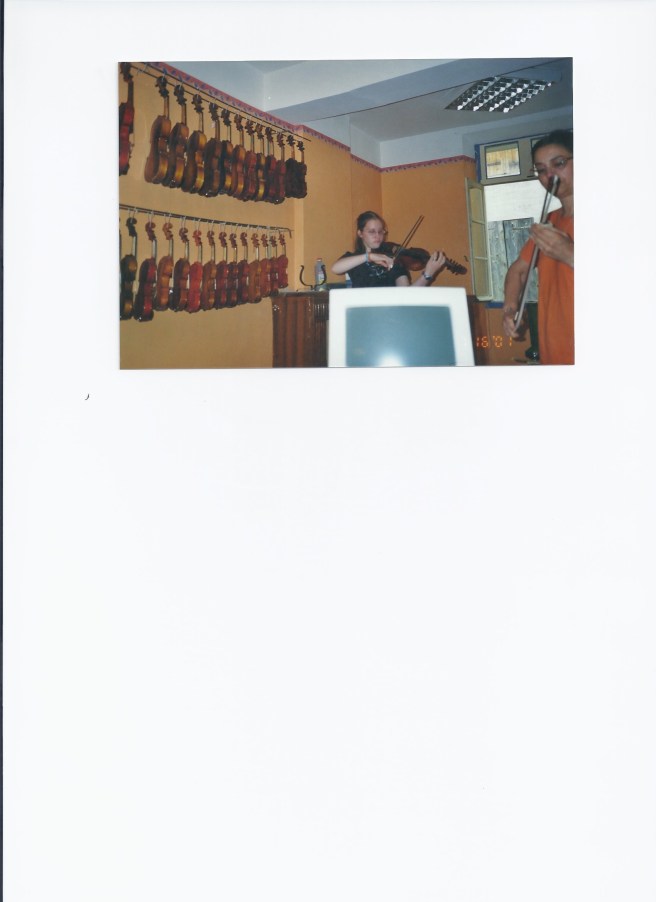
When she began college, our daughter explored several music festivals in France and had one memorable very hot summer in Nice at the summer music academy there. That was one of the summers of canicule (heat wave), when the TV announcers and newspapers warned old people to go spend several hours a day at a shopping mall, or some other large store that was air conditioned. Stores were generally not air conditioned until recent years, and houses were certainly not even beginning to be air conditioned until about five yeas ago. We have always found that there are very few days during the summer that are hot and still. Generally, the tramontane (wind from the mountains) is blowing to some extent. So hikingup and down the hills of Nice to get from the dormitories to her lessons and practice sessions was a chore and she came home at the end of the week with terrible heat rash. But she’d gone swimming at 10 p.m. with fellow students and she’d even gone parasailing, so the adventures continued. Her fondest memories were the summers she spent at a piano festival near Albi, situated in an old castle on the site of an old observatory. Students attended from all over Europe and prepared a recital for the end of the session. We enjoyed taking our friends up to hear her perform.
During one of our weekly phone calls with her, she told us about her dinner that evening. Apparently there were several Swedish students attending the festival that summer and before dinner, they all began to sing the traditional Swedish drinking song. Anne, of course, knew this song as we sing it every Christmas as part of our Swedish Christmas Luncheon ritual, so she joined in with the students, singing along. They looked at her at the end of the song and said, ”Wow! How do you know that song? You’re an American!” So she explained her Swedish heritage and instantly became part of their “family.”
One of the important lessons a child learns in France is to be quiet in a restaurant. It was a lesson that we, as adults, also had to learn. French people, for the most part, talk quietly, concentrating on the food and each other’s company. For a child, this is often a difficult lesson to learn. For Americans, it is an eye-opener. When we take American guests out to a restaurant in France, we are immediately reminded of this lesson, as the diners around us stare and mutter at the loud voices to which they are suddenly subjected. And sometimes, we receive very poor service because of this. To Americans (and Brits!), the quiet peace is simply a peculiarity of a French restaurant, which some never notice because they are too busy listening to the sound of their own voices. Now that our daughter is an adult, she is also keenly aware of this characteristic of a French restaurant. I don’t think that as a child she ever considered the quietness of the restaurants in France, but once she began traveling with classmates through France, she began to notice that something was indeed different!
Every afternoon, while her father was napping, my daughter would join me in our tiny kitchen and become my sous-chef, as together we would prepare the evening meal or a special dessert. One of the recipes she enjoyed making was a simple potato salad, created by an American friend who lived for a while in our village. It used one of our daughter’s favorite ingredients: olives! It is simply potatoes, green olives stuffed with anchovies, crème fraiche, and plain yogurt, but is very refreshing.

We stock up on anchovy-stuffed olives when we shop in Spain, as this there we can find cans of olives packed in quantity-packs, like we might find in a big box store in the US. We are able to purchase anchovy-stuffed olives in the US, as they come in jars from California, but not all stores stock this item. The more difficult thing to get are small containers of plain yogurt in the US! The only kind of plain yogurt I ever find comes in a large tub. And, no thank you, I do NOT want vanilla yogurt!
We have created several wonderful desserts with puff pastry (pate feuillete), including our favorite, which we named “Chocolate Decadent Delight.”
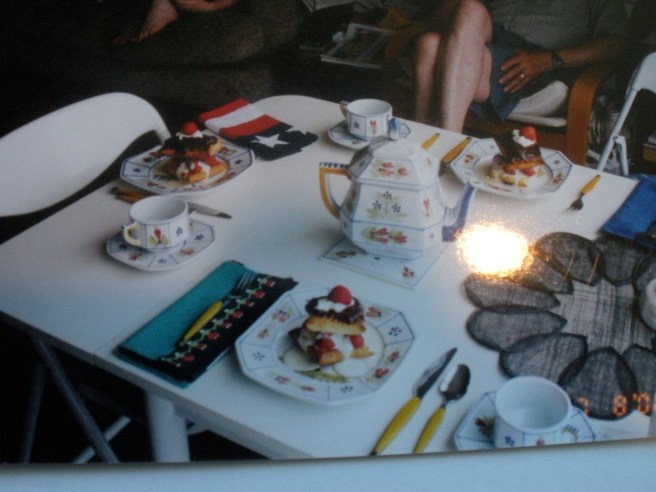
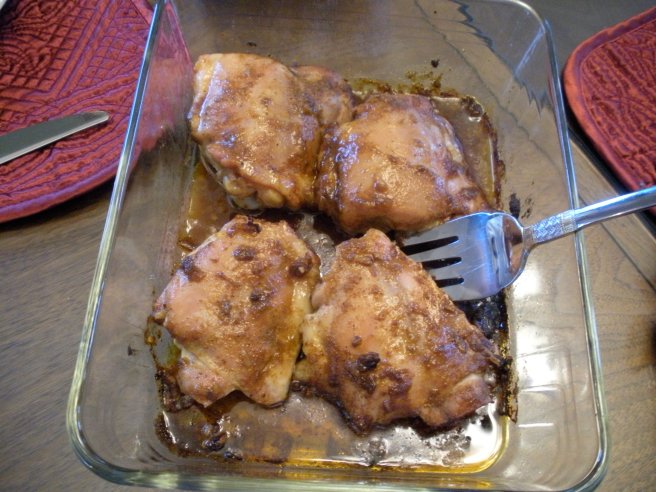
Over the years, we have enjoyed her Roasted Potato Medley and my Exhaustion Chicken, recipes created out of what was on hand in the cupboard.
We both enjoy playing with new ideas, finding stunning presentations in our favorite French restaurants, then trying to recreate them. Because she learned about wine tasting at an early age, she has been able to appreciate good wines and found that saying “no” to a bottle of plunk wine that college friends bought because of a pretty label, was pretty much an easy thing to do! She knows the different between a rose and a Tavel and the difference between a good champagne and a Prosecco, and she hangs onto her Mas Christine for the special events in her future life. I’m pleased that she is on her way to exploring recipes in her own kitchen, and I am always eager to see what she creates next!
Now that she is an adult and out on her own, our daughter still tries to get to Banyuls once a year or every two years. Her home in the north now belongs to another family and her home in the south is where her parents live, and she is making her own home to fit her current lifestyle, but Banyuls will always be her true home: full of memories, friends and extended family.



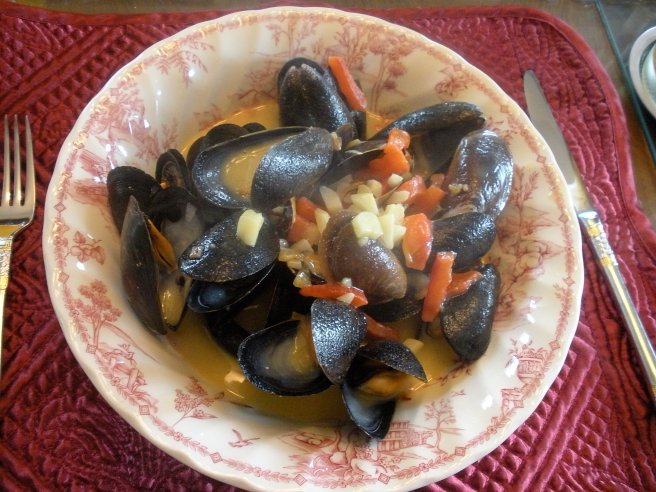
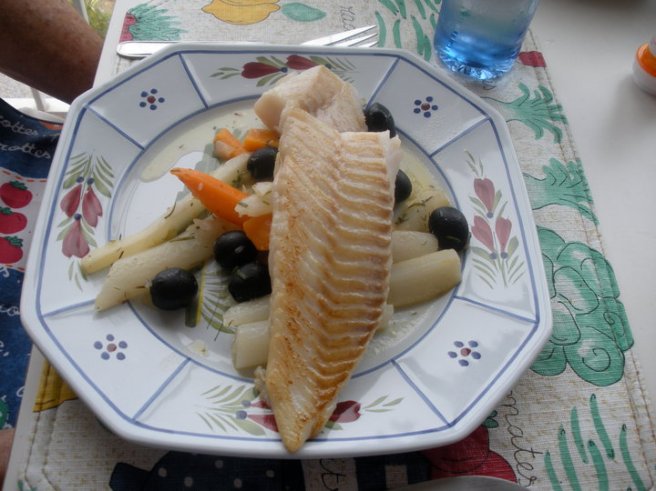

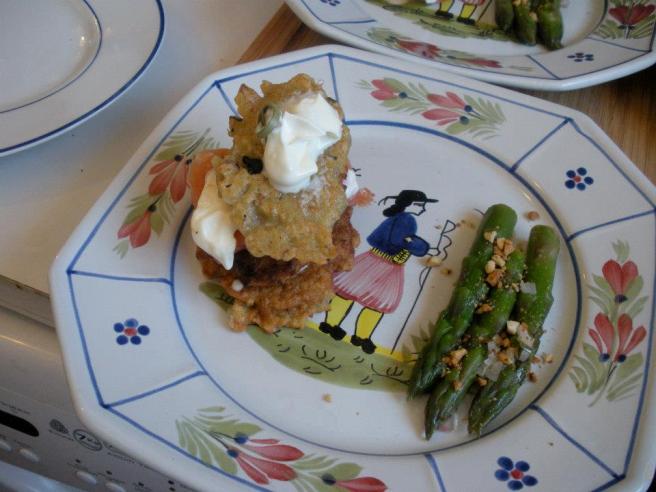
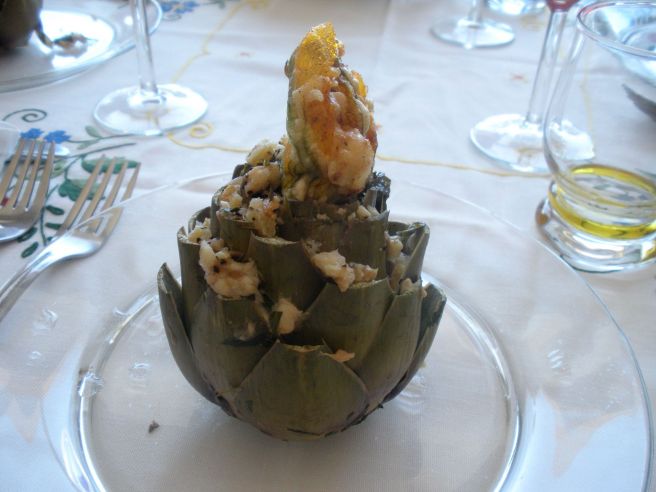
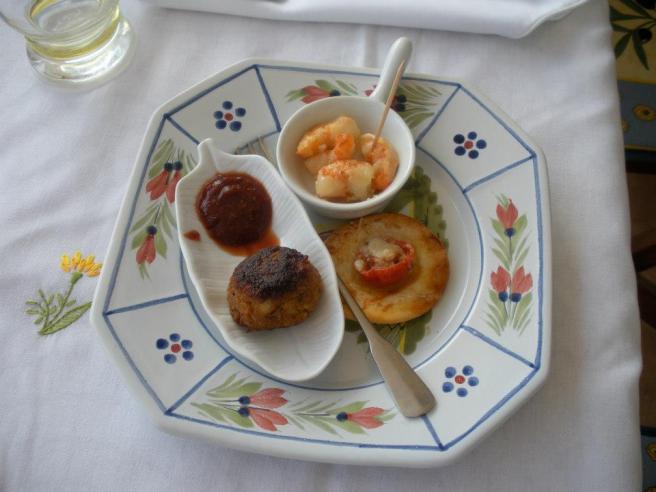
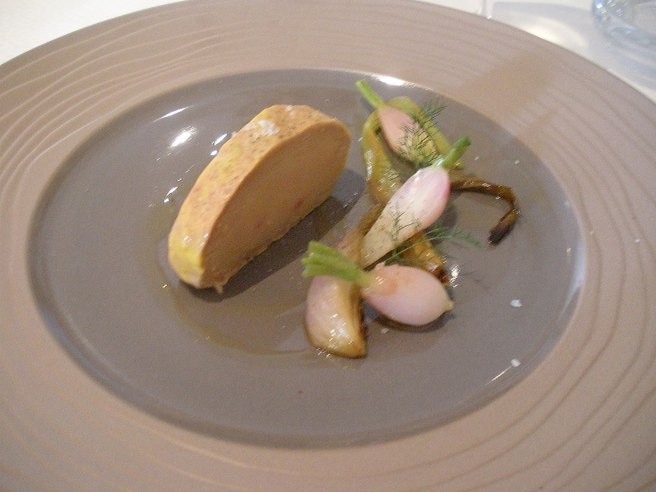
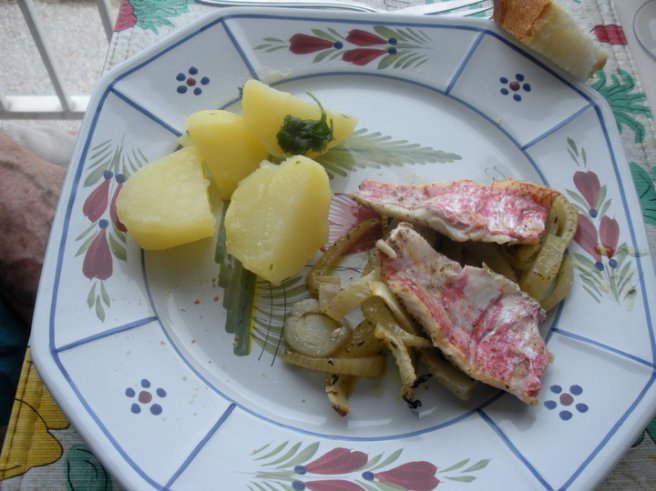


 then candy or cookies or small pots de crème and stuffed apricots with coffee,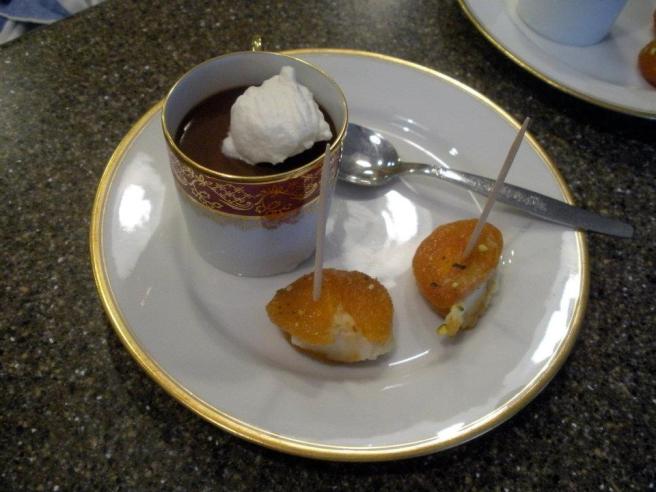


 2 Country Kitchen